

Two “forever chemicals,” also known as PFAS, have been linked to a higher risk from harsh substances. breast canceraccording to a recent study from the National Institutes of Health.
Chemicals found in everyday objects
Dig Deeper:
Researchers found that women with higher levels of PFOA and PFOS (both types of PFAS) in their blood had a 67% higher rate of ER-negative breast cancer. For PFOS, the rate was 93% higher.
It was noted that although no clear association was observed between the two chemicals and overall breast cancer risk, the researchers believed further study was warranted.
What they say:
“Our findings, which we confirmed using a meta-analysis of previous research, indicate that some existing PFAS, including PFOA and PFOS, are associated with a higher risk of ER-negative breast cancer, a more aggressive tumor type with few known risk factors,” explained Alexandra White, Ph.D., a researcher at NIH Stadtman, who led the study. The results are reported in the Journal of Clinical Oncology.
Secretary Robert F. Kennedy Jr. said the Trump administration would “seek evidence” to help give patients “clear answers” about the impact of chemicals such as PFAS on women’s health.
PFAS are a group of synthetic chemicals used in common consumer products such as nonstick pans, food packaging, and even clothing. according to the NIH.
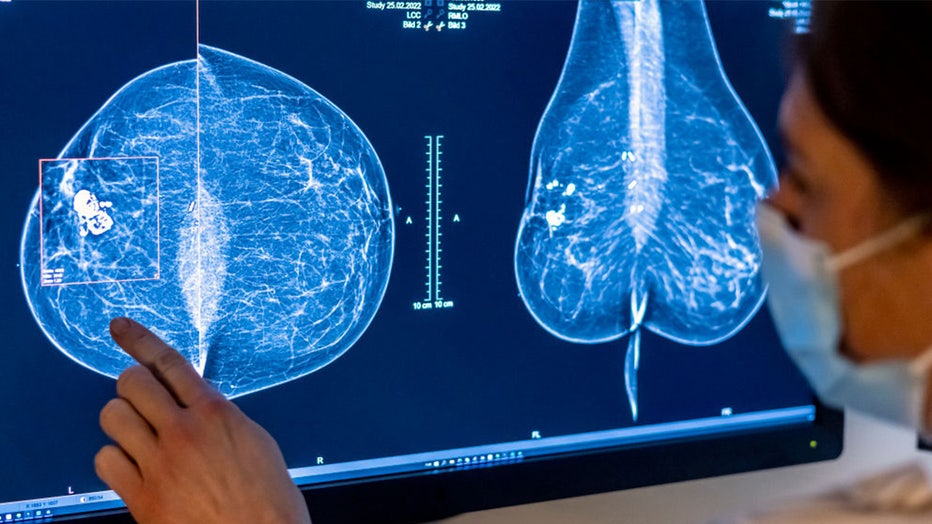
FILE – Medical personnel use a mammogram to examine a woman’s breast for breast cancer. (Photo by Michael Hanschke/photo alliance via Getty Images)
What is ER-negative breast cancer?
Overview:
ER-negative breast cancer tumors are notoriously difficult to treat because they lack the standard hormone receptors targeted by common therapies, according to the Breast Cancer Research Foundation website.
Why you should care:
While major manufacturers have largely phased out older chemicals like PFOA and PFOS, scientists stress that new replacement compounds also need to be studied in depth.
Health officials stressed that identifying these environmental links is a critical first step in helping people reduce their exposure and better protect their long-term health.
The source : Information in this article is taken from a November 5, 2026 press release about the study from the National Institutes of Health and the Breast Cancer Research Foundation website. This story was reported from San Jose.
Gn Health

