National Geographic’Paris photographers travel the world to show us the wonders of the natural world from perspectives almost impossible to capture anywhere else. Its photographers captured more than a million images in 2026 and recently unveiled Images of the Year 2026, a collection of 25 extraordinary photographs that reveal the moments, discoveries and untold stories that defined the past year.
The images will transport viewers from the depths of the cold waters of Greenland to see an incredible shark, to the Chankillo Solar Observatory in Casma, Peru, for a rare view of the sun. They will also visit the Italian Alps to meet a charming horse who loves hats.
“The power of photography is that it makes things visible and understandable that many of us would never otherwise see, and that it can help us see something familiar in an entirely new way,” Nathan Lump, editor-in-chief of National geographicsaid in a statement. “This year’s IMAGES OF THE YEAR collection is a testament to the boundless curiosity and relentless perseverance of our photographers in their quest to help us better understand our world. Together, these images remind us how much there is still to discover about our planet and that the deeply human work of documenting what is real is more valuable than ever in an age where fakes are everywhere.”
Here are eight of our favorite photos from National Geographic Photos from the year 2026.
1. Pygmy Whale Lunge by Ralph Pace
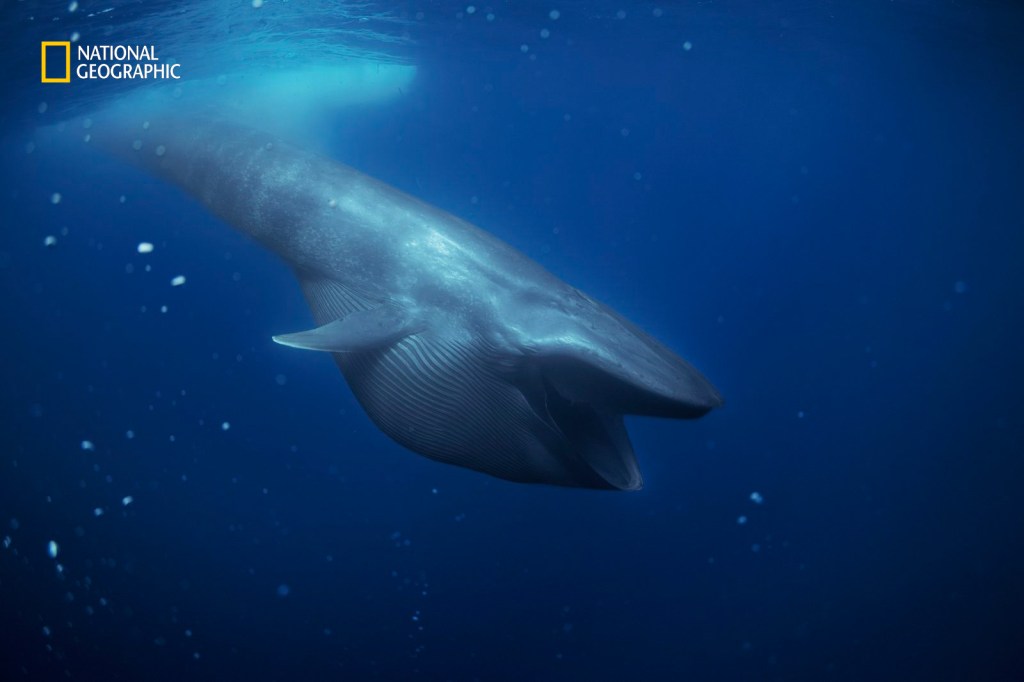
“In the warm waters of New Zealand, a pygmy whale lunges with its mouth wide open to feed on an abundance of krill. Although this giant species is usually migratory, some 700 of them have settled here. Photographer Ralph Pace dove with researchers to study the impact of climate change on krill.
and, consequently, the feeding and reproduction of whales.
2. The path to the sun in Peru by Diego López Calvin
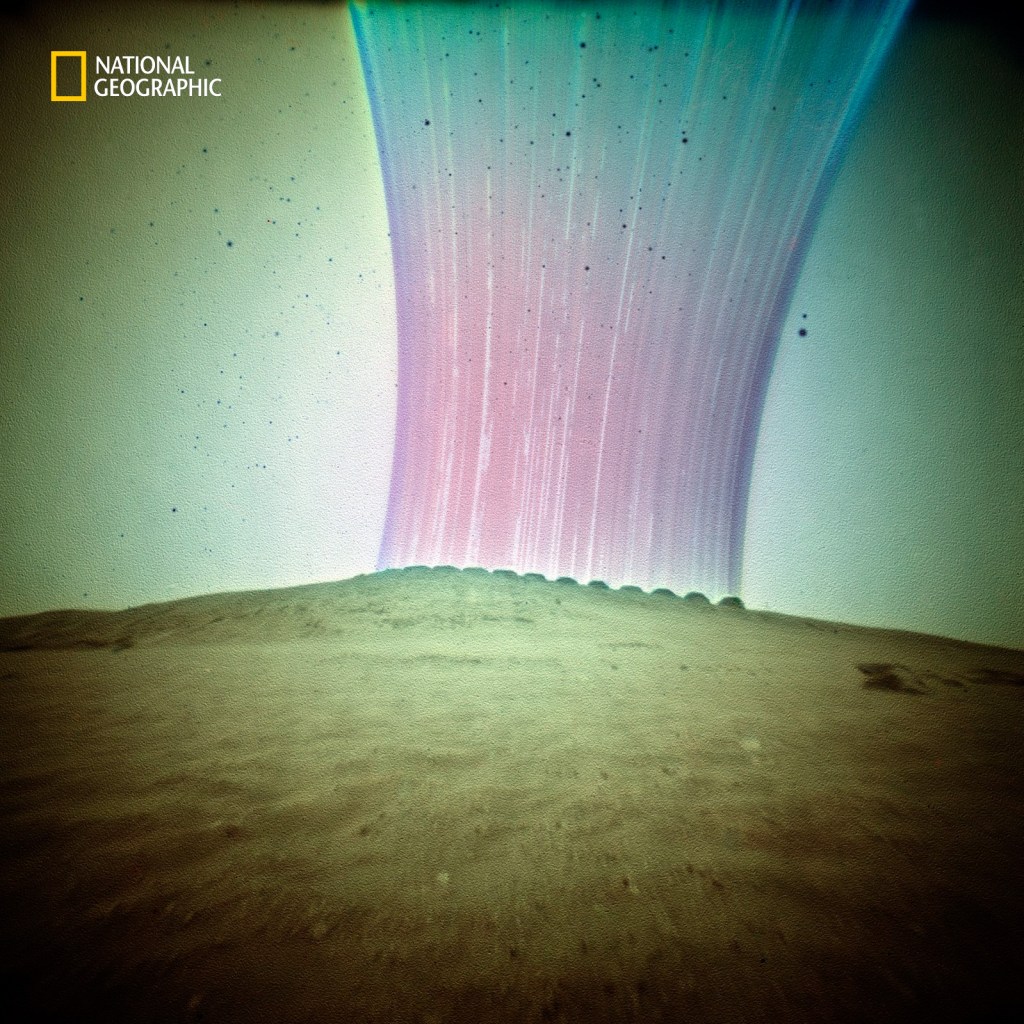
“Apparent path of the sun as seen from the western observation point of the Chankillo Solar Observatory in Casma (Ankash), Peru. The six-month continuous exposure (solarigraphy) taken between June 21 and December 21, 2025 accurately shows the path of the sun, with the winter and summer solstices located at the ends of the structure outlined by the silhouette of the towers.”
3. A tribute to those we lost on 9/11 Photo by Christopher Payne
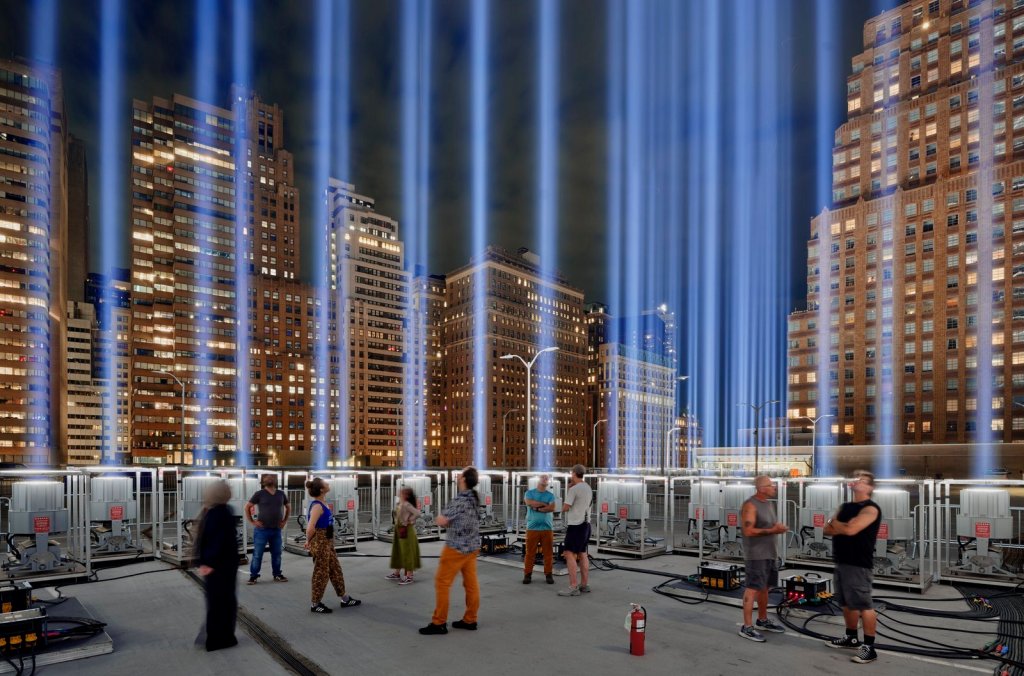
“Every September for 25 years, a team has lit up New York’s night sky to commemorate those who died in the attack on the World Trade Center Twin Towers. Christopher Payne combined four images to capture these technicians who set up the 9/11 “Tribute in Light,” which forms two beams visible 60 miles away, a symbol of the city’s resilience.”
4. A Hat for a Horse by Jasper Doest
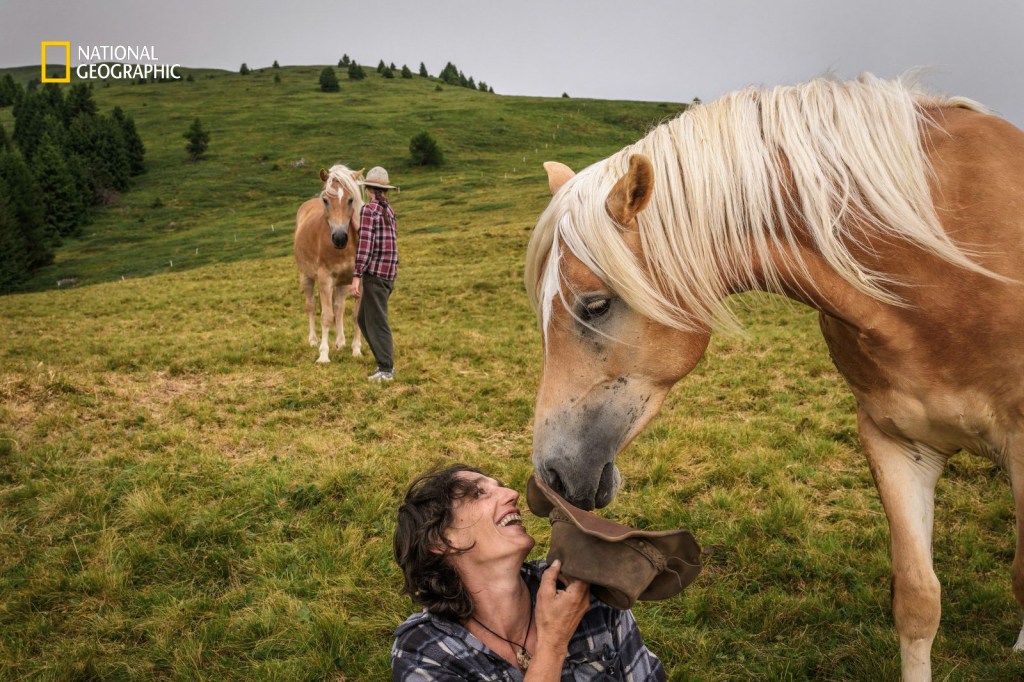
“Lorena Masei playfully offers her hat to a horse on the Masei family farm in the Italian Alps. Photographer Jasper Doest was in the mountains documenting the communities’ coexistence with wild animals, but he was struck by the family’s relationship with the livestock they raise in a landscape shared by bears and wolves.”
5. The Future of Agriculture by Brent Stirton
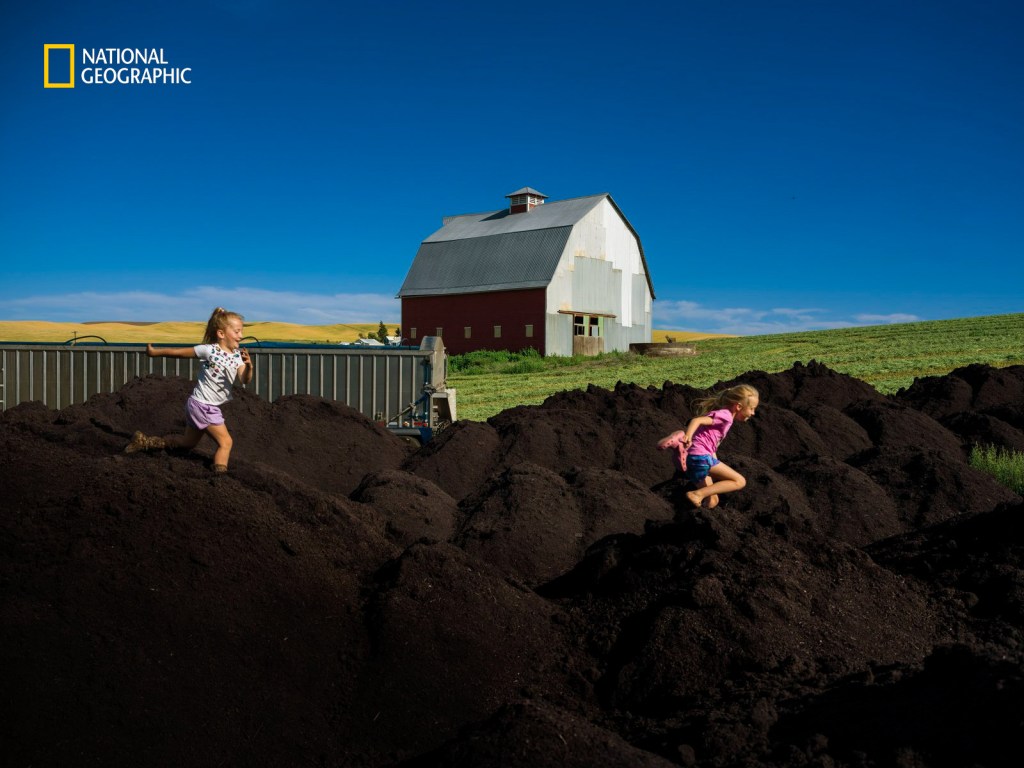
“Frankie and Joey Druffel play among the compost mounds on the family farm. Their father, Allen, a fifth-generation farmer, uses modernized forms of herbicide- and pesticide-free methods – drawing on the practices of his great-great-grandfather – and has implemented soil restoration techniques to eliminate weeds and add nutrients without chemicals.”
6. A Greenland shark by Kiliii Yüyan
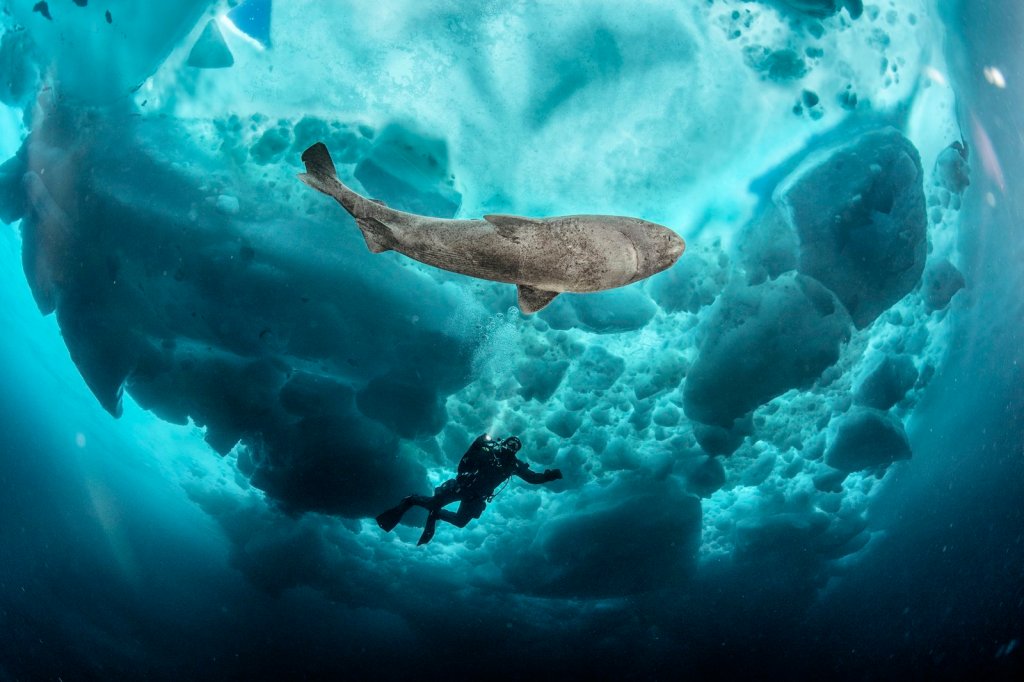
“A Greenland shark, the oldest vertebrate on the planet, swims beneath the meter-thick sea ice near the village of Kulusuk in eastern Greenland, watched by diver Philipp Oppermann. This shark came up from the depths into the shallows at night to follow the scent of a harp bait, a frozen ringed seal. This photograph was taken on March 17 2026, in early spring, when sea ice remains strong and water visibility is spectacular, over 50 meters.”
7. Monkey Business by Prakash Matada
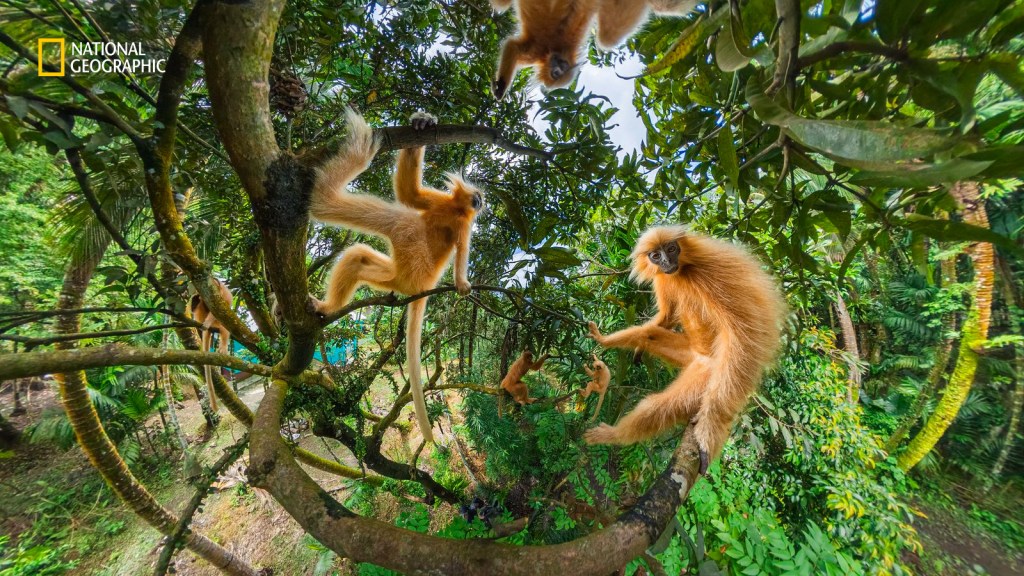
“A curious troop of Gee’s golden langurs, named after a naturalist who documented them in the 1950s, gaze through a fisheye lens that Prakash Matada attached to a telescopic pole. The endangered canopy dwellers have formed a rare bond with humans and have been anything but shy in front of the cameras, staring at their own reflections.”
8. A Hard Day’s Rest by Matthieu Paley
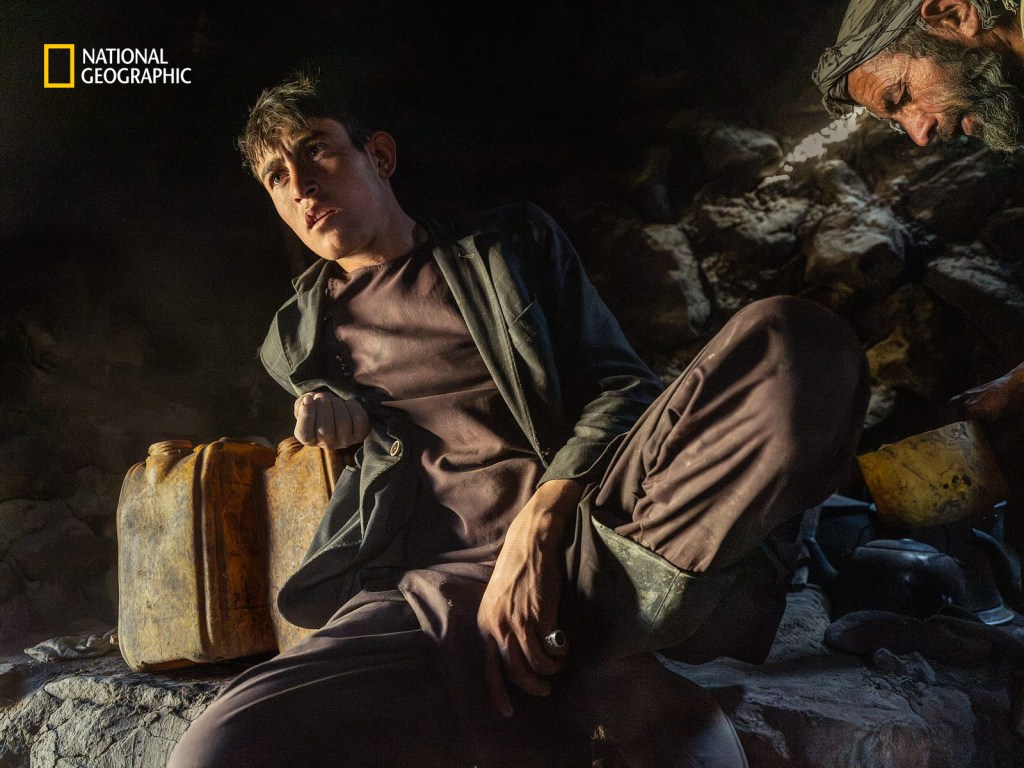
“Twenty-six years ago, photographer Matthieu Paley first visited Afghanistan’s Wakhan Corridor, a narrow strip of land bordering Pakistan, Tajikistan and China, and was transfixed. Repeated visits have only deepened his connection to the region and the local Wakhi people. Here, Hazal-u Din reclines in the firelight after a long day herding yaks.”
To learn more about this story, visit NatGeo.com/Photos.
Gn world