

Want to bookmark your favorite articles and stories to read or view later? Start your independent membership today.
Join us today
Already a member? Log in
Since the U.S. Supreme Court reinstated capital punishment in 1976, state and federal authorities have executed 1,684 people.
For half a century, this violence has been carried out with clinical distance – surrounded by calm and standardized procedure.
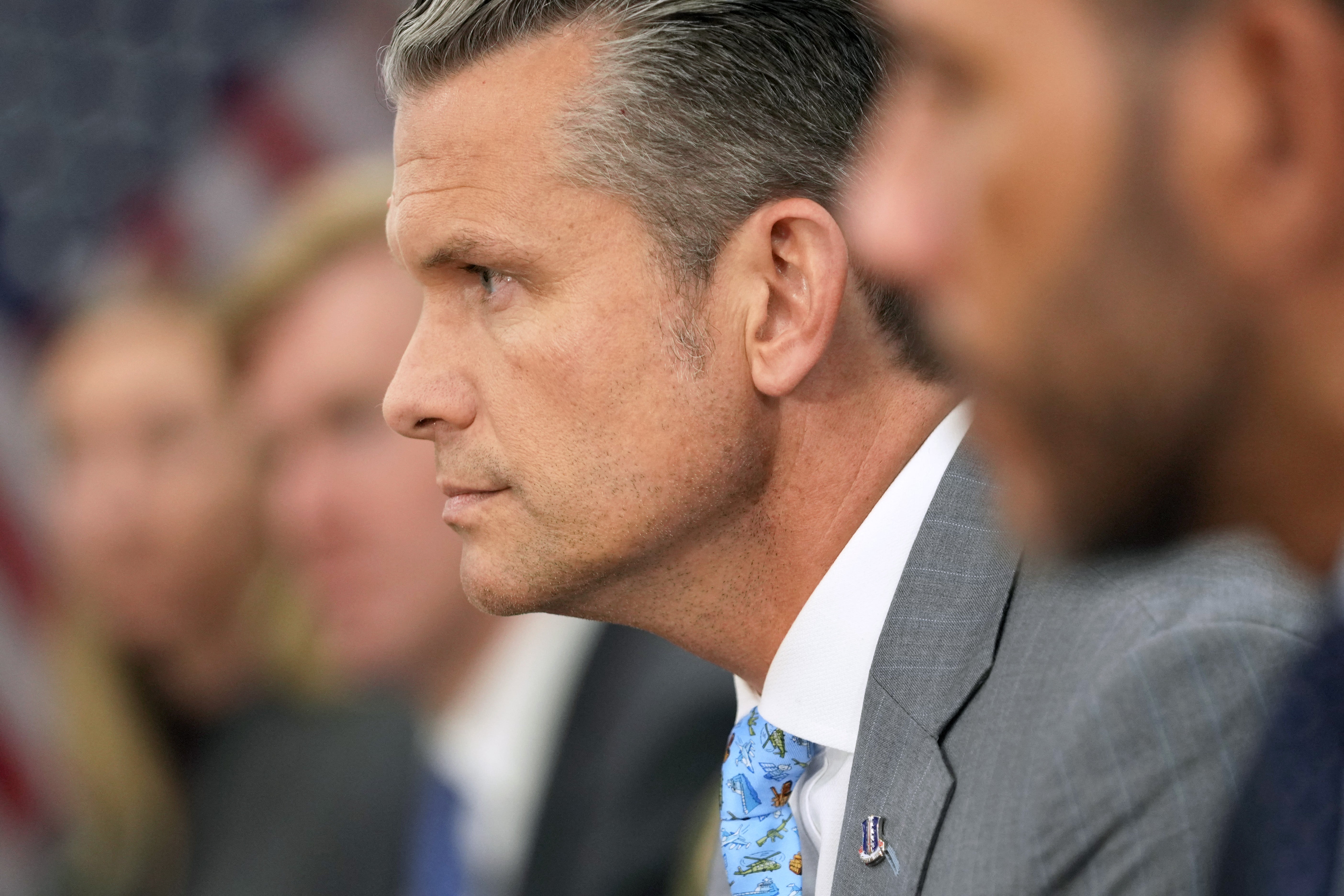
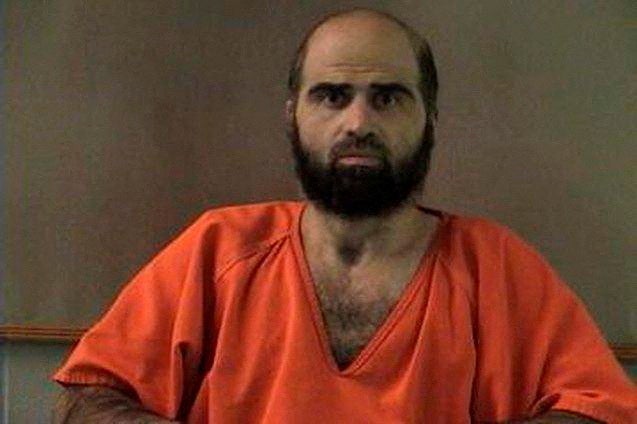
When Defense Secretary Pete Hegseth announced that the execution of Fort Hood shooter Nidal Malik Hasan would be broadcast live around the world, that bureaucratic veneer dissolved.
Described by the United Nations as “amounting to a public execution” – a spectacle unseen in American justice for nearly a century – the Pentagon’s proposal transformed state-sanctioned killing into prime-time political theater.
Donald Trump has since reversed course, reversing his decision to streamline the execution following international condemnation and internal political friction.
But for Dr. Asim Qureshi, director of CAGE International, who has spent two decades navigating the legal workings of America’s death row, viewing the removal as a victory for human decency is to misunderstand how the Trump administration operates. ‘
The political ball has been thrown, the precedent set, and the public appetite tested.
“My reaction was quite horrified,” says Dr. Qureshi, reflecting on the initial announcement of the live broadcast. “It’s presented as accountability, transparency, justice – but at the heart of it all is this fascination with wanting to show power. This administration is built on the optics of projecting power.”
When a government seeks to broadcast state murder, it relies on a specific and fragile logic: absolute domination can be demonstrated through controlled violence.
The White House’s sudden change of heart reveals the risk inherent in this calculation. The unfiltered spectacle is a political “wild card” that, once broadcast, cannot be controlled.
“I think one of the main reasons this project was canceled was because the Trump administration discovered that live streaming horror didn’t really work,” says Dr. Qureshi, highlighting the shift in global consciousness over the past few years.
“Over the past three years, we have seen a live-streamed genocide. And because of it, opinions of Israel – both in the Democratic and Republican parties – are at an all-time low.”
In criminal defense, “mitigation” is the methodical reconstruction of a defendant’s life to understand the factors that led them to the time of their crime. By installing a camera in the execution room, the state unwittingly invites the public to take its own mitigation action.
“Live-streaming an execution would force people to tone down and re-evaluate Nidal Hasan’s case,” says Dr Qureshi.
“As for that question, Nidal Hasan’s problem was about American malfeasance around the world — his reasons were rooted in American foreign policy in Afghanistan and Iraq. And I don’t think Trump, or anyone in his administration, wants people to ask those questions.”
This creates “a bizarre duality” for the White House: where the desire to punish Hasan for his actions must be reconciled with the possibility that Americans might question what led to these actions.
But even by canceling the livestream, the proposal has already changed the course of American justice. By launching the idea of a televised execution, the state pushed the limits of violence that can be considered “just.”
“If you want to change public opinion, you have to bring the most egregious act to the table,” says Dr. Qureshi. “And little by little, the dominant discourse will evolve into the next, slightly less blatant thing.
“It worked because everyone is wondering whether Nidal Hasan’s execution should be broadcast live, but no one is talking about why he is being executed in the first place.
“And in doing so, it made a future live-streamed execution a much more realistic possibility.”
But that baseline was never right.
“We face a country where 98 percent of defendants are forced into plea deals, where a third of black men face the shadow of incarceration, and where children lose years of their lives to wrongful convictions,” says Dr. Qureshi.
“This is not a system suffering from administrative defects. It is an unfair system.
“This live-streamed execution indicates nothing other than the direction in which American justice is heading.
“And there will be no justice without a fundamental overhaul. »
Gn headline

