
Amid a wave of diverse local demands, protests broke out this week across Southern and Western Europe, sweeping France, Albania, Italy, Portugal, Spain and Greece.
Protests against the cost of living and school conditions have rocked France since late September, many of them turning violent. Meanwhile, Albania entered its fifth day of anti-government riots and protests against the general economic situation took place in Milan and several cities in Portugal.
The Spanish protests targeted housing affordability and housing rights, while oil refinery workers in Greece rallied to demand better workplace safety.
President Donald Trump has spoken out about the riots in France, attributing the unrest there to “the immigration of people from a totally different world, people with hatred in their hearts.” He urged France to close its borders in an article on Truth Social on Sunday.
U.S. embassies have issued warnings about protests to Americans in France, Albania and Belgium at different times this month.
France
France has seen weeks of unrest across the country since mid-September, when teachers at the Saint-Exupéry high school in Créteil, a southeastern suburb of Paris, went on strike over staff shortages. After a few days, students began to blockade the school in solidarity over the teaching conditions.
The movement gained traction in Paris before spreading to the rest of the country and evolving to include broader economic discontent. The prices of energy and food products have skyrocketed in recent months: household budgets have been squeezed by energy prices, 21.3% higher in September than a year earlier, and by the 25.7% increase in gasoline prices, according to the national statistics agency INSEE. Unemployment reached 8.3 percent in the second quarter, up from 7.6 percent a year ago.
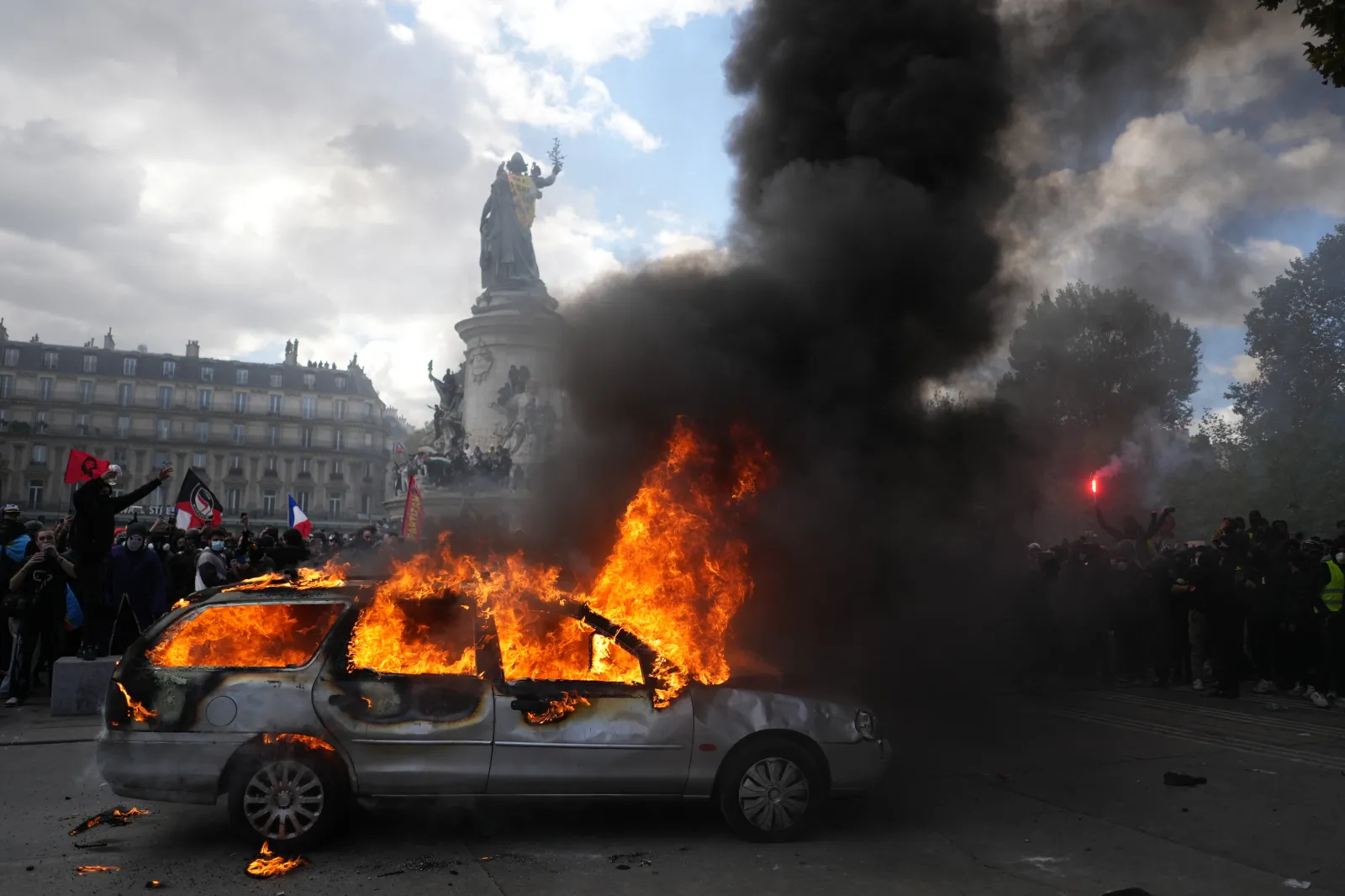
On Saturday, at least 550,000 people took to the streets across France, according to Interior Minister Laurent Nuñez, who said 1,800 people were arrested and more than 500 police officers and firefighters injured.
Shops were looted while cars and trash cans were set on fire in several towns. A town hall built in 1883 in Limoges, about 400 kilometers south of Paris, was largely destroyed after being engulfed by flames.
Vice President JD Vance shared footage of the 143-year-old fire and accused “Western liberals” of “importing the Third World” in an article published Sunday on X, telling Americans it was “the future Congressional Democrats want for your country.” Neither Trump nor Vance has provided evidence of a link between the protests and immigration.
On Saturday, a large part of the crowd had responded to calls on social networks to revive the “yellow vest” movement, born in 2018 against social injustice, and many demonstrators could be seen wearing the symbolic fluorescent tops.
Nuñez is one of several French officials who have accused “extremely violent, radical far-left groups” of stoking violence in the protests, many of which began peacefully.
Albania
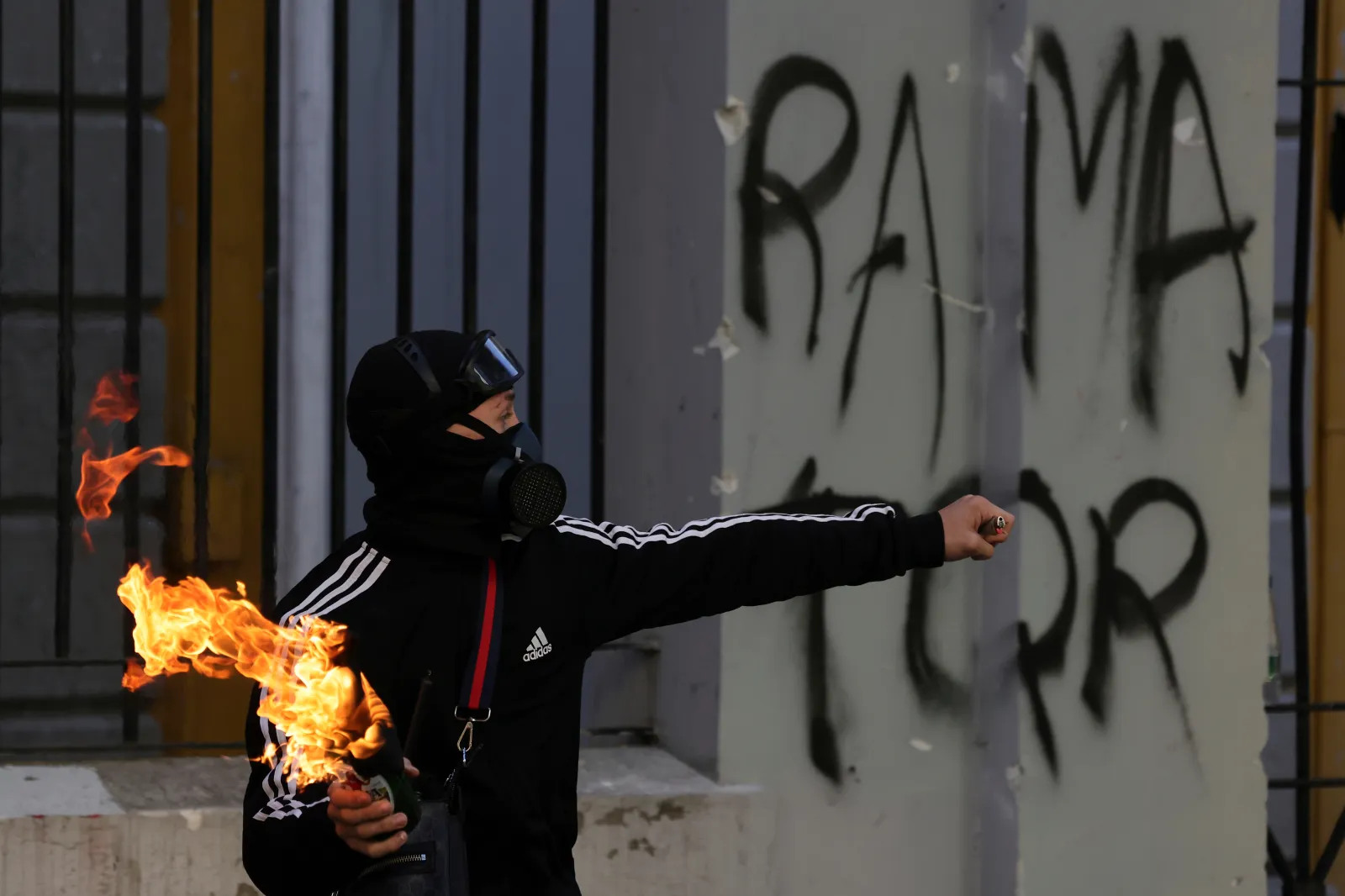
Protests in Albania have intensified after high school and university students joined a broader anti-government movement calling for the resignation of socialist Prime Minister Edi Rama.
This week follows months of rallies in Tirana organized by the so-called “Flamingo” movement. The movement was launched in opposition to a major luxury tourism development project on Albania’s southern coast, linked to an investment company founded by Jared Kushner, Trump’s son-in-law.
On Saturday, protesters threw stones, Molotov cocktails, flares and fireworks at police, who responded with tear gas, water cannons and batons. Police said 167 people were arrested and 132 officers injured during the unrest.
Rama, who has been in office since 2013 and is in his fourth term, has ruled out resigning. He accused his conservative opponents of inciting the clashes.
Italy
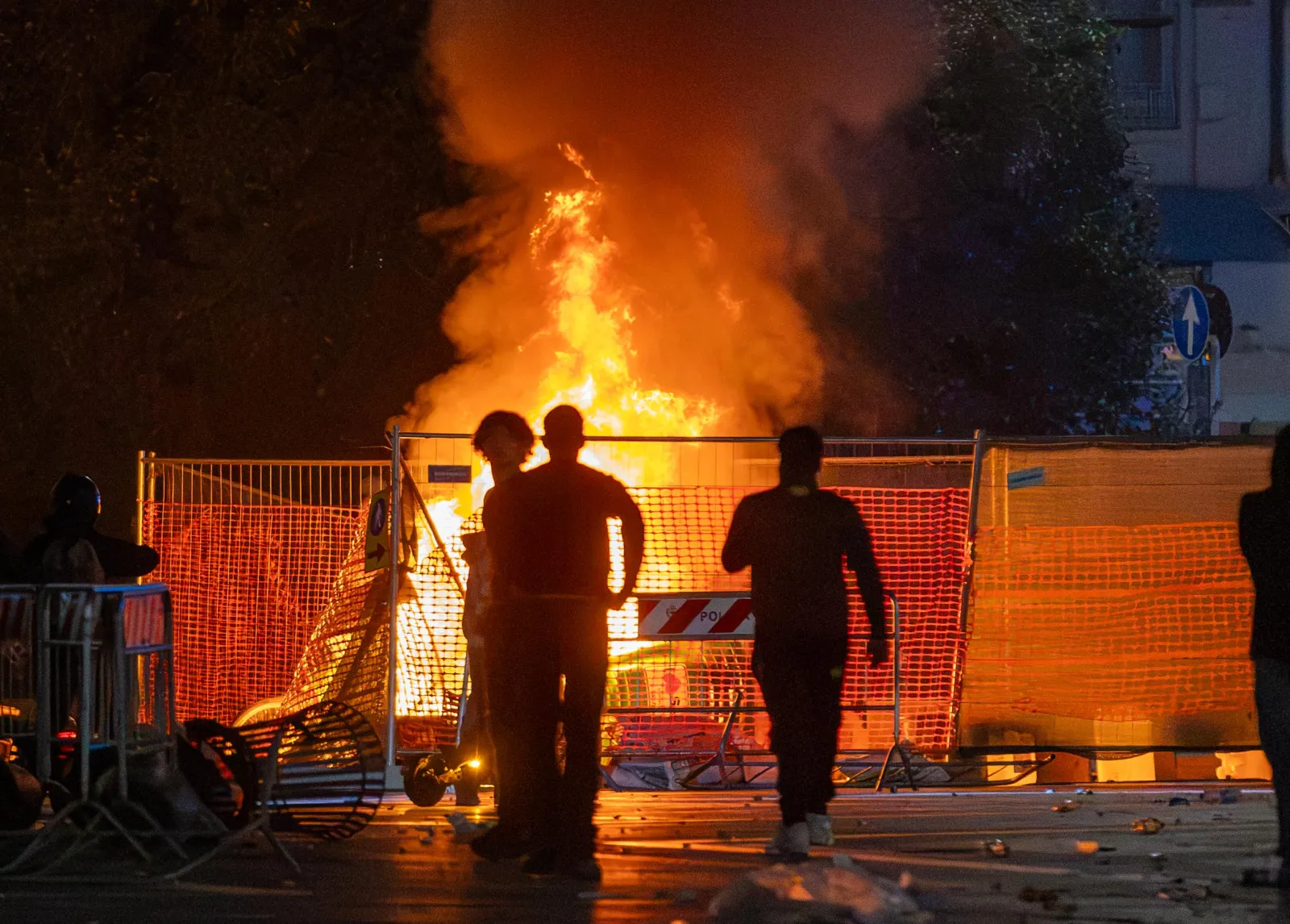
Protesters clashed with police, looted shops and burned properties in Milan on Saturday, as part of a demonstration against wars and the rising cost of living.
Although it began peacefully, violence eventually erupted, with masked protesters throwing rocks, paving stones and other objects at riot police and setting fire to barricades made of bar tables. The police used water cannons and tear gas.
At least two police officers were injured and around fifty demonstrators, including many minors, were arrested, the LaPresse news agency reported.
Milan’s center-left mayor, Giuseppe Sala, said “the reasons for the protests were understandable. The violence against law enforcement and the serious damage caused to the city are not justifiable.”
Portugal
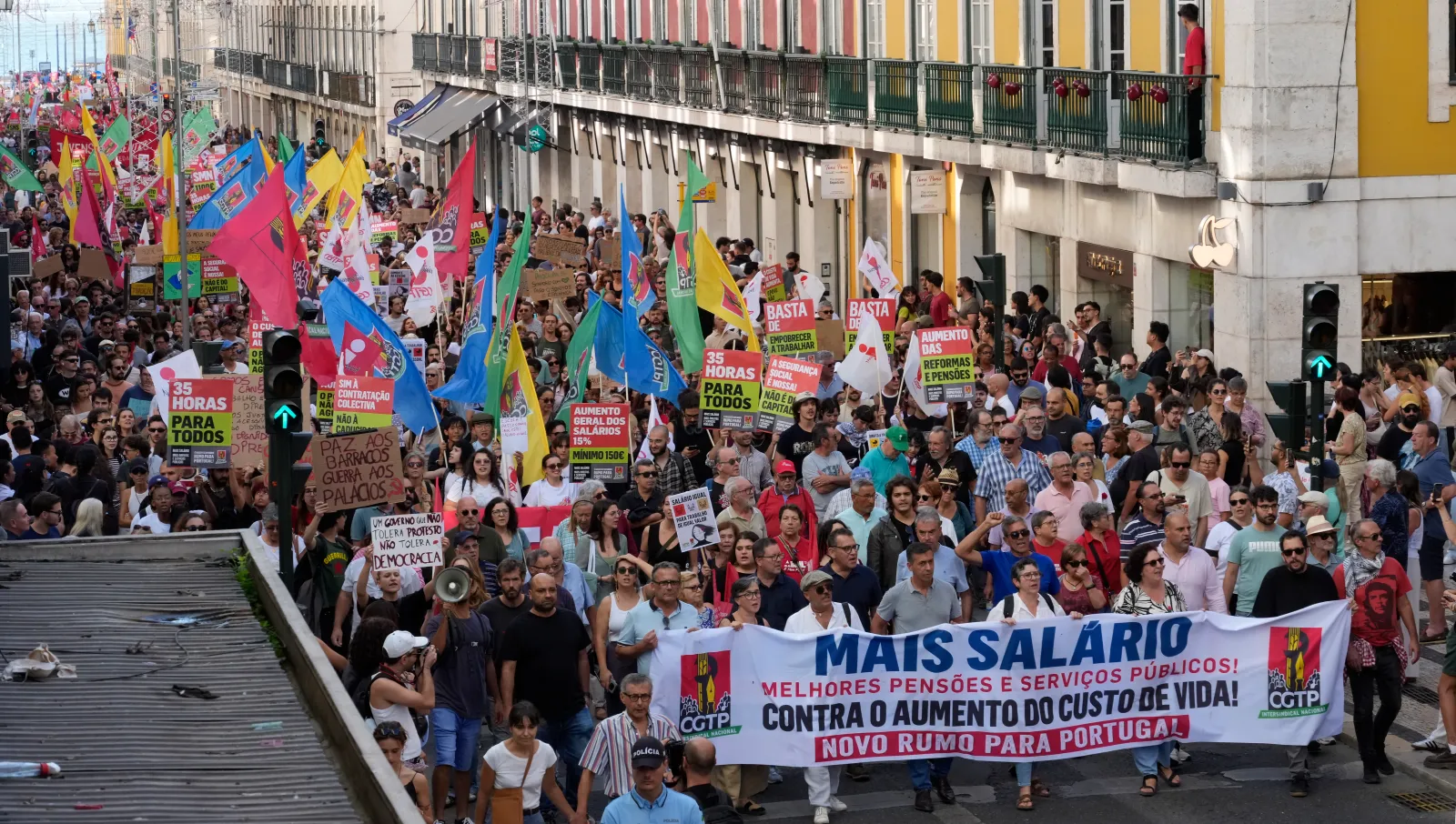
Tens of thousands of people marched in Lisbon on Saturday, against the cost of living and the current housing crisis, according to figures from the largest Portuguese union, the CGTP.
Housing activists in the northern city of Porto recently set up a tent camp that was eventually emptied by police.
Like its European neighbors, Portugal has been hit by rising food and fuel prices amid rising inflation amid escalating tensions in the Middle East, the war between Russia and Ukraine and their impact on global markets.
But Portugal also faces one of the worst housing affordability crises in Europe: property prices have risen 130% since 2013, according to a June report from the European Commission’s Joint Research Centre, which ranks Portugal as “one of the least affordable countries” in the EU. At the same time, new lease rents increased by 10.2 percent compared to the previous year, Portugal’s national statistics institute reported.
Protesters in Lisbon spoke out on Saturday against an upcoming increase in their rent that they cannot afford. Teacher Pedro Penilo told Reuters the country’s leaders were “disconnected from reality.”
While the Portuguese government has recognized “the housing problem as a very serious problem”, as Parliamentary Affairs Minister Carlos Abreu Amorim told Parliament on Friday, it has warned citizens against committing the same disorders seen in other European countries. Prime Minister Luís Montenegro rejected “the importation into Portugal of climates of instability and protest which have no basis in Portuguese society”.
Spain
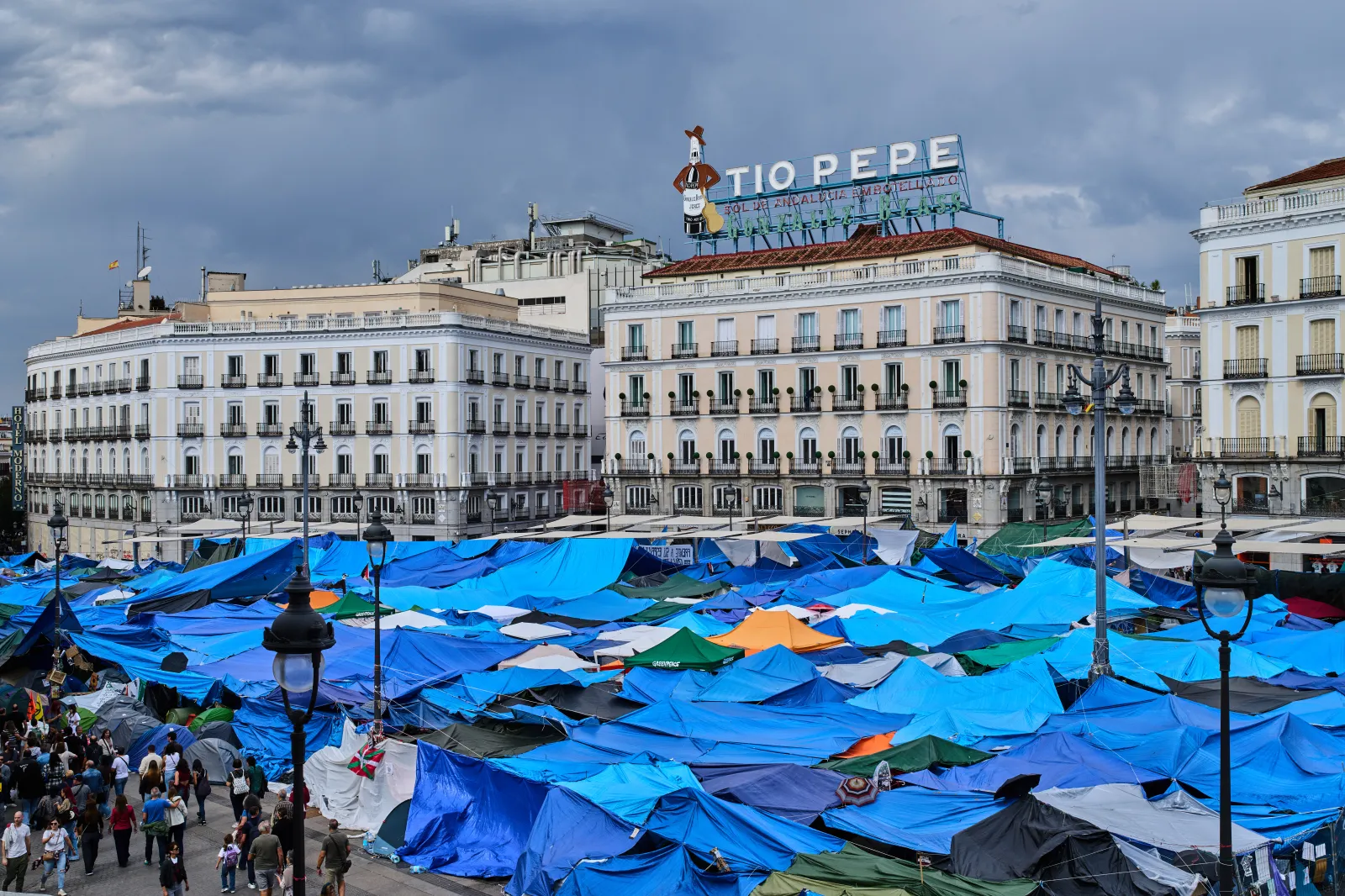
This week is the third time that hundreds of people have occupied Madrid’s Puerta del Sol, a famous square in the city’s center, to protest housing costs, sparked by the eviction and death of María del Carmen Abascal.
The 87-year-old, who used a wheelchair, was carried on a stretcher from her Madrid home of seven decades after police cordoned off the street and evicted protesters. She was taken to hospital due to her failing health and died later that month. The cause of his death has not yet been revealed.
The Madrid regional government demanded the removal of hundreds of campers and took legal action.
On Friday, the Sol metro station had to be closed for cleaning due to the unsanitary conditions of the encampment, Spanish news agency EFE reported.
Greece
In Greece, refinery workers gathered outside the facilities of energy and oil refining company Motor Oil on Wednesday to discuss workplace safety.
The protest took place after two employees were killed in an explosion at the refinery during maintenance operations, according to Greek Reporter media. Workers have called for an investigation into the deaths and better enforcement of safety rules.
Motor Oil announced the deaths with “deep sadness,” it said in a statement, saying they died after being “seriously injured” in an “accident…despite the best efforts of doctors.”
“The management and all employees of the company express our sincere condolences and our commitment to stand by the victim’s family,” the statement said, adding that the company is cooperating with authorities investigating the incident.
Newsweek reporters and editors used Martyn, our AI assistant, to produce this story. Learn more about Martyn here. Contact Newsweek editors for this story: Anthony Murray and Ben Kelly.
Gn world

