
The world’s helium supply is facing a shortage seven months after Iranian strikes on a Qatari gas facility and the effective closure of the Strait of Hormuz. Many industries are feeling the consequences, with no end to the war in sight.
While most people associate helium with party balloons and squeaky voices, this limited and irreplaceable natural resource is essential to modern life. Without helium, there are no smartphones, cars, MRI machines, rocket launches or missiles.
Helium is also difficult to extract and transport, according to Cliff Cain, president of a helium exploration company. It must be maintained at 452 degrees below zero Fahrenheit during transportation. Once released into the atmosphere, helium is gone: it has disappeared. Cain said he had spent decades warning that the complex supply chain was vulnerable to disruption, with helium supplies concentrated in too few places: Algeria, Poland, Russia, Qatar and the United States, with the bulk coming from the latter two countries.
“It only takes a few of them to fall and the whole supply chain collapses,” he said.
What does the war in Iran have to do with helium?
The closure of the Strait of Hormuz in February blocked a third of the world’s helium supply in the Persian Gulf. SO, Ras Laffanthe facility that produces all that helium in Qatar, was hit by Iranian strikes in March, further shaking supply chains.
Ras Laffan is the world’s largest facility for natural gas and its byproduct, helium. After the strikes, the Qataris said it would take at least three years to return the facility to full operation. Ras Laffan did not respond to requests for comment on the extent of the damage to the helium infrastructure in particular.
Qatar is the world’s second largest producer of commercial helium after the United States. Most of America’s helium comes from a single facility in Wyoming, according to the Wyoming Energy Authority, and U.S. helium exports have increased 70 percent since the start of the war, according to U.S. Census Bureau export data..
60 minutes 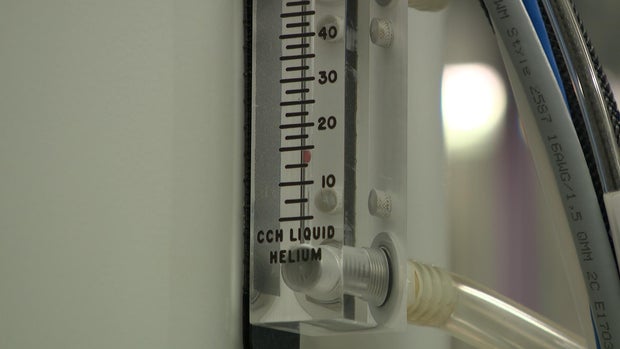
But the United States cannot make up for the shortage indefinitely, and the longer the war with Iran continues, the tighter the global helium supply chain becomes. Spot helium prices have tripled since the start of the war, according to Rich Brooke, a former executive at Air Liquide, one of the six major international helium suppliers.
Companies in South Korea, Taiwan and Singapore are now turning to the United States for helium, and it is unclear how long the United States will be able to meet that demand. It depends on how long the war lasts. For now, some helium suppliers are drawing on their reserves, stored in deep underground salt caverns.
“If you can tell me what’s going to happen in the Strait of Hormuz three months from now, I can tell you exactly what’s going to happen in the helium business. Unfortunately, you can’t, and so I can’t,” Brooke said.
Helium: more than just a product for balloons
As the war continues, the Pentagon has asked some defense contractors to quadruple their production capacities for certain weapons. This worries Cliff Cain, because helium is necessary for weapons development, he says.
“You can’t do modern warfare without helium. And that’s just a fact,” Cain said. “You’ve heard about missiles, hypersonics. Without helium, you can’t make fiber optics. You can’t make munitions. You can’t make the electronics that go into these things. And so, if you don’t have helium, your opportunity to wage war becomes even more difficult.”
60 minutes 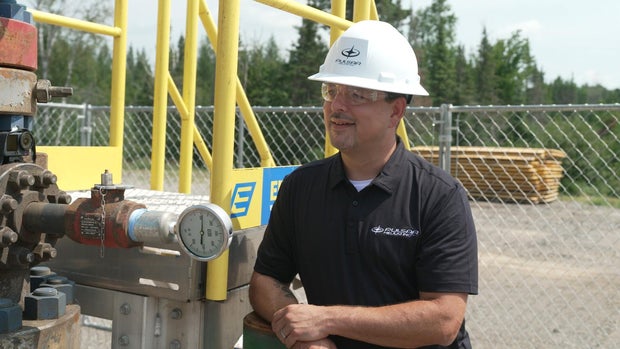
This non-renewable natural resource is also used in scientific research, notably in the laboratory of Joe Sachleben at the University of Chicago. The lab uses helium in nuclear magnetic resonance devices to develop breast cancer drugs, immunotherapies and treatments for Alzheimer’s disease.
Although helium is naturally a gas, it becomes a liquid if it gets cold enough – the coldest on Earth. Every two months, Sachleben pours 100 liters (about 26 gallons) of helium onto magnets in the lab to stabilize them at 452 degrees below zero.
“Once it reaches a critical level, we need to put helium back into the magnet to keep it cold,” he explained. “If that doesn’t happen, we break the magnet”
There is no substitute, no alternative.
Helium is also essential for many electronic devices. A fifth of the world’s helium is consumed by the semiconductor industry, according to the Compressed Gas Association. Polar Semiconductors, in Minneapolis, makes chips for automotive engine systems, data center servers and the U.S. military.
About 40 to 50 percent of the machines in a manufacturing plant, the ultra-clean area where semiconductors are made, use helium in some way, according to Surya Iyer, Polar’s president and chief operating officer. Hundreds of steps in the process involve helium. No helium? Everything stops.
The helium crisis comes at a time when Polar plans to double its production capacity to around 140 million chips per month.
“AI data centers are increasing the demand for semiconductors. Electrification is leading to increasing demand for semiconductors,” Iyer said. “And that means the demand for helium is going to increase for a long time.”
What do we do about limited helium supplies?
Polar is able to cover its helium reserves by relying on three suppliers. The company nevertheless felt the effects of the shortage. One of his suppliers put them on allocation – essentially a rationing program.
Sachleben’s supplier also hit his laboratory with its rationing plan.
“They basically said, ‘Well, we’ll give you 50 percent of what you used last year.’ This doesn’t help us,” Sachleben said. “And so what we have to do is decide which machines are we going to sacrifice and which one are we going to try to keep.”
60 minutes 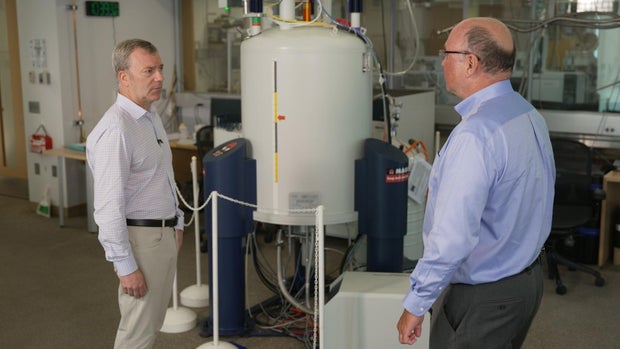
His laboratory has found a backup supplier, but this supplier is unable to guarantee helium deliveries. Then last month he received a message telling him his supplier was about to run out. Sachleben said he is not hopeful he will be able to get the helium he needs as the war in Iran continues.
“I don’t see an end to the current conflict,” he said. “And even if we manage to end the conflict, it will take some time for supply lines to resume.”
Gn bussni

