
Luiz Inacio Lula da Silva tries his luck again. Nearly four decades after his first candidacy for a presidential election in Brazil, the former metalworker is participating in his seventh presidential election on Sunday, October 4, with the hope of obtaining a fourth term at the head of Latin America’s largest economy.
Lula had, however, assured that his career as president of Brazil would end at the end of his third term. “If I am elected, I will only be president for one mandate,” he promised a few days before the second round against Jair Bolsonaro, in 2022. The reason given? The importance of “seeing new leaders emerge”.
Four years later, however, it is he who is again in the running, even if it means having to reassure himself about his advanced age. “I’m in great shape,” he said when formalizing his candidacy in August, praising the merits of his sports routine. But he reiterates his promise: this time, it is “for good”, if the Brazilians elect him again, “it will be (his) last mandate”.
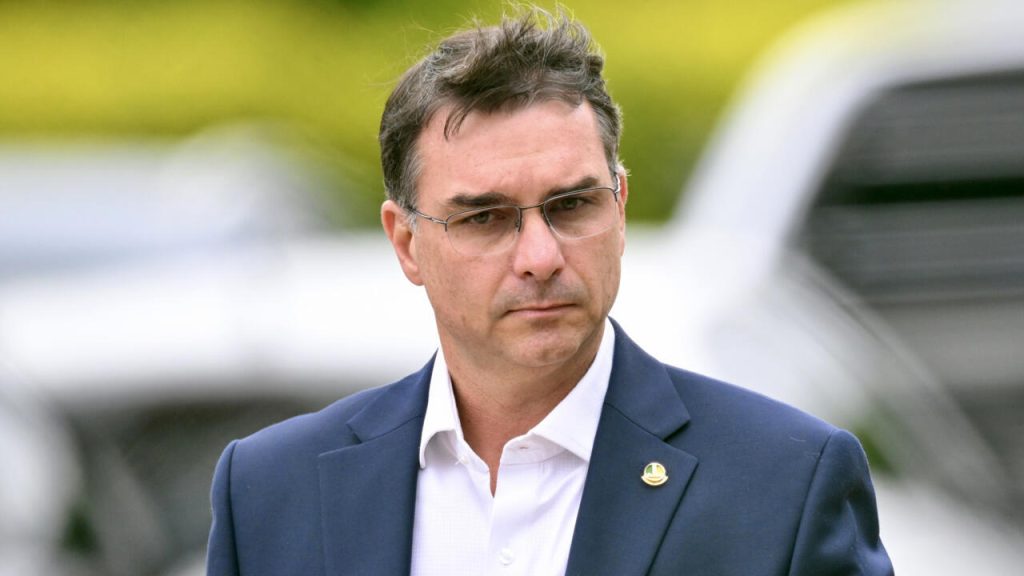
Three days before the first round, the man who will celebrate his 81st birthday on October 27 remains the eternal leader of the Brazilian left and the only one to have a chance against Flavio Bolsonaro, eldest son of Jair, the ex-president serving a 27-year prison sentence for attempted coup d’état. The polls currently show them neck and neck, in an ultra-polarized election where the other candidates are confined to a role of foil.
Also readBrazil: Flavio Bolsonaro, in the name of the father, the sons and the holy ideology
The factory as a school
To run for this fourth term, Lula relied on a formula that has already proven its worth: displaying its proximity to popular circles.
Coming from a poor family in Pernambuco, Lula spent his childhood working as a shoeshine boy and courier in Sao Paulo, before being trained as a turner. It was thus in the factory, in the ranks of the workers’ unions, that his political trajectory was forged. He also made himself known by becoming one of the faces of the major strikes in the metallurgical sector of the State of Sao Paulo during the last years of the military dictatorship (1964-1985).
In Brazil, “you have to understand politics well beyond the partisan framework. When we talk about social policy, we see that Lula understands very well the daily life and the difficulties of ordinary populations”, comments Marcia Dias, director of the school of political sciences at the Federal University of the State of Rio de Janeiro (Unirio). “Through his story as a migrant from the Northeast, the son of a single mother, who tries to survive in a big city like Sao Paulo, he symbolizes for many the Brazilian soul,” she adds.
Also readElections in Brazil: residents of Rio’s favelas, a highly sought-after electorate
It is therefore no coincidence that, almost half a century later, Lula chose to launch his 2026 presidential campaign in this state of Sao Paolo, at the Vila Euclides stadium in Sao Bernardo do Campo, scene of the massive workers’ assemblies of the late 1970s. And in his first campaign speech, he claimed his “popular origin”, paying tribute to his mother and talking at length about his years as a trade unionist.
A winning recipe in 2002
In front of the crowd who came to support him, Lula alluded to his treatment for skin cancer. “I’m going to defy my health and take off my hat for you,” he said. He also reviewed the successes of his former governments.
Lula can also boast of record longevity: few Latin American political leaders have remained at the center of the public stage for so long. His political career officially began in 1980, when he participated in the founding of the Workers’ Party (PT). His first candidacies for the presidential election in 1989, 1994 and 1998 ended in defeats. And for good reason, the former trade unionist arouses the distrust of part of the middle class and especially the employers.
He understands that to achieve power, he will have to broaden his political alliances and change his image. A shift which will give birth in the early 2000s to “Lulinha peace and love”. Suddenly, the man who was perceived as a combative and radical trade union leader appears in elegant suits, calls for “national reconciliation” and begins a seduction operation with the entrepreneurial sector.
The recipe works. In 2002, he won the presidency with more than 60% of the votes in the second round and became the first worker to enter the Planalto palace. He was re-elected four years later.
His first two mandates coincided with a period of strong economic growth and were marked by social measures that transformed the lives of millions of people. Among them, “Bolsa Familia”, aid intended for the most modest families, or even the increase in the minimum wage. Enough to propel Lula to exceptional levels of popularity among the working classes.
Corruption scandals
However, these years were also marked by several scandals which tarnished the president’s image, to the point of driving him out of political life. Among them, that of an alleged vote-buying network in Parliament orchestrated by the left party between 2002 and 2005, the largest scandal of embezzlement of public funds ever brought to light in Brazil.
In 2017, Lula was convicted of passive corruption and money laundering. He spent 580 days in prison and was declared ineligible for the 2018 election. This decision was finally overturned in 2021 by the Federal Supreme Court, which judged that the court was not competent, then criticized the judge at the time, Sergio Moro, for his bias in certain procedures.
After twelve years in the shadow of justice, Lula is running for president in 2022. He narrowly beats Jair Bolsonaro and returns to the Planalto palace.
Despite the scandals, the left-wing leader has managed to preserve his influence over the population, analyzes Marcia Dias. “At least 30% of Lula’s voters never believed the accusations of corruption brought against him and never stopped supporting him. And when his conviction was overturned, some of those who had been disappointed started to believe in him again,” she explains.
A mixed economic assessment
The Lula who returned to power in 2022, however, found a country very different from the one he governed between 2003 and 2010. He arrives at the end of this third term with a rather solid record. The unemployment rate is at its historic low, inflation has slowed sharply, the poverty rate has fallen and the government voted at the end of May to reduce weekly working hours.
Also readParaguay, tax and political haven for the Brazilian far right
But, at the same time, growth has slowed, public debt has increased and the family debt rate remains high. In other words, for a large part of Brazilians, the improvement in certain macroeconomic indicators is not felt in the wallet.
This is the main reason why the president running for re-election is far from the popularity levels with which he finished his second term. According to the latest Datafolha poll, published on September 24, 34% of Brazilians judge its management to be good or excellent, compared to 40% who judge it to be bad or very bad. More broadly, 47% say they “approve” Lula and 50% “disapprove” him.
Security and serial controversies
The questions of the cost of living and the balance of public accounts weighed on the octogenarian’s campaign. Another downside: the difficult question of insecurity which persists, even if Lula tried to put in place a fight plan in the spring.
However, the substantive debates on his record have been overshadowed in recent months by various controversies and scandals. Latest example last weekend: Flavio Bolsonaro (who is evangelical) had to swear that he did not wish to withdraw his status as “patron saint of Brazil” from Our Lady of Aparecida. In the process, Lula and his companion took the opportunity to display themselves with representations of this black Virgin Mary, symbol of Brazilian mixed race.
Also readDistinguishing fact from fiction: the use of AI in Brazilian elections
The fact remains that no alternative figure to Lula has emerged in recent years. In 46 years, the PT has had governors, ministers, mayors and other presidential candidates but it has not been able to find someone of Lula’s caliber. In 2018, Fernando Haddad replaced him and he lost the election to Bolsonaro. In 2022 and 2026, the party once again called on its founder. He did not find a replacement, while Lula said in 2022 he wanted to take advantage of his mandate to prepare new leaders.
“Lula’s leadership is very important for the party too. He is the founder of a PT which represents the social movements of the 1970s, which is the largest party in Brazil, but also in Latin America,” recalls Marcia Dias.
“The last time Lula was able to pass the baton was with Dilma Rousseff,” adds the specialist, referring to the woman who presided over Brazil between 2011 and 2016. “Certainly, new leaders are probably needed at the moment. But to date, no one is better equipped to face the threat of a return of the radical neoliberalism of the Bolsonaros.”
The shadow of Donald Trump
Not to mention another major parameter: the influence of Donald Trump which is pushing the far right throughout South America.
See alsoPresidential election in Brazil: an election under influence?
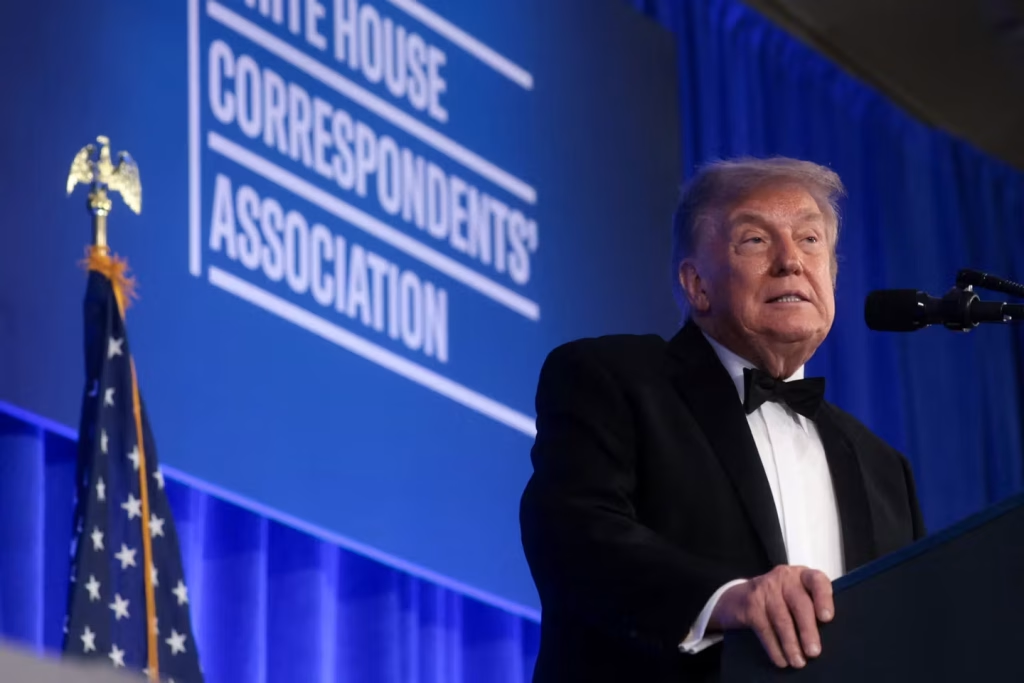
If the President of the United States did not publicly support Flavio Bolsonaro, he did not hesitate to hit Brazil in July with high customs duties that Brasilia described as “illegal”. A burning issue for the Brazilian president as the presidential election approaches. Representatives of Brazil and the United States held a meeting on Wednesday in Brasilia on the commercial relationship between the two countries, a “constructive” discussion according to the Brazilian authorities.
If he needs to maintain ties with Washington, Lula does everything to present himself as a bulwark against North American imperialism. At the UN, he insisted last week that his country would never be “no one’s backyard”. In response, he displays his desire to “deepen” Brazil’s ties with China and other Brics members, while defending the use of strategic resources such as rare earths to stimulate the country’s industrial development.
This article was adapted from Spanish by Cyrielle Cabot. The original can be found here.