
Ryan Goepel knew he didn’t always treat his gout as well as he should. The inflammatory disease can be triggered by diet and lifestyle factors, and flare-ups can cause pain and discomfort.
When the Florida father of three’s knee started hurting during a September 2024 trip, Goepel figured it was just one of those flare-ups. But as the pain persisted, he went to his doctor. She gave him medicine and took his blood for testing. Two days later, she called with alarming results.
“She said, ‘Stop what you’re doing and go straight to the hospital.’ And I’m like, “What do you mean?” “, remembers Goepel. “She says, ‘Go away. You don’t have an immune system. I don’t know what’s wrong. Go ahead.'”
Goepel rushed to a nearby sports medicine hospital, where he underwent another round of blood tests. He was alarmed when an oncologist came to discuss the results.
“I’m like, ‘Why are you here? My knee hurts,'” Goepel said. “And she said to me, ‘Well, actually, you have leukemia.'”
His condition was critical and his organs were on the verge of shutting down. Doctors told Goepel’s girlfriend that they should consider palliative care for the then 49-year-old man.
“It was so bad that they didn’t tell the patient, they told the family,” Goepel said. “They basically told him, ‘You should make arrangements. He’s not going to leave alive.'”
Ryan Goepel 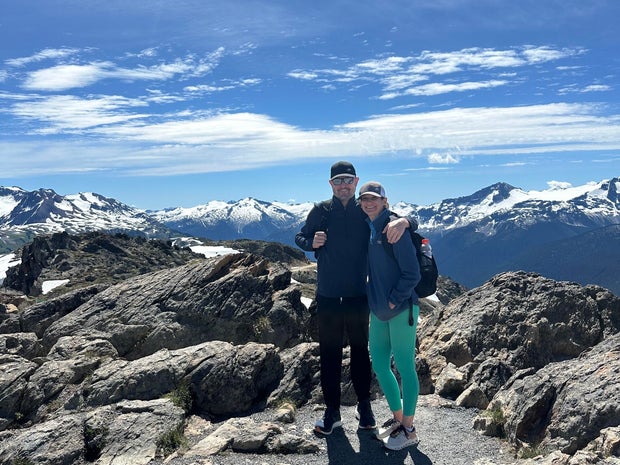
“Not done yet”
Goepel’s girlfriend refused to give up hope. She and Goepel sought a second opinion. Eventually, Goepel was transferred to the Sylvester Comprehensive Cancer Center in Miami. There, a biopsy confirmed that he had acute myeloid leukemia, or AML, a type of blood cancer that, according to the Cleveland Clinic, has a five-year survival rate of about 30 percent.
The genetic makeup of Goepel’s disease complicated matters. His AML posed an unwanted risk, said Dr. Justin Watts, a hematologist-oncologist who treated Goepel and chief of the cancer center’s leukemia section. That meant the chemotherapy most often given to patients like Goepel probably wouldn’t treat his disease. This could weaken his body without dealing with the cancer, which could kill him within weeks. Even if the chemotherapy had initially worked, Goepel would have been at higher risk of relapse and future illness.
There was one bright spot in the sea of bad news: There was still an opening in a clinical trial overseen by Watts. The trial aimed to determine whether two drugs typically given to older AML patients would be effective for younger patients. Because Goepel’s AML had a genetic makeup similar to that of a 70- or 80-year-old, he seemed like a good candidate, Watts said.
Ryan Goepel 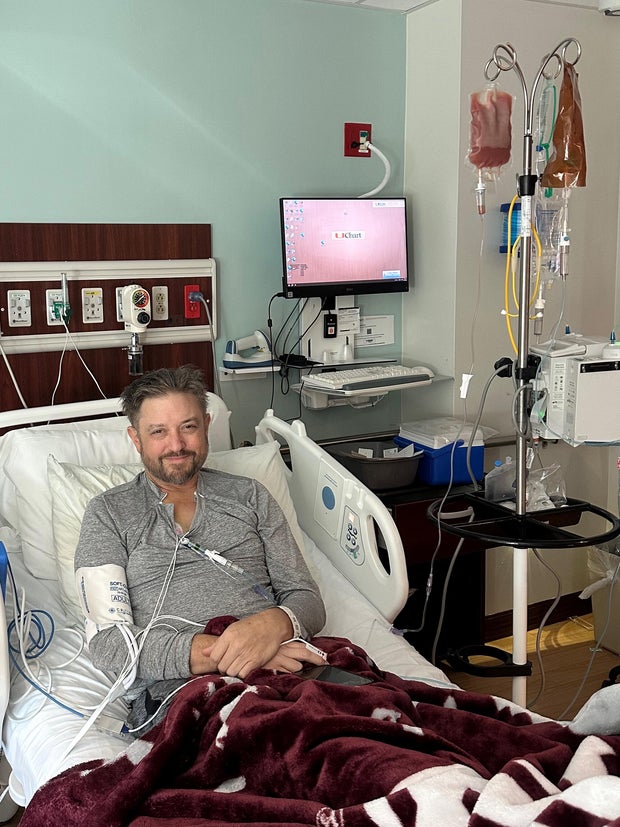
Goepel said signing up for the trial was a no-brainer.
“My girlfriend gave me a journal the first day, like, ‘Maybe it would be good for you to write,’ and I didn’t know what to write, and I just wrote, ‘I’m not done yet,'” Goepel said. “I kind of went to the doctors and said, ‘OK, what should I do? I have to get up, jump, hop on one foot, take this pill, take whatever. Just, what should I do?”
A clinical trial with “crazy” results
A day after participating in the trial, Goepel began his treatment. He received two medications: a pill taken daily for 28 days and an infusion given daily for the first week of that period. His cancer quickly began to respond. A little more than two weeks later, he was in remission, a development Goepel called “crazy.”
He wasn’t the only trial participant to see such results. According to data published in the academic journal Haematologica in September, 25 of 36 patients saw their cancer shrink or disappear during 28 days of treatment, and 19 of them went into complete remission. Goepel was one of those patients, going into remission the same month he experienced the pain that prompted him to see his doctor.
Only about 44% of adverse-risk AML patients see their cancer shrink or disappear with standard treatment. Patients enrolled in the trial also spent less time in the hospital, needed fewer blood transfusions and experienced fewer infectious complications than those who received standard treatment, according to trial data.
The trial results, along with data from another Phase 2 study examining a similar treatment regimen for AML patients who are not eligible for standard chemotherapy, “generate questions about whether we can change our decades-old standard approach to treating these patients,” said Dr. Mihir A. Shukla, a hematologist at NYU Langone’s Perlmutter Cancer Center who was not involved in Watts’ study or Goepel’s care.
The results “are interesting and suggest that certain populations could benefit” from such treatment, Shukla said.
Life after leukemia
After completing the trial program, Goepel still needed a bone marrow transplant. Such procedures can essentially rebuild the immune system and be curative for someone with leukemia, Watts said. More than half of the trial’s patients underwent a transplant, the data showed. Goepel’s two sisters were perfect partners. He underwent the transplant in November 2024.
“All these things came together, and it happened so fast, and then it was just kind of a fluke,” Goepel said. “Literally: right place, right time, right people. And it really worked.”
After the transplant, Goepel spent three weeks in the hospital as his immune system began to rebuild itself. He then spent another 100 days isolated at home. He had some post-transplant complications, including a bout of rotavirus and a case of pneumonia. But both illnesses have been treated and tests show the graft is working properly.
Meanwhile, Goepel has been cancer-free for two years. It’s an outcome that seemed unlikely when he was first diagnosed, Watts said.
“I’m not sure, but he probably wouldn’t be alive today if we had gone the other way,” Watts said, referring to standard treatment.
Ryan Goepel 
Further research investigating treatment options for adverse-risk AML patients is underway, Watts said. Goepel will also meet regularly with her care team to ensure the transplant continues to be successful and her cancer remains in remission.
Today, Goepel is finding a new rhythm. He and his girlfriend married in November 2025, on the one-year anniversary of his remission. He starts traveling again. It also looks at the past two years and determines what life beyond cancer is like.
“It’s not so much normal, because you kind of lose the sense of what normal is, but you just don’t live in fear of it coming back,” Goepel said. “Because if my throat hurts, (I think) ‘Oh shit, is it cancer?’ You jump into it. But no, it’s just a sore throat. Relax and enjoy life again. »
Gn Health

