

Want to bookmark your favorite articles and stories to read or view later? Start your independent membership today.
Join us today
Already a member? Log in
Lung cancer rates have been declining in the United States for decades, but the disease remains the leading cause of cancer deaths in the country.
Some 229,410 cases and 124,990 deaths are expected this year, according to the American Cancer Society.
Although the falling case rate is linked to a historic decline in smoking, about 20 percent of cases involve people who have never smoked, according to the Lung Cancer Research Foundation.
One such case is that of American Pope Leo XIV, a 71-year-old man who never smoked and who recently underwent successful surgery for early-stage lung cancer. He was diagnosed with adenocarcinoma, the most common form of lung cancer, but will not need any further treatment, according to the Vatican.
There are many reasons why people who have never smoked may develop lung cancer, often related to their environment or family history.

Air pollution
It has long been known that outdoor air pollution contributes to lung cancer. This pollution comes from coal-fired power plants, vehicle exhaust, smoke from wildfires and other industrial sources, according to the American Lung Association.
“Particle pollution increases the risk of premature death, heart disease, and asthma attacks, and it can also interfere with the growth and function of the lungs,” the group explains.
However, there is also concern about indoor air pollution.
Radon gas is emitted by uranium in the soil and enters homes through cracks in doors and walls. Prolonged inhalation of odorless and tasteless products can cause lung cancer.
The only way to detect radon in the home is to use an air test or digital detector, the association notes.
People can stay safe by wearing a properly fitted respirator, blocking cracks in windows and doors, and avoiding going outside on days when pollution reaches dangerous levels.
Short-term testing – with test kits sent to a lab – can take up to a week. Long-term tests are more accurate but take at least three months.
Asbestos
Asbestos is another household threat that contributes to lung cancer. This mineral fiber found in rock and soil has been used in building materials for insulation and fireproofing. It is also used in heat-resistant fabrics, roofing shingles, floor tiles and automobile parts, according to the U.S. Environmental Protection Agency.
Inhaling asbestos fibers released into the air during home maintenance or renovation can cause lung cancer, including mesothelioma, a rare form of cancer found in the lining of the lungs.
Asbestos-containing materials that are not damaged or disturbed are unlikely to pose a health risk and should be left alone when in good condition.
But damaged asbestos is dangerous and people should not stay in homes where the asbestos appears damaged.
People can protect themselves from exposure by identifying areas where asbestos may be present and hiring a professional to inspect and remove any harmful materials.
Secondhand smoke
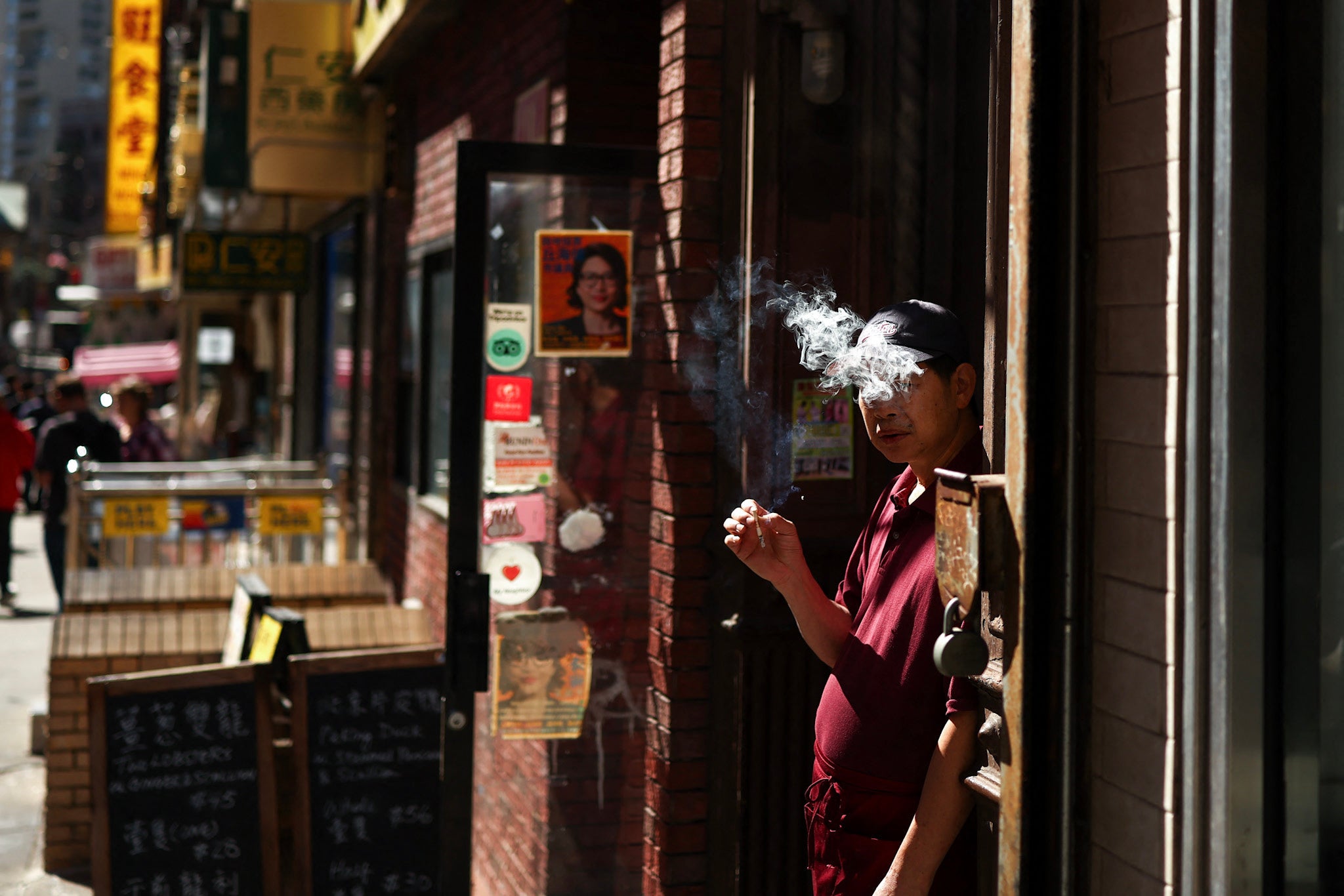
People may not be smokers themselves, and smoking rates in the United States have fallen to record lows, but millions of Americans still smoke cigarettes.
And even brief exposure to second-hand smoke leaves people vulnerable to the same cancer-causing chemicals in cigarettes, the American Cancer Society warns.
Secondhand smoke is linked to more than 7,300 lung cancer deaths each year. Adults who don’t smoke but are exposed to it increase their risk of lung cancer by 20 to 30 percent, according to the Centers for Disease Control and Prevention.
Avoiding second-hand smoke when possible is the best way to stay safe and reduce risks. Unfortunately, it is more difficult for an age group.
“Young children are most affected by second-hand smoke and least able to avoid it,” the company notes.
Genetic history
While only 5-10% of lung cancer cases in non-smokers are hereditary, carriers of a certain gene may face major lung cancer risks.
People with a mutation in the EGFR gene — a gene variant known as EGFR T790M — are about 25 times more likely to develop lung cancer as non-carriers, according to researchers at the Dana Farber Cancer Institute and Harvard Medical School.
“To my knowledge, this is one of the strongest cancer risk-increasing mutations ever discovered,” Alexander Gusev, HMS associate professor of medicine at Dana-Farber, said in a September statement.
There is nothing anyone can do to reduce the risk associated with this gene. But people can reduce their overall cancer risk by adopting a healthy lifestyle, such as staying active and eating well.
Ultra-processed foods
A growing body of research has linked the consumption of ultra-processed foods to the risk of lung cancer, as well as other cancers.
A previous study of more than 101,000 adults found that people who ate more ultra-processed foods had a 41% higher risk of developing lung cancer, even after accounting for smoking, overall diet, fitness and other known risk factors.
“Although the study does not prove that ultra-processed foods cause lung cancer, its results highlight diet as a potentially modifiable risk factor at the population level,” says the Nevada Cancer Coalition.
Experts advise people to generally avoid these foods for better overall health.
Eat a diet rich in fruits, vegetables, and healthy fats and proteins, like the doctor-backed Mediterranean diet.
Gn Health

