Starting mid-December 2026, messages you post on large, public Discord servers may appear when someone searches on Google. If you are in one of the regions approximately 63,000 discoverable servers that qualify, your words are about to reach an audience far beyond the community where you typed them, much like how apps have been found to secretly track users without their knowledge.
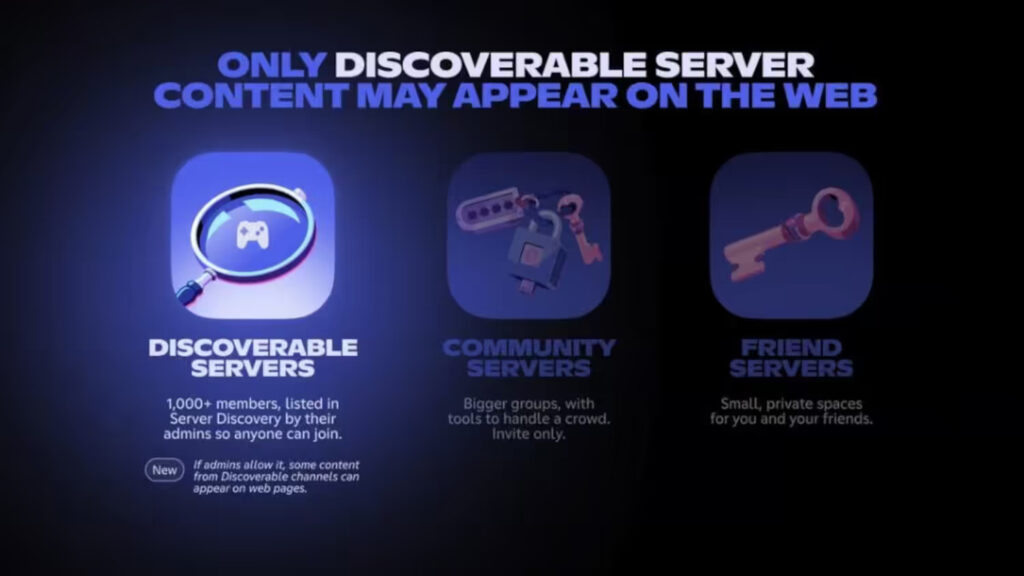
What really changes
The Discord rollout is happening in two phases, and the timing is important for anyone who wants to take action before indexing begins.
On November 16, 2026Discord begins creating server web pages for each discoverable server that doesn’t already have one. These pages describe the community and may include automated summaries of discussions from public channels.
Post indexing follows mid-December 2026deployed gradually, so the first searchable articles may take several weeks to appear in the results. Messages posted before mid-December will not be included.
Usernames and avatars will not appear next to messages displayed on the server’s web pages, according to Discord’s blog.
The change only applies to discoverable servers, which Dexerto reports require at least 1,000 members as well as Discord activity and security requirements. Private servers, direct messages and group DMs are completely excluded.
This would affect more than 63,000 servers, according to Dexerto.
What you can actually do about it
Users and server administrators have controls available now, before deployment begins in mid-December. Knowing how to stay safe online means taking advantage of these controls before deployment begins.
Users have a single toggle to work with. Under User Settings, then Data & Privacy, the Channel Posts The setting controls whether your messages appear in web results on each discoverable server you participate in.
Administrators have more granular control. Through server settings and then web presence, they can select which individual public channels participate or turn off web exposure for the entire server.
Discord says eligible channels will be tagged so you can identify them before posting. Disabling the setting stops future indexing, but messages posted while it was enabled remain visible unless deleted directly from Discord, according to the Discord blog.
Regional defaults apparently vary. According to Dexerto, the feature requires registration in the EU, UK, Canada, Brazil, Australia, and South Korea, while appearing by default for adult users in most other regions. Dexerto also reports that teenage users are excluded until they reach adulthood. Discord did not confirm these regional details in its main announcement.
Why Discord does this
Discord presents this change as a way to reconnect useful community knowledge with the open web.
Discord’s stated rationale centers around gaming knowledge. Strategies, item breakdowns, and creation guides that once lived on search forums have migrated to Discord communities over the years, making them harder to surface through a regular web search. Discord positions indexed messages as a way to bring these conversations back into the broader information ecosystem.
Search results will be linked to Discord rather than replacing the experience of being on a server. This framing is important: Discord broadens visibility and does not move content.
The tension is nevertheless real. Joining a public server and assuming your posts stay within that community is understandable, although it was never technically guaranteed. Discord’s privacy policy already noted that content in large or publicly accessible spaces can reach people outside of the immediate community, according to Discord, a data visibility issue reminiscent of how a surveillance app can expose communities that were never meant to be monitored.
Before mid-December, check your settings under User Settings, then Data & Privacy. The gap between a technically public post and that post showing up in Google search results isn’t small, and Discord has made it impossible to ignore.
Gn tech