
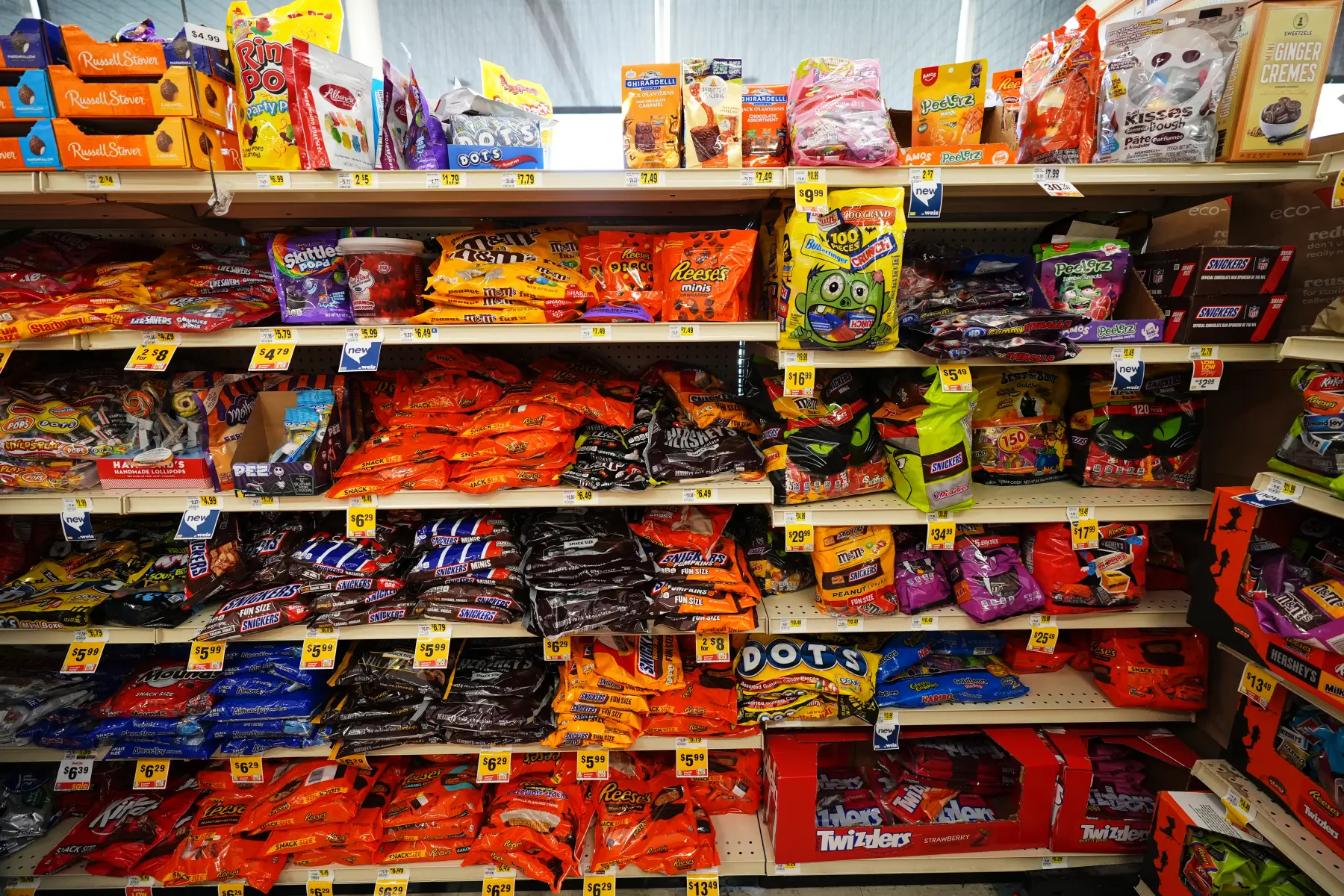
Halloween candy is displayed for sale at a Weis Markets grocery store on Thursday, October 22, in Dundalk, Maryland.
Stephanie Scarbrough/AP
hide caption
Stephanie Scarbrough/AP
For people stocking up on candy this Halloween, it’s spooky season at the grocery store — and not in a fun way.
Prices of candy, the most popular Halloween purchase, and chewing gum rose 7.7% in one year and more than 18% in two years, according to the latest federal data. This is higher than the average rate of food inflation during this period.
A major culprit: chocolate. Drought and heavy rains in regions like West Africa have hurt cocoa harvests in recent seasons and driven up prices around the world.
Global cocoa production is now rebounding, but that’s not much help for consumers preparing to hand out candy to sweet tooths this weekend, according to David Branch, sector director at the Wells Fargo Agri-Food Institute.
“The candies on the shelves right now – chocolate candies – this cocoa was bought in 2025,” he said. And last year’s cocoa prices were high.
Still, rising consumer prices aren’t expected to deter people from celebrating the holiday, with the National Retail Federation estimating that consumers will spend $13.5 billion on Halloween this year. This represents an annual increase of 3% and is a record: $115 per person, or 55 cents more than last year.
Exorbitant cocoa prices moderate
There was an oversupply of global beans earlier this year and cocoa prices have fallen from recent highs.

Still, Branch said consumer chocolate prices are “sticky,” meaning they won’t fall even when cocoa prices fall due to the lag in production. Manufacturers also face higher prices on other ingredients like sugar, higher fuel costs because of the war in Iran and more expensive imports subject to U.S. tariffs.
Enna Grazier, owner of New Hampshire small-batch chocolate company Enna Chocolate, said she faces a series of higher costs, including 50% tariffs on some holiday packaging and ingredients she plans to buy from Canadian suppliers.
“I’ve had to look elsewhere or get creative with some of my packaging needs for this holiday season, and it’s very frustrating,” Grazier said. “That means I can’t plan that far ahead, or the plans I had made were disrupted and we had to pivot and change.”
Some candy manufacturers have ushered in a flavor shift in recent years. Companies are offering more gummy and sour candies and launching products that don’t use more expensive chocolate, such as KitKat’s marshmallow-flavored Witch’s Brew and Reese’s White Ghosts coated in white cream.
Yet consumer demand for chocolate has not diminished. Sales of chocolate candies have been increasing for several years in a row, according to data from market research firm Circana, which tracks purchases in U.S. supermarkets. However, shoppers bought fewer chocolate candies over the same period, meaning people are paying more for chocolate and getting less.
Gn bussni

