

Want to bookmark your favorite articles and stories to read or view later? Start your independent membership today.
Join us today
Already a member? Log in
The White House has spent several months preparing for a possible Democratic takeover of Congress, formulating plans to advance key elements of President Donald Trump’s agenda through executive action while preparing for congressional investigations, according to an administration official and two people familiar with the strategy.
Senior aides, including Deputy Chief of Staff Stephen Miller and Budget Director Russell Vought, have worked alongside the White House Counsel’s Office since April. Their focus has been on identifying executive actions on immigration, tariffs, housing costs and federal spending that Trump can implement without legislative approval, three sources said. Reuters.
White House counsel Will Scharf and his team are also assessing “what Trump can legally do on his own, in which areas he might push the limits of his authority and how to defend those decisions in court,” the White House official noted.
These preparations highlight a key paradox of Tuesday’s midterm elections: While capturing Congress would give Democrats the power to open investigations, block legislation and restrict spending, Trump would retain sweeping executive power over trade, foreign policy and the federal bureaucracy — powers he has drawn heavily on during his second term.

If Republicans lose their majority, Trump said he plans to veto it for “a month or two” before negotiating deals with opposition leaders.
‘I guess I’ll become Mr. Veto,’ Trump said the New York PostPod Force One from Pod Force One in an interview excerpt published on Sunday. “And then at some point we’ll probably make deals.”
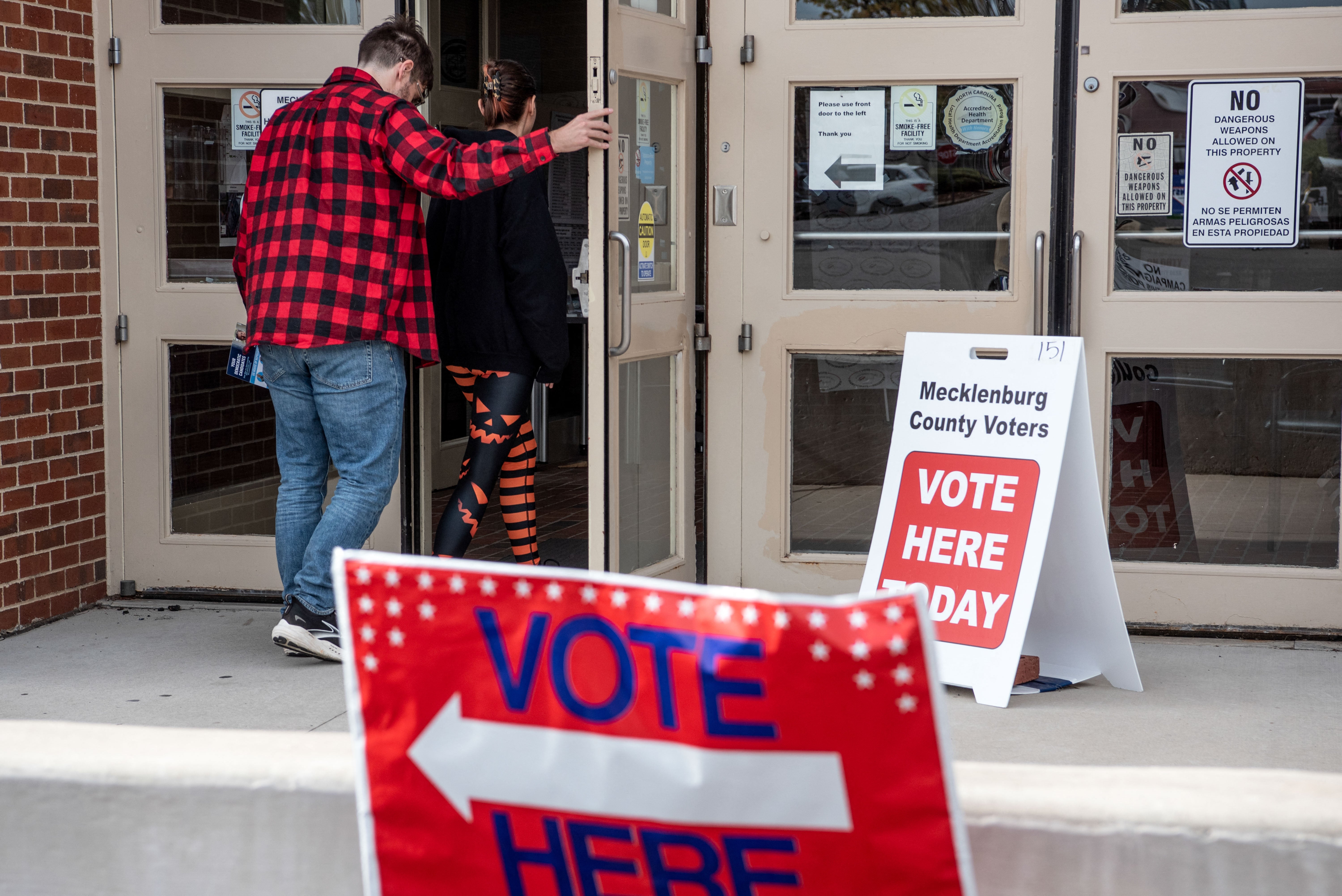
Democrats need a net gain of four seats in the U.S. House and Senate to overturn narrow Republican majorities of 218-214 and 53-47, respectively. Public polls suggest Democrats are favored to win the House, while the Senate race remains exceptionally close.
Over the past month, Trump has held rallies across the country to help maintain Republican control of Congress, even as his internal team quietly plans a radically different legislative landscape in 2027.
The White House has rejected suggestions of potential losses for Republicans, criticizing media reporting on the subject.
“This administration and common-sense Republicans will continue to secure our borders, restore law and order, put more money in the pockets of hard-working Americans, and deliver victories for the American people,” White House spokeswoman Lauren Bis said.
Among the executive actions being considered are new tariffs on imports of wind turbines and critical minerals, stricter rules on visas for temporary foreign workers and international students, and measures to reduce construction and housing costs, according to the White House official.
Federal agencies have already submitted policy proposals and legal reviews regarding actions the administration could take unilaterally, a source said.
Vought, who heads the U.S. Office of Management and Budget, is currently reviewing which initiatives can move forward using funds previously allocated by Congress, two sources added. It also aims to revise federal grant rules to give political appointees greater authority over which government programs receive funds, which could increase White House oversight of spending without congressional consent.
Trump was briefed on these preparations and participated in discussions regarding the strategy, the White House official confirmed.
Asked about Trump’s willingness to govern primarily through the executive branch in a Democratic-controlled Congress, one source noted that he would be “very comfortable.”
Governing without Congress
Since returning to office in January 2025, Trump has regularly tested the limits of presidential authority, using executive orders to impose sweeping tariffs, intensify immigration controls, reduce federal staffing and advance foreign policy goals — including military operations against Iran — without new legislation or congressional consent.
One notable exception was a major tax and spending cut package passed by the Republican-controlled Congress and signed into law by the president in July 2025.
“For the past two years, President Trump has basically ignored Congress and tried to do as much as possible through executive orders and executive power,” said Nathan Gonzales, editor in chief of Within the elections, which provides non-partisan political analysis. “I think it will only continue if there are Democratic majorities.”
Trump has repeatedly declared a national emergency to increase his ability to act independently. Although Congress could vote to end such emergency declarations, Trump could veto such a resolution, requiring a two-thirds majority in both chambers to overturn it.
However, a Democratic-controlled Congress would still present significant challenges. A Democratic majority in the Senate would allow the party to block Trump’s judicial and executive nominations, including possible nominations to the Supreme Court.
“I expect they will be very reluctant to approve the president’s nominations,” said Andrew Busch, a public policy professor at the University of Tennessee at Knoxville and author of a history of the midterm elections.
Democrats could also refuse to advance bills supported by Trump. However, Trump could veto any Democratic legislation, and the party is unlikely to gain enough votes in the House to override a presidential veto.
Additionally, courts could overturn executive actions that exceed legal authority. To prepare, the White House plans to seek formal legal opinions from the Justice Department to determine the limits of Trump’s unilateral authority and build defenses against potential legal challenges, a source noted.
Democratic investigations
A major challenge that the executive branch cannot prevent is control of Congress.
Previous reports from Reuters noted that senior House Democrats and committee staff members discussed conducting hearings, issuing subpoenas and requesting documents to determine whether Trump used presidential authority for his personal benefit or to favor his allies and donors.
White House aides have been preparing for possible surveillance for months, according to the three sources.
White House lawyers have advised policymakers and agency heads on how to respond to requests for documents, subpoenas and congressional investigations, and asked officials to exercise caution regarding written materials.
Additionally, administration lawyers have requested an opinion from the Justice Department that could allow Trump to invoke executive privilege to shield communications with private advisers from legislative oversight, a source said.
Gn headline

