
The fruits we eat contain many benefits, and scientists continue to study how these benefits might benefit our mental and physical health.
In a small pilot study, researchers led by a team from Harvard Medical School in the United States found that a daily dose of blueberries could help alleviate symptoms of depression in older, sedentary adults.
This is a group of people who we already know are at higher risk of depression and who don’t necessarily have access to some natural methods of coping, including exercise and getting outdoors.
Eating blueberries every day could be an easy and healthy way to combat depression.
The researchers have now published their work in the Journal of Nutrition, Health and Agingand the study also showed interesting changes in gut bacteria caused by the extra blueberries.
“Our goal was to preliminarily determine the effect of blueberry consumption on the gut microbiome, metabolites, and depressive symptoms,” says molecular nutritionist Courtney Millar of Harvard Medical School.
The study involved 18 participants aged 65 and older, who received either 48 grams of freeze-dried blueberry powder (about two cups of berries) or the same amount of placebo powder each day.
After three months, depressive symptoms had improved in both groups. People in the blueberry group showed greater and more consistent improvements, although the difference did not reach statistical significance.
))>
“Although changes in mental well-being outcomes did not differ between groups, they appeared to be ‘improvements’ of greater magnitude in the blueberry group, with less variability compared to the placebo group,” the researchers write in their published paper.
“This pilot study was designed to test the feasibility of the intervention and gather preliminary outcome data needed to estimate the power of a larger trial.”
As for gut bacteria, there were some small changes in the enzymes (proteins that trigger chemical reactions) present in the blueberry participants.
Six types of bacterial enzyme genes changed in abundance, with five of them increasing, including one involved in making gamma-aminobutyric acid (GABA), a neurotransmitter previously associated with depression.

It is already well established that the fiber and anthocyanins (blue pigments) found in blueberries can have an effect on the gut microbiome. Some changes were therefore expected – and more detailed analysis will be needed to confirm exactly what is happening.
The researchers also acknowledge the relatively small sample size and the fact that participants were mostly female and white, with mild depressive symptoms rather than diagnosed depression.
Although we cannot draw any broad conclusions from the results published here, it opens the way for larger studies.
The researchers say further studies should involve more diverse populations and “recruit a larger sample size to account for the effect of potential confounders and baseline differences.”
The fact that there was no statistically significant difference between the blueberry group and the placebo group might make you think there’s nothing to see here — but the larger, more consistent improvements in symptoms, coupled with changes in the gut microbiome, are reasons to conduct follow-up studies.
We also know that the placebo effect has been demonstrated in study after study. It could be argued that even the idea of a daily dose of blueberry powder was enough to improve the mood of participants in the placebo group.
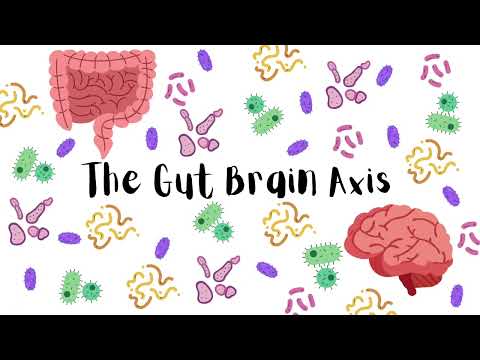
The brain and gut have a complex, bidirectional relationship that scientists are still trying to understand. There is already notable evidence that what we eat in our diet can have an effect on mental health, and this small study adds to it.
“Our data are preliminary and warrant additional studies to investigate the link between blueberries, the gut microbiome, and mood in older adults,” the researchers write.
The research was published in The Journal of Nutrition, Health and Aging.
This article was fact-checked by Rebecca Dyer and edited by Rebecca Dyer. Although we are proud of our process, we are only human. If you spot an error, please let us know.
Gn Health

