
Bay Area public transportation supporters cheered election results Tuesday that showed two tax measures designed to avoid drastic cuts to easily passable bus and train service.
Early results from five Bay Area counties showed that Measure RTM, a 14-year regional sales tax, was on track to pass with a 61.5 percent yes vote.
Jeff Cretan, a spokesman for the Connect Bay Area coalition that campaigned for the tax in Alameda, Contra Costa, San Francisco, San Mateo and Santa Clara counties, called the apparent margin of victory “incredible.”
“This is a huge win for public transit,” Cretan said. “I think these results show that people believe in the importance of running our buses and trains to get people to work, to get seniors to their appointments, and to get kids to school. All of that is important for the Bay Area to truly thrive.”
San Francisco’s Proposition H, a separate parcel tax measure aimed at funding just the city’s Muni transit service, also seemed certain to pass with a 72.5% yes vote.

The RTM measure imposes a 0.5% sales tax in Alameda, Contra Costa, San Mateo and Santa Clara counties and a 1% sales tax in San Francisco to generate approximately $1 billion annually to maintain current service levels at BART, Muni, AC Transit, Caltrain and other transit agencies. Sales taxes will also be used to fund fare reductions, accessibility and orientation programs.
Proposition H is a San Francisco-specific measure that will tax property owners at different rates based on property type and size to generate about $184 million annually for the city’s Muni transit service for 15 years.
San Francisco Mayor Daniel Lurie hailed the result as a sign of the city’s long-term commitment to better public transportation.
“Tonight, San Franciscans came together to build a stronger Muni for everyone,” Lurie told an election night crowd. “But let me be clear: This isn’t about spending more money to get the same results. With this infusion of funding comes a responsibility to provide a better transit system – more reliable, more efficient, safer and worthy of the people who rely on it every day.”
“You know, you prepared yourself for a possibly different outcome,” she said. The looming budget crisis for transit operators “would impact people in just a few months if this hadn’t passed. It’s amazing that we can see that what we have is worth protecting and developing.”
The campaign opposing RTM — the Committee for Affordable Bay Area Transit — did not respond to a request for comment Tuesday evening.
As Election Day approached, the committee argued that transit companies exaggerated potential service cuts to scare voters into approving the tax, and said the regional measure lacked accountability safeguards.

The committee framed opposition to the tax as a crucial opportunity to send a message to the region’s transit agencies that they need to institute major financial reforms.
“They’re promising oversight that doesn’t really exist. They’re saying they need money that they don’t really need right now,” Gregg Dieguez, chairman of the Committee for Affordable Transportation in the Bay Area, said before Tuesday’s vote. “They need real reform, and the reforms they are promising are ineffective and tiny. »
Opponents of Proposition H said passing the tax was also a missed opportunity to rein in a fiscally irresponsible transit agency.
“Mayor Lurie ran on accountability, and this measure has no accountability. The voters are being screwed. The SFMTA will use Prop. H money to treat the agency like a venture capital firm, hire quickly, grow quickly but with no goals,” said Marie Hurabiell, executive director of ConnectedSF.
Hurabiell said the San Francisco Municipal Transportation Agency could have made budget cuts without affecting service.
The coalition that supported the measures included business groups, labor unions, and environmental and transportation justice advocates. These advocates joined transit agencies themselves in warning that failure to adopt the taxes would result in significant service reductions.
Some of the proposed cuts included: BART closing up to 15 stations and ending service at 9 p.m., Caltrain closing a third of its stations and eliminating weekend service and AC Transit reducing service by 16% and laying off up to 300 employees.
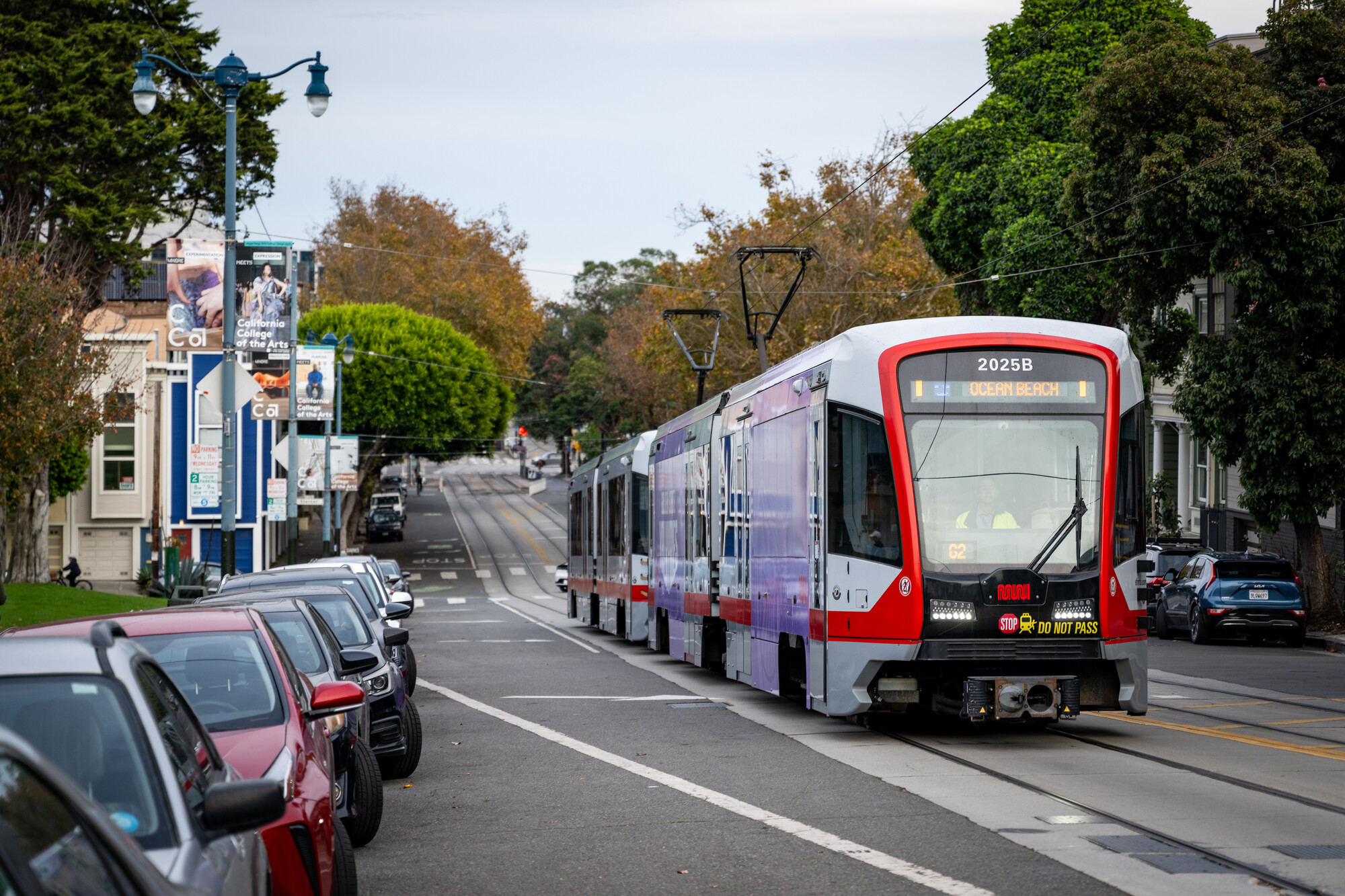
If both measures fail, Muni warned it could eliminate up to 20 bus routes, double wait times on other routes, reduce night service to 9 p.m. and eliminate historic cable car and streetcar service.
Major transit agencies are suffering a deep and lingering financial hangover from the collapse in ridership and fare revenue triggered nearly seven years ago, at the start of the COVID-19 pandemic.
Public transportation operators have used billions of dollars in emergency federal aid, along with state aid, to keep service levels slightly below pre-pandemic levels.
“The business community has invested significant resources to ensure the success of RTM because they know our economy depends on our ability to get people to and from work,” said Emily Loper, senior vice president of public policy at the Bay Area Council, which represents some of the region’s largest employers.
Under SB 63, the state law that authorized the RTM ballot measure, transit agencies must now undergo a financial efficiency review to identify cost-saving measures. Tax money will begin flowing to agencies next year.
Gn usa

