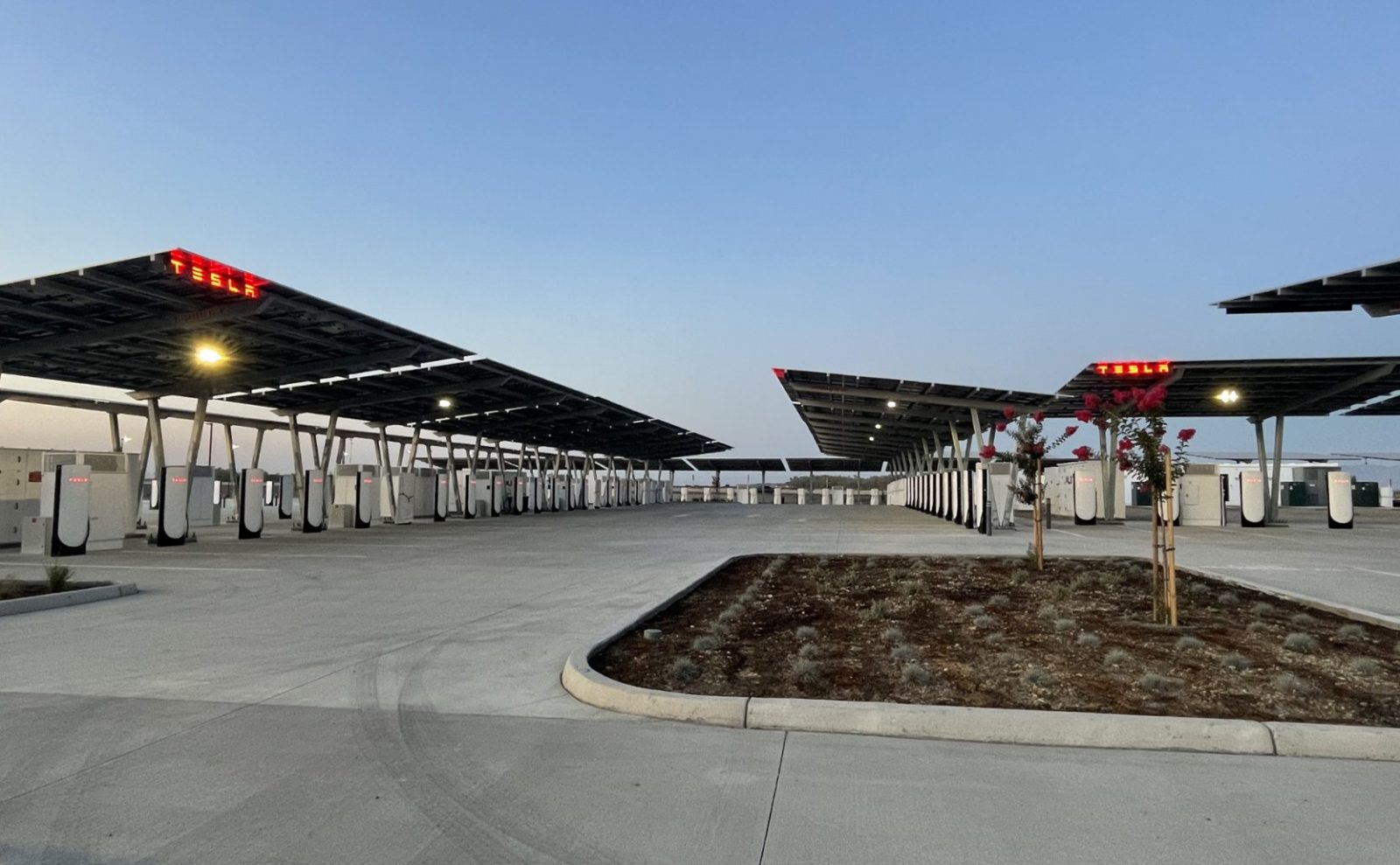
California is spending at least $28 million on more public fast chargers for electric vehicles — and it could foot the entire bill for eligible installations.
The state’s Fast Charge California project opens for applications today, October 7, offering up to $100,000 per charging port. Eligible businesses, nonprofits, public agencies and California tribes can apply, but electric vehicle fast chargers must be open to the public.
This gives owners a way to add fast charging with much less upfront expense, while giving electric vehicle drivers more places to plug in.
The California Energy Commission is funding the project through the California Electric Vehicle Infrastructure Project (CALeVIP), its statewide electric vehicle charging incentive program. The Center for Sustainable Energy (CSE) manages the commission’s program.
The size of the incentive depends on how much power each port can provide. Ports with guaranteed power between 150 kW and just under 275 kW can receive up to $55,000. Ports delivering at least 275 kW can receive up to $100,000.
These dollars can cover up to 100% of approved costs, including chargers, installation, planning and engineering. Per-port caps still apply, so a more expensive project will not necessarily have its entire bill paid.
Funding is for projects ready to be built. This means that applicants already have a final utility design or letter from the utility confirming that no new or improved services are needed and that permits are in place.
“Through CALeVIP, we learned that the fastest way to install charging stations is to fund projects that are actually ready to build,” said Scott Shepard, CSE senior director of transportation programs. “When permitting and utility coordination is already underway, incentive dollars can turn into working chargers much faster.”
Applications close January 14, 2027. Once the window closes, eligible applications will be funded in the order they arrive, with eligible projects in disadvantaged, low-income, and tribal communities given priority.
Before applying, owners should check if their location is eligible. The CALeVIP program page indicates that charging centers, hotels and business districts are no longer eligible site types for this cycle. At least half of the connectors installed on each funded site must also be CCS.
The new funding round follows the award of $56.9 million in spring 2026 to fund more than 1,266 build-ready DC fast charging ports. These projects span all 58 counties in California, and more than 67% of funded chargers have been installed or planned in disadvantaged, low-income tribal communities.
CSE says CALeVIP has supported 10,200 charger installations since the program launched in 2017. Funding comes from the Energy Commission’s Clean Transportation Program and the California Greenhouse Gas Reduction Fund.
CALeVIP’s EV Charging Opportunity Finder tool maps existing chargers, local EV registrations and community data to help owners evaluate potential sites.
Candidates can find the complete rules on the CALeVIP website. Another application window is scheduled for February 24 through May 27, 2027, with incentives of up to $55,000 per port.
Learn more: EVgo’s 750 kW charging system will arrive in 2027

If you’re looking to replace your old HVAC equipment, it’s always a good idea to get quotes from a few installers. To ensure you find a reliable and reliable HVAC installer near you who offers competitive pricing on heat pumps, visit EnergyWise. EnergySage is a free service that makes it easy for you to get a heat pump. They have pre-selected heat pump installers competing for your business, ensuring you get high quality solutions. Plus, it’s free to use!
Your personalized heat pump quotes are easy to compare online and you’ll have access to impartial energy advisors to help you every step of the way. To start here. – *announcement


FTC: We use automatic, revenue-generating affiliate links. More.
Gn bussni