

Want to bookmark your favorite articles and stories to read or view later? Start your independent membership today.
Join us today
Already a member? Log in
TA day before his party lost nearly 50 seats in the House and Senate, as well as countless governorships and state legislative seats in what has now been dubbed a “blue tsunami,” President Donald Trump spent most of his closing speech bragging about renovations to the Lincoln Memorial Reflecting Pool.
The day after an election that served as a resounding referendum on his failures as president, he spent nearly an hour chatting with the White House press pool in front of a steel girder for a “completion” ceremony marking the end of construction of the steel frame of his massive White House ballroom.
Standing in the cavernous space where the East Wing of the White House once stood – before it was unilaterally and, according to a court ruling, illegally demolished – he told reporters to “imagine the chandeliers” and “imagine the marble floors” that would one day be there.
“It will be the most beautiful building,” Trump promised.
The president’s schedule this week included another public event focused on his various renovations and other vanity projects — a hastily arranged signing ceremony for a proclamation meant to prevent future presidents from tearing down the gaudy Louis XIV-inspired decor he has plastered all over the Oval Office.
“I’m going to sign a document that will make it a landmark for the ages,” he said, later adding that the proclamation would, in his view, prevent the over-the-top decor he placed in the Oval Office and Cabinet Room from being “touched by anyone, destroyed, torn down by stupid people.”
“I just thought it was very important that no one was allowed to come and take it apart and try to do something with it,” he added, no doubt spurred into action by former President Barack Obama’s jibe in the final days of the midterm campaign that Trump made the Oval Office “look like Saddam Hussein opened a cheesecake factory.”
Trump’s singular obsession with his various and sundry beautification projects has, White House insiders say, almost completely consumed his attention for weeks now, even as he crisscrossed the country in a failed attempt to garner support from his MAGA base and avoid what became a historic drubbing for his party last week.
There is a name for the position he has given himself, and it is not “President of the United States.”
Decorating the Executive Mansion, selecting its china and flowers, tending its gardens and lawn, planning its social calendar, and presiding over its entertainment spaces — these are, by a long and largely gender-specific tradition, the duties of the first lady of the United States.
These are soft, ceremonial, aesthetic functions that American political culture has always viewed as work performed from the (now demolished) East Wing, left to a president’s wife and her staff while he handled the difficult business of governing.
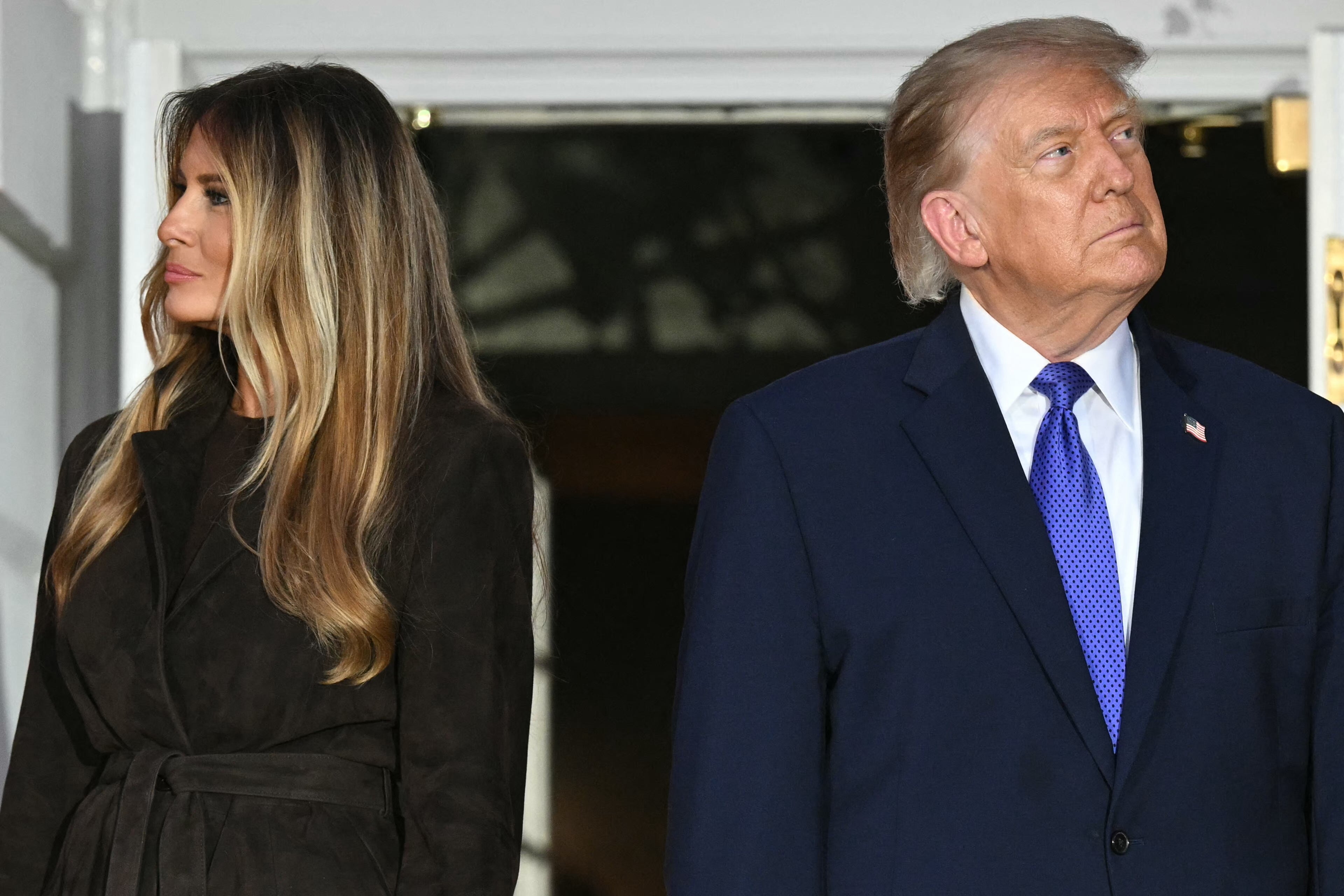
But with his party suffering a massive rout and his approval rating hovering around 30 percent two years into his term, Trump appears to have taken refuge from the political tumult in the first lady’s portfolio.
He has opinions about the shade of blue in the now twice-painted Reflecting Pool — “American flag blue,” very dark, he explained at length, because a lighter color “wouldn’t have any reflection.”
He had the grass replaced in front of the White House, thanks to a job donated by lawn company Scotts after the UFC fight he commissioned for the South Lawn destroyed it, and talks about it like a first lady might talk about the Rose Garden – which he had paved over in favor of a Mar-a-Lago-style patio in early 2025.
He listed the 83 statues and fountains his administration has cleaned, the light fixtures it has repaired, the graffiti it has cleaned up. And he spent most of the year building a 90,000-square-foot ballroom in which he could host — the largest first lady ceremony ever.
To build it, he demolished the east wing. The physical offices of the first lady of the United States were demolished to make way for the president’s entertainment space.
And while he was doing all this, his wife was doing something else entirely. She worked on diplomacy.
Melania Trump spent this week not arranging flowers, but welcoming senior Russian and Ukrainian officials to the White House to mark a ceasefire that her office says she personally brokered.
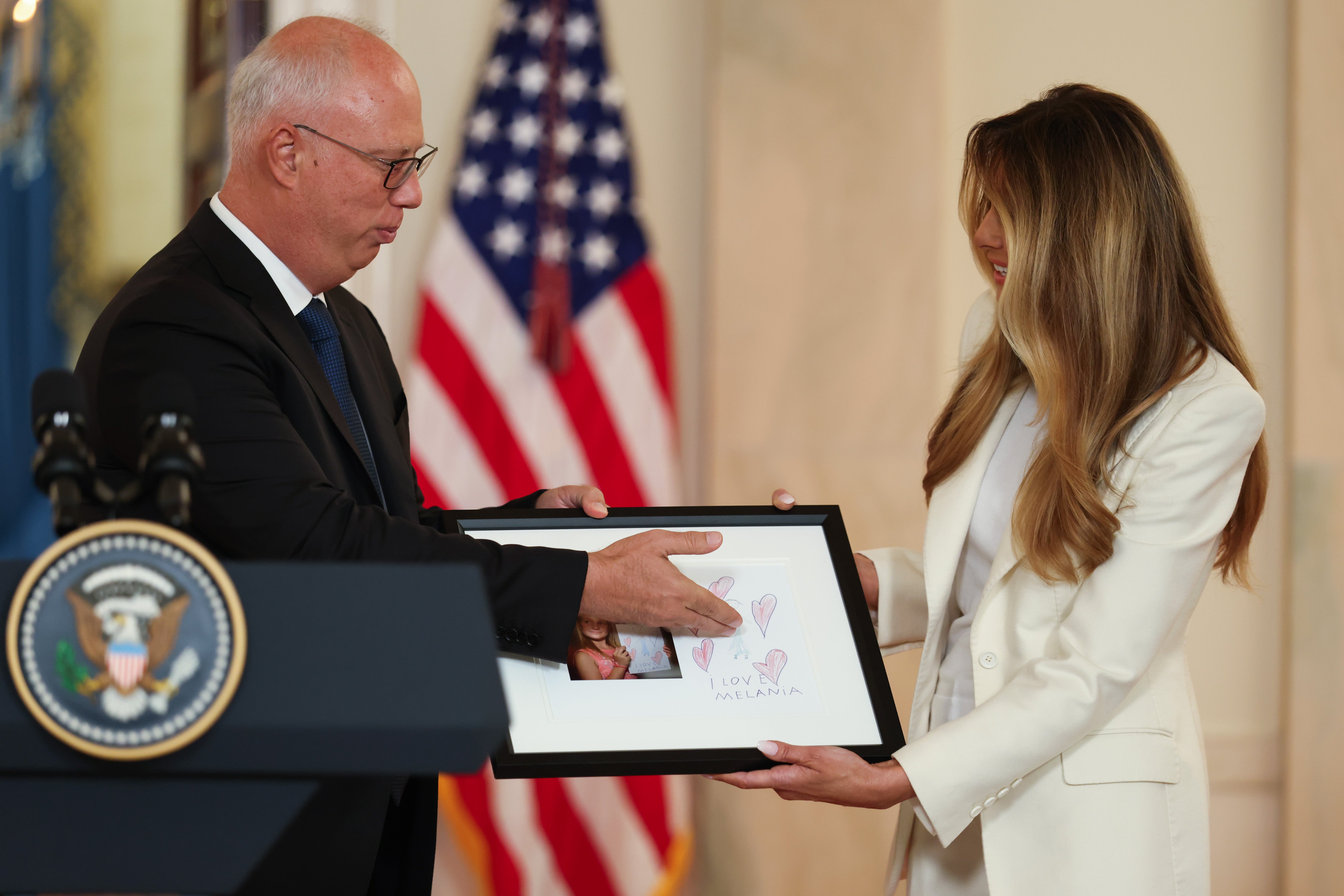
The truce in the Russian-occupied town of Oleshky ended fighting long enough to allow civilians to be evacuated through a humanitarian corridor, and the White House described the First Lady as its “exclusive intermediary” while crediting her with helping negotiate the temporary deal.
It follows more than a year of behind-the-scenes work that began when she sent Vladimir Putin a letter — hand-delivered by her husband during his August 2025 summit with the Russian leader in Alaska — and opened what she called an “open channel of communication” with the Russian president on children displaced by war.
His office credits the channel with reuniting 34 children with their families. And in March, she even took the chair’s seat at a United Nations Security Council meeting on children in conflict, becoming the first wife of a world leader to do so.
Kirill Dmitriev, one of Putin’s top envoys, praised his “crucial leadership role.”
The contrast with her husband’s record during the same war is not subtle. Trump spent the better part of two years promising to end the Russian-Ukrainian conflict, sometimes within 24 hours, and failed to do so. He told a rally in Florida last week that he was “on the verge of ending, I hope, the Russian-Ukrainian catastrophe.” In the meantime, his wife produced an actual signed agreement, however small.
Asked if his wife would join the formal trilateral peace talks he has advocated between Russia and Ukraine — talks that have yet to come to fruition despite his best efforts — Trump said she would not. “What she wants is to save children,” he said. “That’s his goal.”
Yet the division of labor in the wake of Trump’s midterm defeat is more than shocking, with the first lady negotiating with a nuclear-armed adversary while the president practically measures the curtains.
None of this means the renovations are insignificant to him — several aides who spoke to The Independent in recent weeks, they say it’s what occupies his mind the vast majority of his waking hours.
In the week his coalition collapsed at the polls, the projects were where Trump chose to be seen — in front of the steel beam, in front of the swimming pool, signing a proclamation to protect his gilded Oval Office decor “for the ages.”
He can’t change the outcome of the election, but he can continue to build things that he believes will help him be remembered in history.
So he retreated to the part of the work where the work is visible, where critics can be called vandals, and where the finished product can be photographed and admired. He told the country to imagine chandeliers. He didn’t have much to say about the election.
Gn usa

