
Yashar leader Gadi Eisenkot on Friday maintained his four demands on any party interested in joining a coalition he was working to build, including mandatory national service for all Israelis, after Yisrael Beytenu leader Avigdor Liberman opened the door to a government with the ultra-Orthodox parties, which are fiercely opposed to the idea of conscripting Haredi youth.
In a lengthy post on X, Eisenkot began by emphasizing that “Israel is in a real, tangible and dangerous state of emergency.”
“The current government poses a fundamental threat to the very existence of Israeli democracy, nothing less. This is happening while the war fronts remain active, but are themselves subject to political and personal whims. Israel is already in the midst of a dangerous diplomatic tsunami,” he wrote.
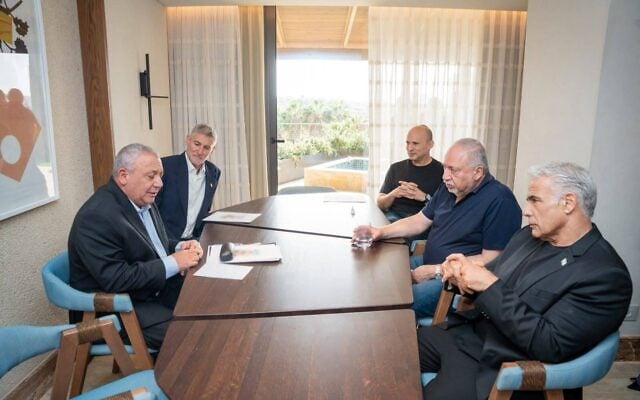
“In this context, in recent days, I have put forward a plan with my partners to form an emergency national government,” Eisenkot said, adding that he was working to establish a new government as soon as possible, the basis of which would be the four Jewish-led opposition parties: Yashar, with 21 seats; B’Yachad, with 12; The Democrats, with eight; and Yisrael Beytenu, with seven.
The four parties held only 48 seats in the 120-member Knesset, meaning they could not form a majority government on their own. Netanyahu’s traditional right-wing and religious bloc won 53 seats, while the Arab Ra’am party and the Joint List won 19 in total, leaving the opposition searching for additional partners or outside support.
“Any other party or MP who approves of my four fundamental principles will be invited to join – whether immediately or at a later stage,” Eisenkot said. He added that he intended to contact every faction in the Knesset and invite members willing to adhere to the principles to join a government under his leadership.
He listed the four principles as follows:
1. Recognition of the State of Israel as a Jewish and democratic State.
2. Acceptance of the values of the Declaration of Independence.
3. Compulsory service for all – whether military, national or civilian service – in order to strengthen the Israeli army and expand its ranks.
4. Recognition of Hamas as a terrorist organization and commitment to dismantling its military and governmental power.
Eisenkot notably appears to have slightly modified the fourth principle regarding Hamas, using the word “dismantling” rather than “destruction” of its military and governmental power. This potentially leaves the door open to diplomatic solutions for Gaza rather than military solutions, which the Arab Ra’am party may have an easier time accepting. B’Yachad and Yisrael Beytenu, however, refused to form a coalition with Ra’am.
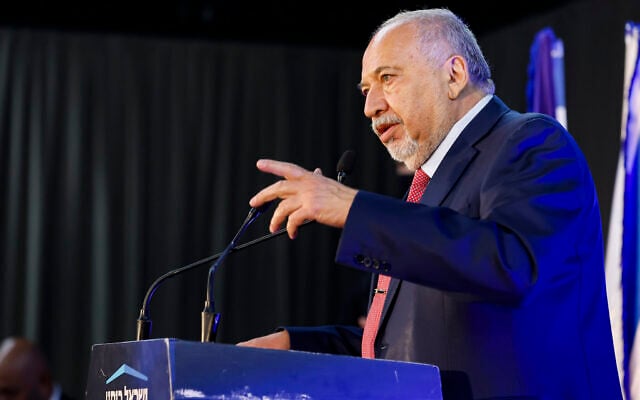
The renewed emphasis on compulsory service came after Liberman said Friday morning that he was prepared to end years of opposition to sitting with ultra-Orthodox parties and accept what he called a “painful compromise” on enlisting Haredi to form a government without Netanyahu and avoid new elections. Liberman nevertheless said he would not support a government dependent on Raam or the Joint List.
Eisenkot said it was the duty of Israeli elected officials to prevent another round of elections while preventing Prime Minister Benjamin Netanyahu from remaining in power.
The costs of maintaining Netanyahu as prime minister “have become even more evident in recent days,” said the Yashar leader, who blasted the prime minister’s calls against ratification of the election results as well as Netanyahu’s handling of relations with the United States.
Eisenkot argued that allowing an interim prime minister commanding only a minority in the Knesset to continue to lead the security establishment and law enforcement was “dangerous” and “must not continue for even one more day.”
Eisenkot highlighted recommendations submitted by 67 lawmakers for him to form the next coalition, adding that the seven lawmakers from the ultra-Orthodox United Torah Judaism party had also not recommended Netanyahu, leaving the prime minister with just 46 lawmakers supporting his continued rule. He noted that 74 lawmakers did not express confidence in Netanyahu remaining as prime minister.
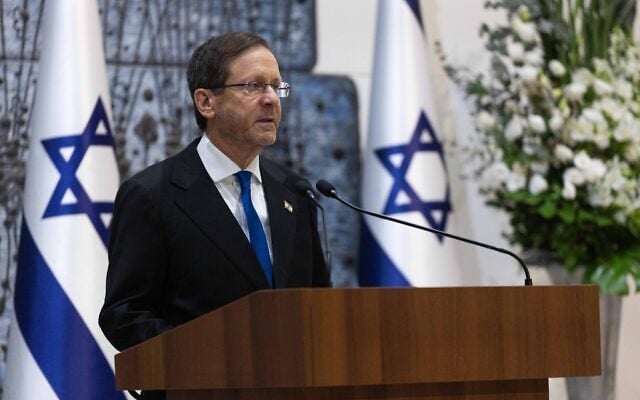
Speaker Isaac Herzog said Thursday that factions representing 67 lawmakers had recommended Eisenkot, compared to 46 for Netanyahu. Herzog stressed, however, that the recommendations alone did not determine who would receive the mandate: under Israeli law, the president must choose the lawmaker he believes has the best chance of forming a government. Herzog said he intended to hand out the mandate on Sunday after further discussions with party leaders.
Eisenkot said his team had worked tirelessly behind the scenes to form a new government. He said his team spent “dozens of hours” negotiating and held numerous meetings, some public and some not, including meetings he said took place “in the last few hours.”
“We have made significant progress and achieved a breakthrough – working quietly and modestly, with much of our activities remaining out of public view,” Eisenkot said. “When there is something to report, I will keep you informed myself – looking you, you citizens of Israel, straight in the eye. »
“Citizens of Israel…both those who voted for me and those who did not, Israel is in a state of emergency. We must steady the ship and return Israel to safe shores,” Eisenkot wrote.
Eisenkot said he intended to carry out both the mandate he believed voters had given him and the one he hoped to receive from Herzog “with a sense of sacred responsibility,” calling the coming days a “test of leadership and love of country.”
“Anyone who attempts to undermine or sabotage the formation of this government for personal rather than substantive reasons will go down in history as someone who failed to rise to the gravity of the moment and who failed to act to save Israel in times of emergency. Such an act will not be forgiven,” he added.
Eisenkot closed his statement by promising to provide “stable, unifying and responsible leadership” that has “earned clear support from the public and members of the Knesset.”
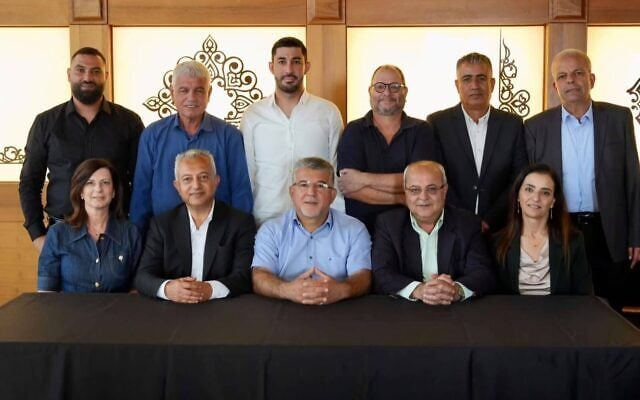
Despite Eisenkot’s 67 recommendations, his path to a coalition remained complicated. The Joint List supported him as prime minister and told Herzog it was ready to support a government from outside, but several of Eisenkot’s Jewish opposition partners ruled out depending on Arab parties to govern.


Gn world

