
Richard Satin was sure he was dying.
Everything had gone well until the fall of 2025. He had enjoyed the summer with his wife and 8-year-old daughter, including a trip to Disney. But in October, he woke up in the middle of the night, distressed.
When his wife, Farrah, rushed him to a Long Island hospital, tests showed his blood sugar was rising. Doctors discovered that he suffered from diabetes. They also identified a blood clot in his portal vein, which connects the gastrointestinal tract to the liver. They treated the clot and stabilized his diabetes. He was discharged a week later with the new diagnosis.
But it was the start of a vicious cycle. A few days later, Satin was in pain again and returned to the hospital. Doctors had few answers. During a visit, a doctor recommended a high-fiber diet. Another visit came with a recommendation for a liquid diet. Nothing helped.
Soon, Satin lost all appetite. Eating a bowl of Jell-O has become an accomplishment. His daughter was frightened by his appearance. His favorite pastime, golf, was impossible. By mid-December, he had lost 70 pounds. His wife was at the end of her rope.
“Farrah just looked at me and said, ‘We can’t go down this path anymore. We have to do something,'” Satin recalled.
The couple began contacting specialists, but many were unavailable for months. Satin, convinced that he would not last that long, makes an appointment with a concierge doctorDr. William Klein. On Christmas Eve, he had his first date with Klein.
“He examined me for a few hours, took a lot of vials of blood and said, ‘If you don’t have surgery right away, you’re in trouble,'” Satin said.
Richard Satin 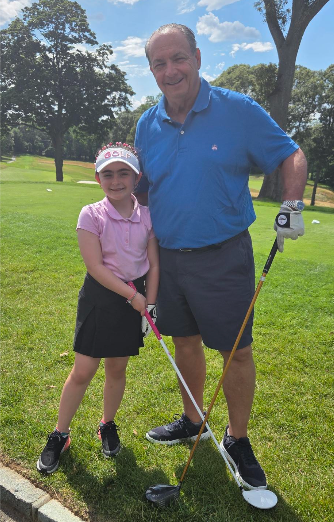
A life-saving surgery
Klein determined that Satin had a problem in his gastrointestinal tract, but he didn’t know exactly what was wrong. He referred Satin to a surgeon, Dr. Gary Gecelter, chairman of the department of surgery at St. Francis Hospital & Heart Center. Gecelter examined Satin’s case and repeated all the tests performed by Klein.
Gecelter discovered that Satin had an “unusual inflammatory problem” in her digestive tract. This had caused an inflammatory reaction to the blood supply to the stomach, causing a clot in his liver and intestinal obstruction. Previously, doctors focused on the problem of clotting. But Gecelter believed that if he removed the part of the small intestine that was inflamed, it would help Satin recover.
In early January, Gecelter performed a complex but minimally invasive surgical procedure to remove the inflamed part of the small intestine. Satin “literally woke up saying he felt better,” Gecelter said.
“I thought it was more of a placebo effect than reality,” Gecelter said. “But the next day, he was tolerating fluids. Within two days, he said he felt his (symptoms) were resolved.”
Three days after the operation, Satin was discharged. Less than a week later, he was eating his favorite foods again. In three months, he had regained half the weight he had lost.
Satin said he was shocked to feel so much better so quickly, especially because it took so long to receive a diagnosis.
“It was surreal,” Satin said. “There were a lot of times in October, November, December where I couldn’t always see the light at the end of the tunnel, so many days without eating, missing Thanksgiving, holidays and birthdays. But I learned a lot in the process.”
A “beautiful” letter of gratitude
As Satin recovered, his daughter Becky looked on with relief. For months, her father hadn’t been able to play golf with her or attend school events. She had been afraid he would never feel better. To express her gratitude, she wrote a short letter to Gecelter.
“It would have been really bad if he hadn’t lived,” Becky said. “I’m glad he did it and I’m so excited to do so many fun things with him. I wrote the letter to thank the doctors.”
Richard Satin 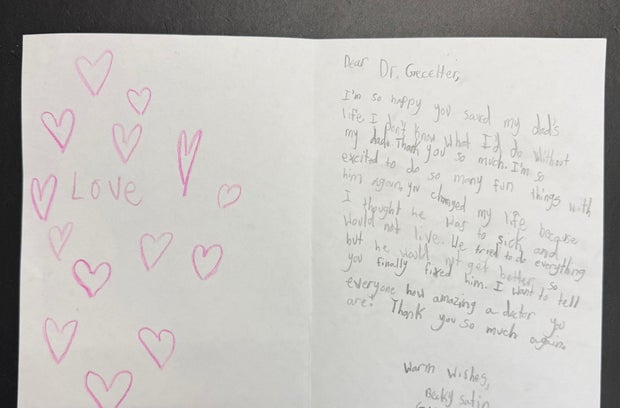
One photo shows Satin, Becky and Gecelter all together and smiling, with the 8-year-old holding the note. Gecelter said he kept the letter in his office.
“I get some nice letters, especially around the holidays, but this one was remarkable,” Gecelter said. “It was written by a child under 10, in her own language. It expressed a sincerity that only a child can convey. It was charming.”
“I don’t take anything for granted.”
Six months after his surgery, Satin celebrated with a big party at the country club he and his family belong to. Friends and family were invited. Klein and Gecelter were named guests of honor.
Satin remains healthy. He has regained much of the weight he lost, although his appetite is weaker than before. He’s back on the golf course and attending his daughter’s school events. He has made lifestyle changes to accommodate his diabetes diagnosis, such as monitoring his blood sugar and avoiding alcohol and fried foods, but his condition is stable.
Richard Satin 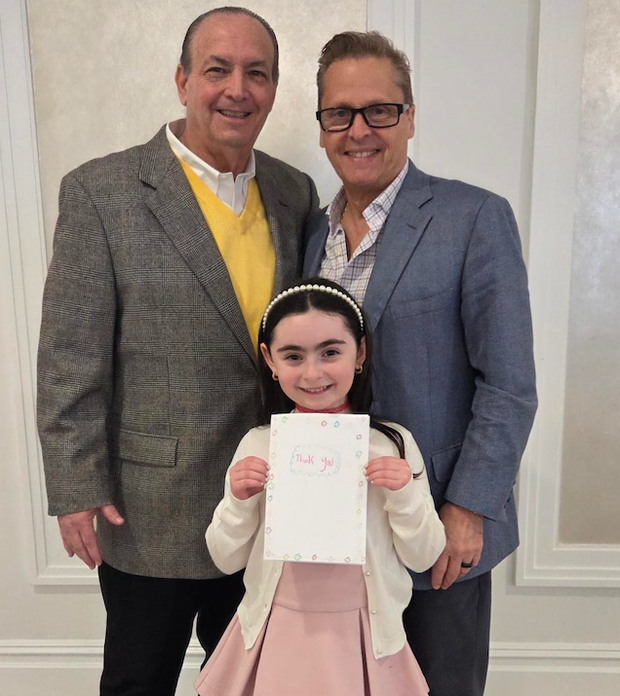
Gecelter said he wasn’t able to understand why Satin got sick in the first place, so it’s “unclear whether whatever caused that initial condition could” happen again. But if it does, doctors will now know where to look, Gecelter said.
Satin said he can’t wait to start traveling again and continue spending time with his family. In June, the trio went on vacation originally planned for December and which had been postponed due to his illness.
“I promised my wife 20 years ago that I would give her 50 years, so she is asking me for 30 more years,” Satin joked. “I don’t take anything for granted.”
Gn Health

