
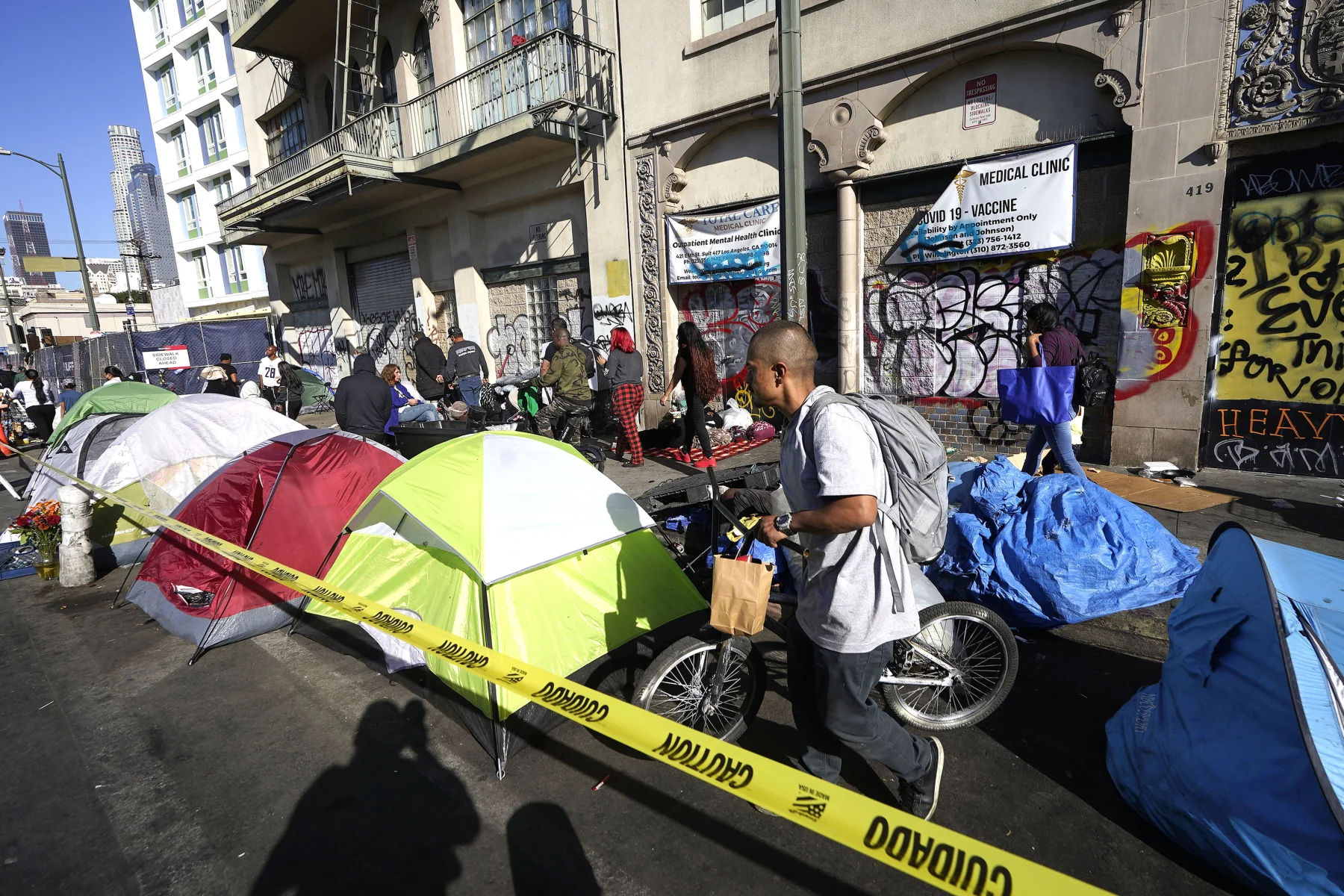
People line up alongside temporary tents to partake of a free Thanksgiving meal provided by the Union Rescue Mission as the Los Angeles Skid Row District’s annual holiday welcomes thousands of homeless and other people in need, in downtown Los Angeles, November 24, 2022.
Damien Dovarganes/AP
hide caption
Damien Dovarganes/AP
After years of increase until record levelsthe homeless population in the United States fell by more than 6% in 2025. That’s about 49,000 fewer people without housing. This is the second year in a row that homelessness has declined, with a smaller decline in 2024.
“President Trump’s actions to secure the border, remove illegal criminals from our streets, and restore safety to our communities have resulted in historic declines in the number of homeless people,” Housing and Urban Development Secretary Scott Turner said in a press release announcing the results of an annual count in communities across the country. The agency had not yet published a detailed report.
A second independent analysis based on the same count, but commissioned by the advocacy group National Alliance to End Homelessness, found a similar decline but attributed different reasons for it.
“It’s good news that more people are getting housing and that the programs funded by Congress are working,” said CEO Ann Oliva.
Both analyzes reveal that in the United States, nearly 700,000 people are still living in shelters or on the streets, far more than before the COVID-19 pandemic.

The Trump administration has cited its changes in immigration policy as a key factor in this decline. Under the Biden administration, New York, Chicago, Boston and Denver have all seen increases in the number of asylum seekers showing up at homeless shelters. “These are also the four cities that accounted for half of the most recent decline,” said Devon Kurtz, director of public safety policy at the Cicero Institute, an administration ally on homelessness policy.
Kurtz also pointed to the decline of cities like San Francisco, which is poised to support more sober living optionsaccommodations that prohibit drugs and alcohol. But critics say it could send more people back onto the streets if they relapse, which is common.
The Trump administration says mandating drug freedom would help more people recover and wants to expand those programs. In fact, the administration wants revise several billion dollars in spending on the homeless and redirecting them to short-term housing with mandatory substance abuse and mental health treatment. So far it has been blocked by the courts.
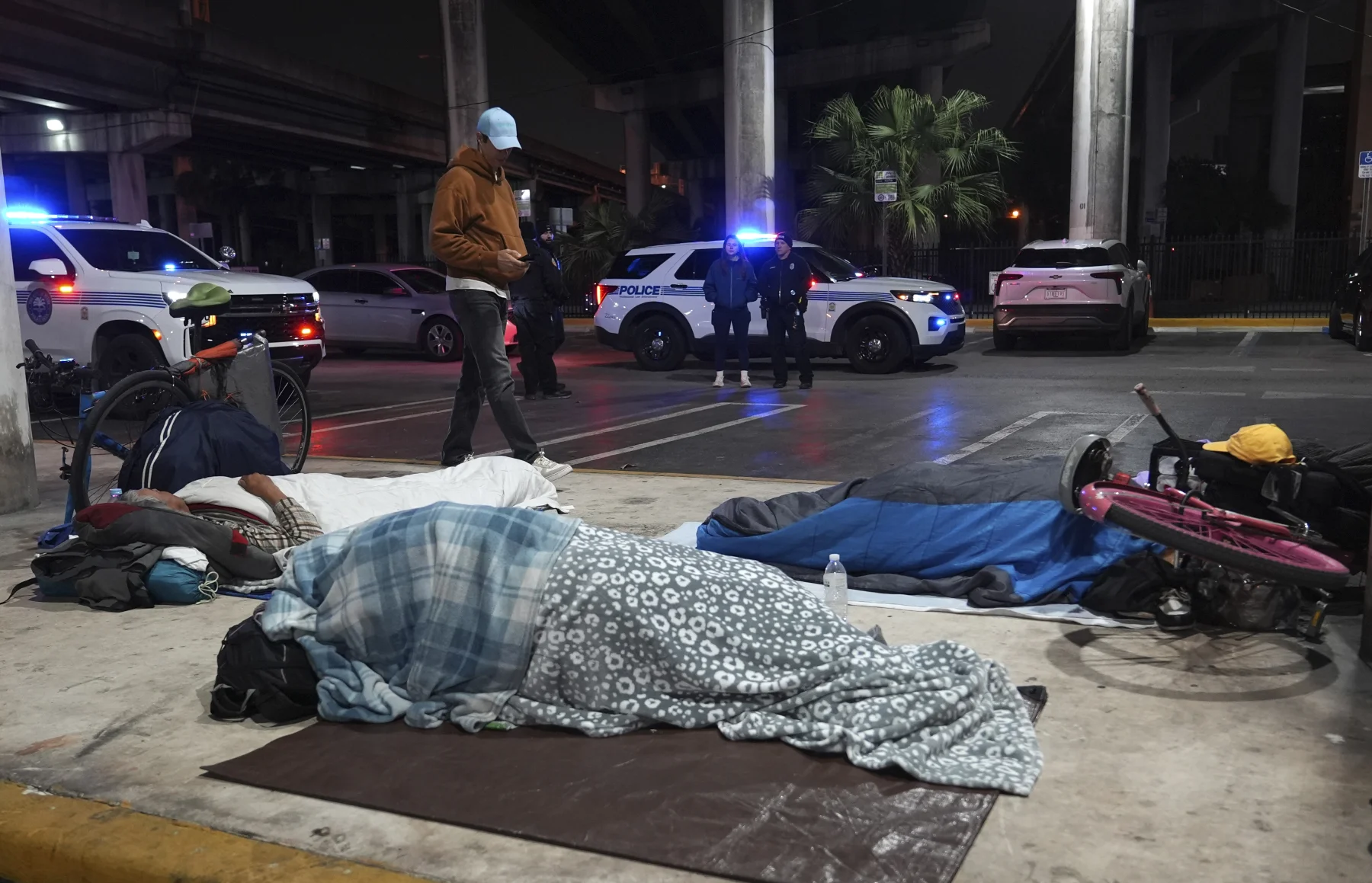
Manny Sarria of the Miami-Dade County Homeless Trust, left, walks past people sleeping on the streets during the annual point-in-time count of people experiencing homelessness, Friday, Jan. 24, 2025, in Miami.
Lynne Sladky/AP
hide caption
Lynne Sladky/AP
The administration says the longstanding federal policy of getting people into permanent housing first, then offering voluntary treatment, has failed and is responsible for the pandemic surge in homelessness. But Oliva, of the Alliance for the Homeless, said programs that let people off the streets without preconditions were largely to blame for the latest declines, particularly among veterans.
“Investments in programs like this are much closer to the scale of veterans’ needs than those of any other homeless population,” she said. Homelessness among U.S. veterans declined by more than 7% last year and by nearly 60% since 2010.
In contrast, Oliva said more permanent housing is needed for people who are chronically homeless and more likely to suffer from mental health and substance abuse issues. Unlike other groups that saw declines last year, the number of long-term homeless people increased slightly.

HUD also credited a repression in homeless encampments after Supreme Court in 2024, cities can ban people from sleeping and camping in public places. Oliva said the analysis his group commissioned showed that cities with such bans “actually performed worse than the national average.”
Oliva noted that the decline in homelessness last year was broad and likely due to a number of factors, including slowing rental markets in some areas. Although rents remain high, they are down from record highs during the pandemic, which could curb the flow of newly unhoused people.
Declines were also seen in places that experienced major weather disasters, such as western North Carolina and Hawaii. When HUD and other groups step in to help displaced people, unhoused people also receive help they previously didn’t have access to.
Gn headline

