
It’s been a roller coaster week for the stock market. THE Nasdaq Composite (^IXIC +1.09%) officially entered correction territory after falling more than 10% from its October high, while the S&P500 (^GSPC +0.31%) And Dow Jones Industrial Average (^DJI -0.46%) are down approximately 6% and 5% respectively.
Investors are also struggling with the economic slowdown. The Fear and Greed Index measures investor sentiment based on several stock market indicators and has quickly dipped into the “extreme fear” category amid this week’s turmoil.
But it’s not all bad news yet. Warren Buffett gives timeless advice for investing during crashes and bear markets, and history shows that this strategy has worked every time.
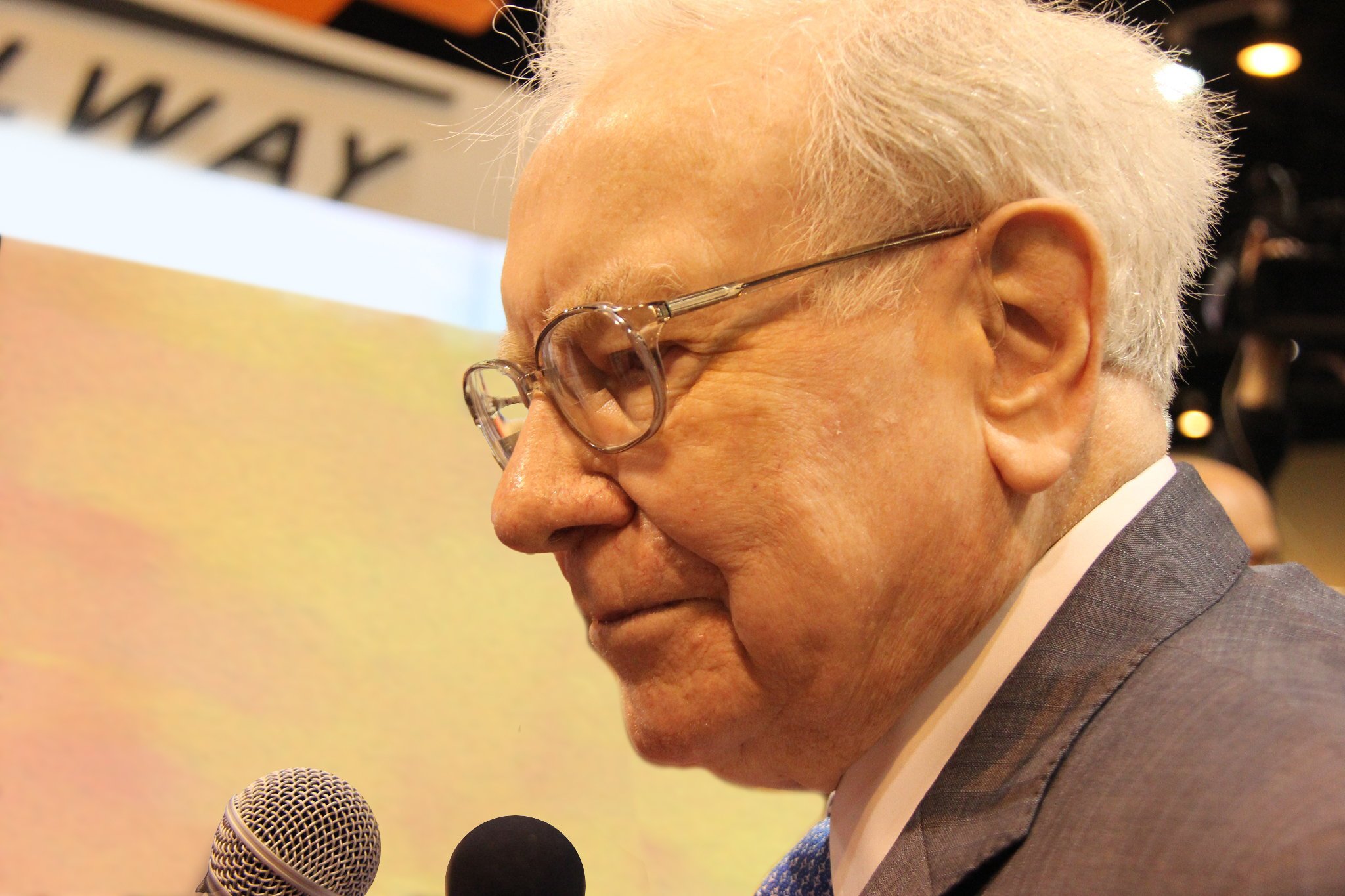
Image source: The Motley Fool.
The key to protecting your investments
When the market is weak, it can be tempting to avoid investing or even selling your stocks for fear that prices will fall further. But according to Warren Buffett, it’s one of the worst decisions to make during a recession.
“A simple rule dictates my purchase,” Buffett explained in a 2008 opinion piece for The New York Times. “Be afraid when others are greedy, and be greedy when others are afraid.” He went on to point out that “bad news is an investor’s best friend. It allows you to buy a piece of America’s future at a discount.” In other words, when the future is bleak, buy more.
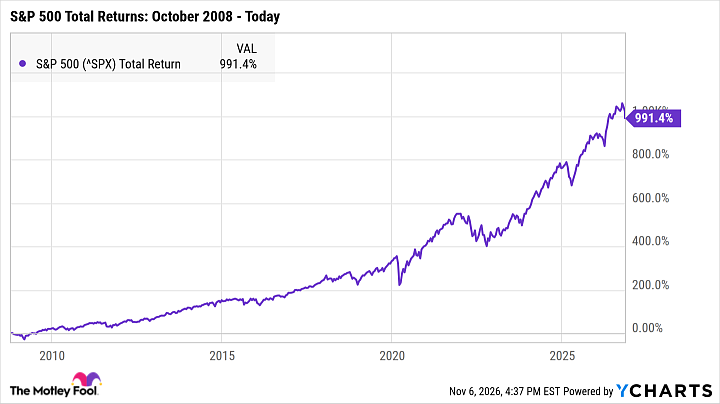
In the years since this article was published, the S&P 500 has soared nearly 1,000%, and the investors who have reaped the greatest rewards are those who stayed invested even when times were tough.
^SPX data by YCharts
“In the long run, the stock market news will be good,” Buffett continued, pointing to the Dow Jones’s extraordinary rise from 66 to 11,497 over the course of the 20th century.
“You would think it would have been impossible for an investor to lose money in a century of such extraordinary gain. But some investors did. The unlucky ones only bought stocks when they felt comfortable doing so, then sold when the headlines made them nauseous.”
History shows that Buffett’s strategy has never been wrong
Regardless of the amount of short-term volatility, the market has always managed to recover.
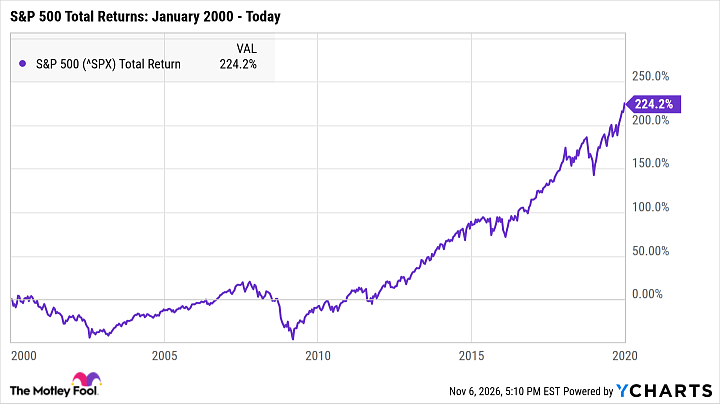
During the dotcom bubble of 2000, for example, the S&P 500 fell nearly 50% due to the collapse of the technology sector. It took until 2007 for the index to reach a new all-time high, and just a few months later the Great Recession began.
However, between 2000 and 2020, the S&P 500 still saw total returns in excess of 224%. In other words, even if you had invested at the worst time — right before the start of two of the worst recessions in U.S. history — you would still have more than tripled your money in 20 years.
^SPX data by YCharts
This trend also continues throughout history. Between 1919 and 2025, all 20-year rolling periods of the S&P 500 ended with positive total returns, according to Crestmont Research analysis. By holding an S&P 500 ETF or index fund for 20 years, it has always been more difficult to lose money in the stock market than making money.
What should investors do now?
Whatever the future of the market, it is essential to continue investing. However, it is more important than ever to choose your actions wisely. Weak companies can thrive during economic booms, but recessions and bear markets will hit these stocks the hardest. The weakest among them can crash and never recover.
Companies with strong fundamentals – such as a sustainable competitive advantage, healthy finances and a competent management team – are most likely to bounce back after a crash. The more of these stocks you own, the better prepared you’ll be to not only survive a downturn, but thrive over time.
Gn bussni

