Fusion energy seems like a perpetually elusive goal, but with new ideas and better equipment, scientists are getting closer and closer to harnessing the power of stars. But some physicists are testing a different combination: better equipment for an old idea.
Physicists recently reported the successful experimental demonstration of helicon current drive at the National DIII-D Fusion Facility. First proposed in the 1980s, helicon current uses a specific type of high-frequency radio wave to drive the hot plasma of a fusion reactor, producing an internal electrical current to stabilize the reaction. However, the equipment at the time simply wasn’t able to meet the theory, so the idea was abandoned until now. But thanks to major advances in reactor equipment, scientists successfully tested and demonstrated helicon current drive for the first time.
Physicists Bob Pinsker, Jeff Lestz and Bart Van Compernolle of General Atomics were co-senior authors of the paper describing the results, published recently in Physical Review Letters.
The key to continued fusion
Most major fusion facilities use a tokamak, a donut-shaped machine that uses magnetic fields to confine plasma. A set of magnetic coils generates a toroidal field all around the donut, while a current-carrying magnet called a solenoid creates a second magnetic field all around the donut, according to an explanation from the U.S. Department of Energy.
However, as Pinsker explained to Gizmodo, the tokamak’s operating time is “inherently limited” in its duration (pulse length) because the plasma current is driven by a transformer-like arrangement. At some point the solenoid must be reset and the plasma must be stopped. This inherently creates disruptions in the operating time of a tokamak. For example, Pinsker said, DIII-D’s tokamak pulse duration is limited to only about 10 seconds. Larger reactors can maintain these pulses for about 500 seconds (8 minutes) or even 1,000 seconds (17 minutes), he added.
Ultimately, however, tokamak reactors operating this way cannot operate in a “steady state,” which is what most design studies indicate is necessary for them to be commercially viable, Lestz said. As a result, scientists have explored so-called “non-inductive” methods for driving the tokamak’s current using different electromagnetic waves.
“So helicon current is not a different approach to fusion energy,” Pinsker explained. “(R)ather, it’s another technology that can be applied to the tokamak to improve this approach.”
A theory ahead of its time
The idea behind these methods, according to Pinsker, is to introduce radiofrequency energy into the torus so that it excites certain types of waves in the plasma. These then resonate with the electrons in the plasma, which pushes the electrons, thus generating a current. This has been demonstrated on several tokomaks. However, the approach used in this experiment might fail to penetrate deeper into the plasma, Lestz added.
Scientists hypothesize that another type of radio wave in the same frequency range – a helicon – could address these concerns. According to Pinsker, whose doctoral thesis focused on this proposal, there were three main reasons why things didn’t work out in the 1980s. First, the plasmas in the tokamaks at the time were “insufficiently reactor-like” to properly absorb the helicon waves. Second, the wave launch technology was not efficient enough. Finally, diagnostic techniques were not advanced enough to allow scientists to look for non-inductive currents in plasma.
“Everyone who tried it in the ’80s was sort of hoping for a miracle,” Pinsker said in an interview with the American Nuclear Society (ANS). “We were hoping that this part of the model was wrong. … The problem was always that we didn’t have a reactor nearby to test it.”
Predictions come to life
But over the following decades, the field underwent dramatic changes. As early as 2014, Pinsker and his colleagues prepared to revive the old theory, and a new round of experiments began in the summer of 2024. DIII-D had a specialized antenna called a “comb line,” which could launch helicon waves toward plasmas hot enough to absorb them. Additionally, improvements in measurement techniques allowed the team to take a closer look at how their experiments unfolded.
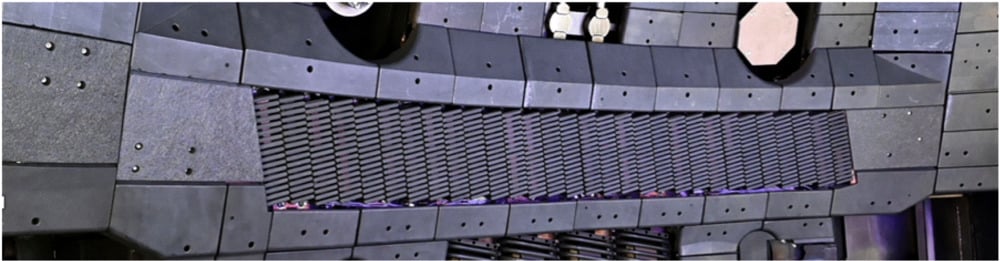
Anyway, this time it worked. Pinsker reported to ANS that the team could clearly identify heating in the plasma resulting from the absorption of the helicon wave. But before getting excited, the researchers took particular care to validate the statistical evaluations. Pinsker added to the ANS, recalling how they “really went to extremes to make sure that we couldn’t be accused of cherry-picking and showing a fluke that had a big effect.”
In “a few” years
The results look impressive, but there is still a long way to go, Pinsker said. DIII-D is also an experimental facility and cannot replicate the “reactor-like conditions” for which helicon current is most promising, Lestz told Gizmodo.
“Like any good experiment, I would say that our results suggest many avenues for further work and raise a number of additional questions,” Pinsker added. “I think the simplest way to dramatically improve our results would be to dramatically increase the amount of power we could couple to the helicon waves in the plasma.”
In short, as with most fusion research, only time will tell. But these new discoveries prove that over time, science finds a solution. And it’s a promising idea, I think.
Gn tech