
Iran on Monday urged Washington to accept its demands and end the war, in light of the costs of continuing the conflict and the feelings of American voters after last week’s midterm elections, which saw Democrats take control of both houses of the US Congress.
Iran’s Foreign Ministry also said U.N. inspectors had examined one of its nuclear sites in Bushehr, saying the inspection “serves as evidence that this regulated cooperation continues” between Iran and the International Atomic Energy Agency.
Iran’s call for the United States to accede to its demands came as the country’s president said its supreme leader had asked officials to end the prolonged standoff. It also comes amid reports of a US offer to partially lift its blockade in exchange for reopening the Strait of Hormuz, a key route for global oil and gas supplies.
Iranian Foreign Ministry spokesman Esmaeil Baghaei claimed the United States was being dragged into war by Israel, repeating a claim the country has already made. In the United States, critics of Israel on both sides of the party have made the same accusation.
“Washington must understand to what extent its involvement in the objectives of a regime that commits genocide and pursues a policy of incitement to war can create problems for it,” he said during a press briefing. “US officials must understand that following Israeli policies and military aggression against Iran carries heavy costs for American society and its ruling class. »
Referring to the Democrats’ decisive victory in the recent US midterm elections, which a number of officials blamed on widespread opposition to the war, Baghaei said a deal depended on Washington understanding the “feelings of its own society” and that the Iranian proposal was “the most logical, the most operational and the most structured road map.”
He reiterated Iran’s position that the United States must give in to Iranian demands in order to reopen the Strait of Hormuz.
“Tehran will only sign and implement an agreement that fully guarantees the national interests and legal rights of the Iranian nation,” he stressed, welcoming the mediation efforts of Pakistan and Qatar.
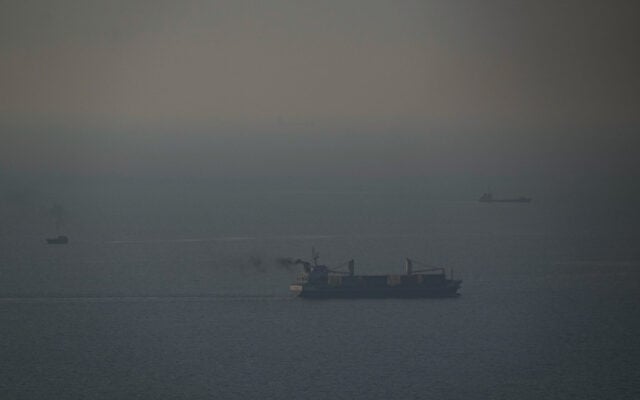
Baghaei called the new US Iron Gate task force, intended to shut down Iran’s ground military supply networks, “a way to distract from US midterm results.”
Responding to US Secretary of State Marco Rubio’s statements to reporters on Sunday that Iran’s demands were “outrageous and ridiculous”, Baghaei said “the US attack on Iran in the middle of negotiations is what is outrageous and ridiculous”, referring to US strikers on Qeshm Island.
Iranian state media reported explosions Sunday evening in Qeshm, near the Strait of Hormuz. No vital infrastructure or services were hit by the US attack, a provincial official told the semi-official Fars news agency, adding that the targeted sites were far from residential and commercial areas.
A senior Iranian source told Reuters the U.S. strikes targeted Iranian radar systems used for both air defense and maritime navigation, as well as bases for missile launchers and mine-laying systems.
Iran says IAEA inspects nuclear power plant
Baghaei also said Monday that the International Atomic Energy Agency recently inspected Iran’s Bushehr nuclear power plant.
He said the U.N. nuclear watchdog had “failed in its legal obligations by adopting positions that overlook culpability and wrongdoing in the assault on Iranian facilities.”
“Professional communication between the Iranian mission in Vienna and the agency is ongoing,” Baghaei said.
Iran announced Monday that it had summoned the Austrian charge d’affaires after the European country refused to allow the Iranian nuclear chief to participate in a meeting of the UN nuclear agency in Vienna.
“The refusal of the Austrian government to issue visas to the delegation of the Islamic Republic of Iran is a completely unjustified decision,” Baghaei said. He claimed the decision was taken under pressure from the United States.
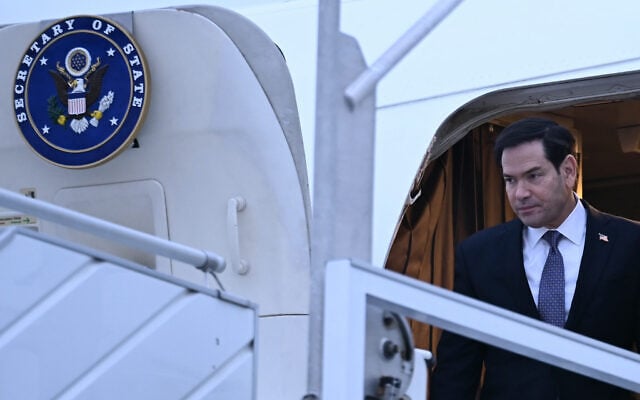
The United States reportedly offered Iran a partial lifting of the blockade
The United States has proposed to Iran a phased plan to open the Strait of Hormuz that would begin with a partial lifting of its blockade, the Emirati newspaper Erem News reported, citing diplomatic sources close to mediation negotiations between Washington and Tehran.
The second phase would include nuclear negotiations, with a gradual lifting of sanctions on Iran and the release of frozen Iranian funds, according to the report.
Iran has not responded to the US offer and wants Washington to make written commitments and take concrete steps to lift the blockade of Iranian ports and release funds. However, according to a diplomatic source, Washington considers Iran as the party that violated the June memorandum of understanding between the parties and therefore believes that it is it that should make commitments on the opening of Hormuz before moving forward.
According to Iranian journalist Ali Gholhaki, considered close to the regime’s security services, the latest Qatari proposal would allow Iran to enrich uranium to 3.67%, dilute Iranian highly enriched uranium inside the country, lift the US naval blockade, bring IAEA inspectors to Iran and release up to $10 billion in Iranian assets.
Qatari PM in Washington for talks with Trump, Vance
Meanwhile, diplomatic efforts to end the conflict continued, with Qatar’s Prime Minister and Foreign Minister Sheikh Mohammed bin Abdulrahman Al-Thani meeting with US President Donald Trump and Vice President JD Vance in Washington on Monday after visiting Tehran last week, according to Reuters.
Trump’s meeting with the Qatari prime minister lasted just under an hour, a White House official said.
The meeting was notably held closed to the press, breaking with Trump’s general preference of answering questions from reporters while welcoming world leaders.
Anwar Gargash, a senior United Arab Emirates official, said a comprehensive political settlement between the United States and Iran appeared difficult.
“We should… prepare for a long period of uncertainty during which neither a decisive resolution nor a stable regional order can be taken for granted,” Gargash said.
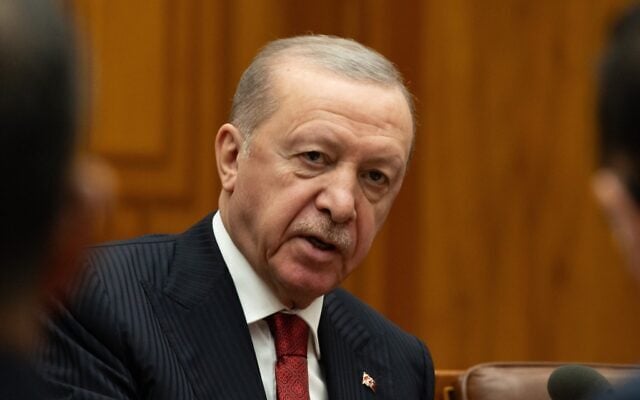
Concern over the war has gripped the region for months, and Turkish President Tayyip Erdogan said Monday that he had told Trump that Ankara did not want to see further escalation.
“We emphasize at every opportunity that it is possible to resolve these issues through dialogue and diplomacy. Unfortunately, we are once again seeing a negative change. We are doing everything possible to prevent this,” Erdogan told reporters.
Iranian President: Supreme Leader wants to end “no war, no peace” reality
Iranian Supreme Leader Mojtaba Khamenei has asked the country’s leaders to end the “no war, no peace” state against the United States, Iranian President Massoud Pezeshkian said.
“The supreme leader has ordered us to end a situation of neither war nor peace,” said Pezeshkian, seen as one of the top officials who would like a deal with the United States to ease his country’s economic woes. “We can discuss with dignity and put an end to this matter with dignity. »
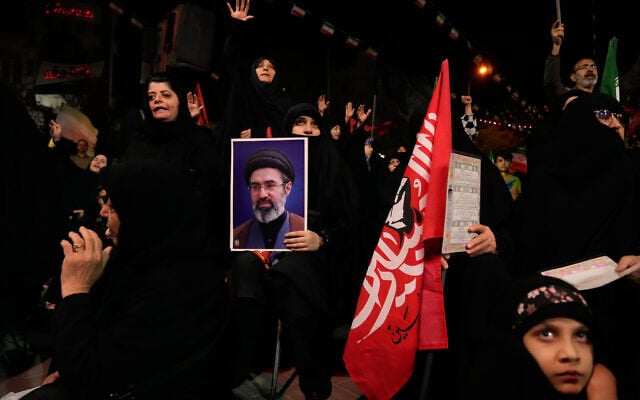
Khamenei has not been seen or heard from since he took office in March, and he was reportedly seriously injured in the Israeli strike that killed his father. It is not really clear whether he is actually giving orders to the Islamic Republic.
Pezeshkian said he understood that the Iranian public was suffering from U.S. sanctions and blockade: “I am here today and I have a responsibility to serve the country and its people…I cannot accept that anyone in the country goes to bed hungry.” »
He also said he was moving to a smaller office in order to save energy.
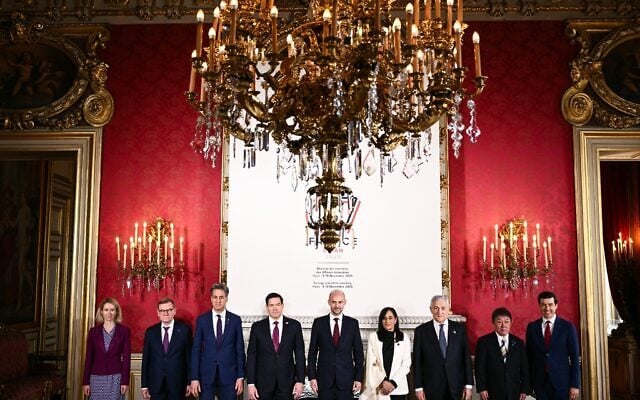
G7 ministers press Rubio on Iran, Ukraine in Paris
Top G7 diplomats have begun a two-day meeting in Paris, during which European foreign ministers are expected to pressure US Secretary of State Marco Rubio to ensure that any settlement to the war with Russia is fair to Ukraine and to avoid any further escalation with Iran.
Rubio said he expected allies to have a lot of questions about the conflict and next steps, according to the AP.
The meeting of ministers from major industrialized countries from Britain, Canada, France, Germany, Italy, Japan and the United States provided an opportunity for Europe and its allies to express their concerns to their American counterpart.
Regarding Iran, Europeans were impatiently awaiting a resolution and a return to normal maritime traffic in the energy transit hub of the Strait of Hormuz.
Against this backdrop, oil prices fell sharply on hopes of diplomatic negotiations to end the US-Iran war, with the main international contract, North Sea Brent, falling more than 5% to $93.32 per barrel, while US benchmark West Texas Intermediate fell 4.5% to $86.75 per barrel.
Gn world

