
Salvadoran troops supported the police operation before the Haitian Prime Minister’s visit to El Salvador.
Published on November 10, 2026
Salvadoran President Nayib Bukele said Salvadoran troops had targeted one of Haiti’s largest criminal organizations. This comes amid international calls for respect for international human rights law.
Bukele announced the attack on the X social media platform on Tuesday.
Recommended Stories
list of 3 itemsend of list
“We destroyed the house of (gang leader) Lanmo San Jou and the headquarters of the 400 Mawozo gang,” the right-wing leader wrote.
Bukele posted a video of helicopters flying over and firing at the Croix-des-Bouquets site, near Port-au-Prince.
The operation would have been carried out on Sunday by the Haitian police with the support of Salvadoran troops and would have left 20 dead.
The announcement comes as Haitian Prime Minister Alix Didier Fils-Aimé prepares to travel to El Salvador next week to discuss the future of Salvadoran troops in her gang-plagued Caribbean country.

Amnesty International urged both countries to ensure that all operations carried out by Salvadoran forces in Haiti comply with international human rights law, and called on them to make public the agreement governing the massive deployment.
“Both governments must make public the agreement governing the deployment and explain how they supervise the deployed forces, what rules govern the use of force, to whom they are accountable and how people can report possible violations without fear of reprisals,” said Ana Piquer, Amnesty’s Americas director.
“Ensure that all operations carried out by Salvadoran forces in Haiti comply with international human rights law,” she urged the leaders of the two nations.
She also called on both countries to open “prompt, independent and impartial investigations into all allegations of human rights violations.”
“The response to gang violence must not repeat the abuses and impunity that characterized previous interventions in Haiti,” she added.
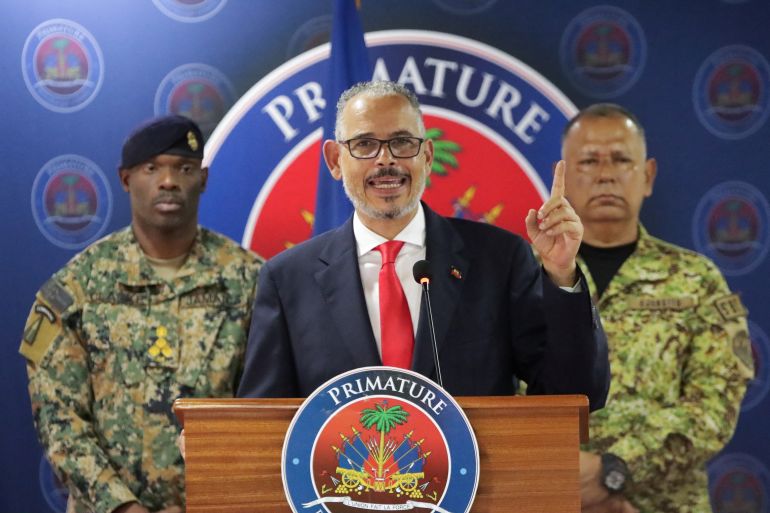
Some 2,000 soldiers have been sent by the Salvadoran president to Haiti since the disappearance, in mid-October, of four Salvadoran soldiers.
The vast majority do not participate in the UN-backed Gang Suppression Force (GSF), raising concerns about their rules of engagement.
Bukele initially said the deployment was aimed at bringing home four Salvadoran GSF soldiers who went missing during an Oct. 18 ambush.
But more recently, he has hinted at a broader goal of eliminating Haiti’s powerful gangs, as he did in his own country with a campaign riddled with allegations of human rights abuses.
Haiti is expected to hold elections in July and October next year, marking its first elections in more than a decade.
Gn world

