
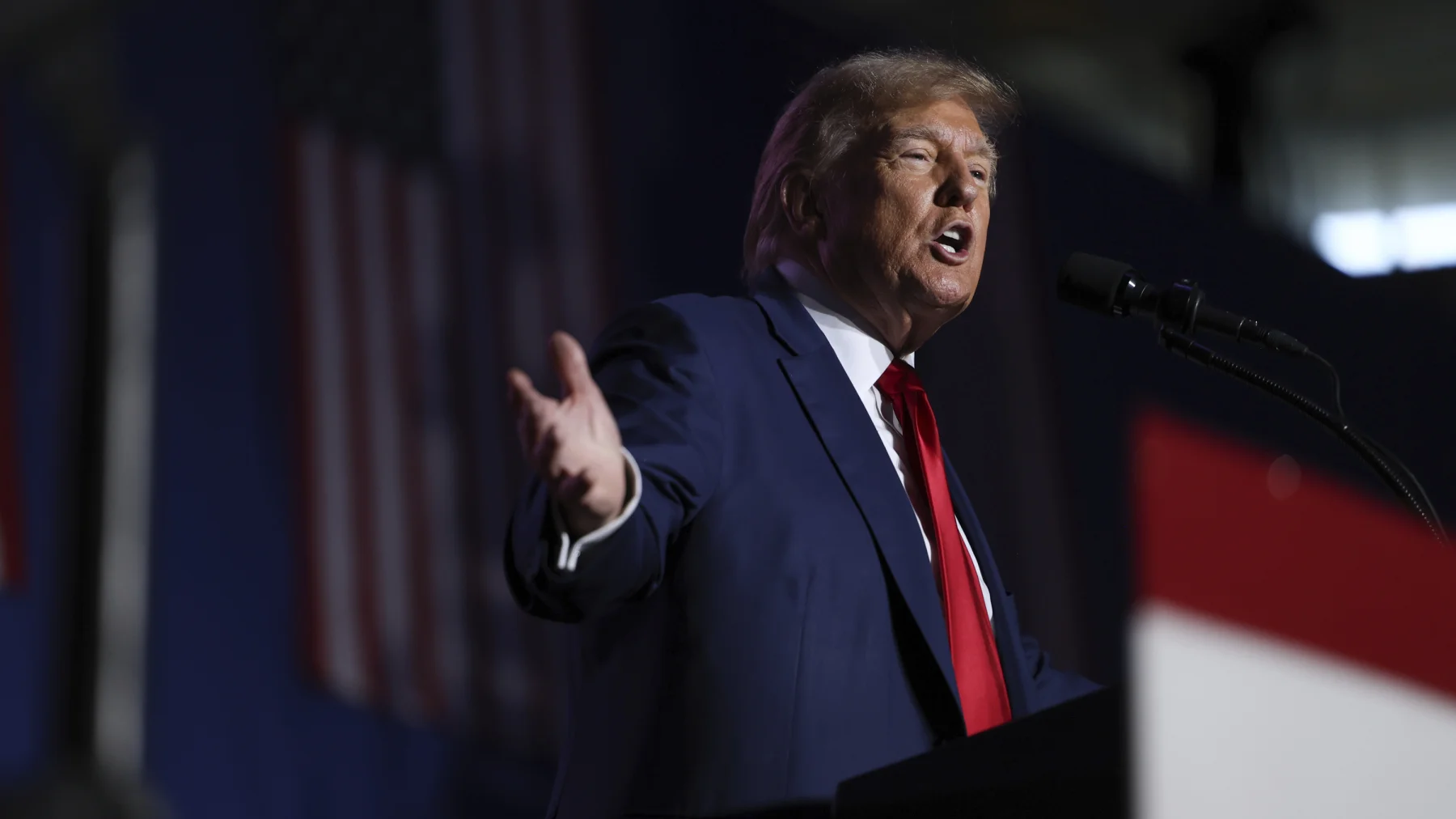
During the last presidential campaign, Donald Trump proposed changing the way university accreditation works in order to control higher education institutions.
Reba Saldanha/AP
hide caption
Reba Saldanha/AP
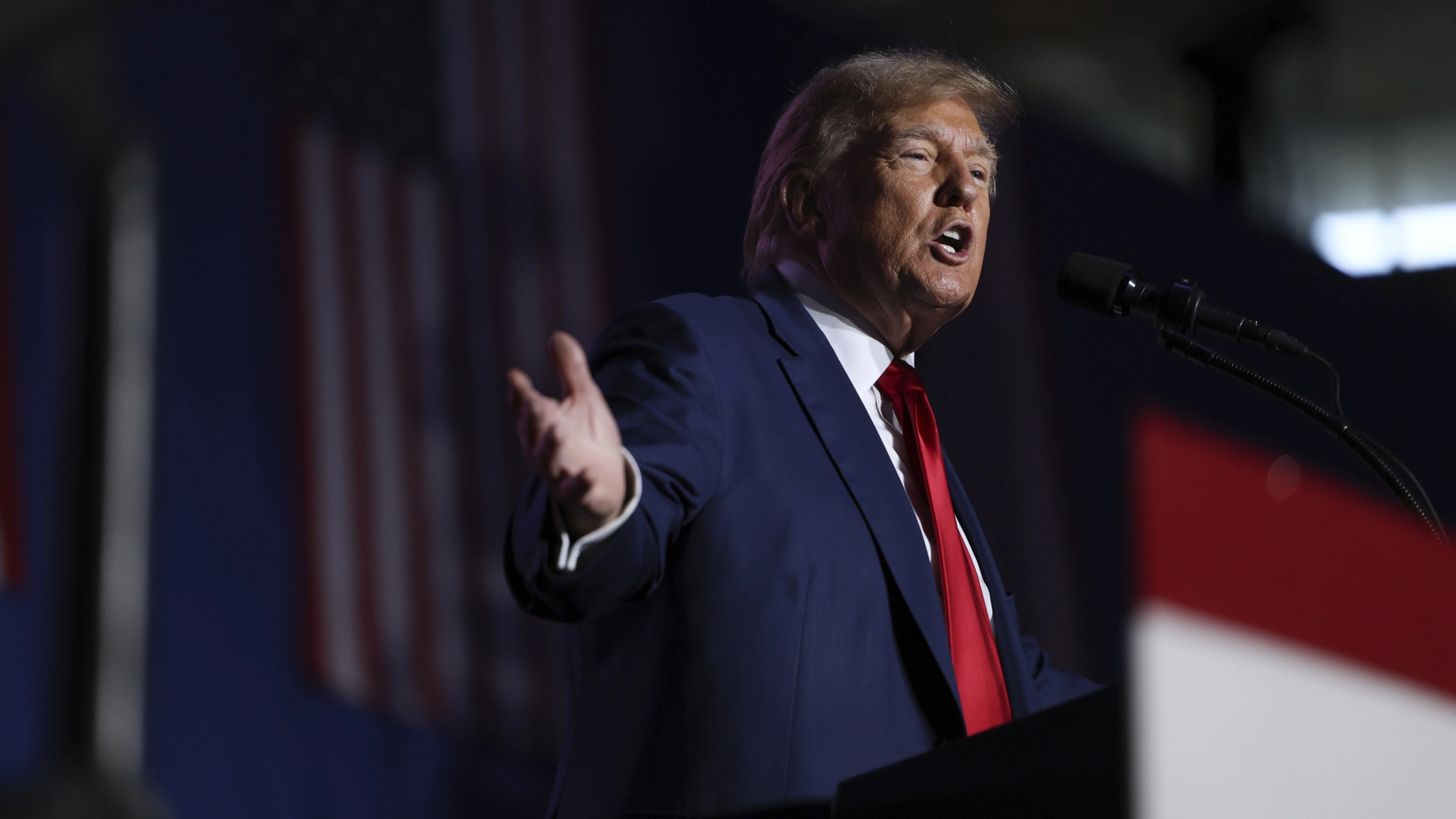
During the last presidential campaign, Donald Trump proposed changing the way university accreditation works in order to control higher education institutions.
Reba Saldanha/AP
Catch up on what you missed with our Education newsletter, sent weekly.
The Trump administration has made many education policy changes that are hard to miss: cutting the U.S. Department of Education’s workforce by about half, eliminating research funding, uprooting special education staff, upending student civil rights protections, overhauling student loan repayment plans, cutting college loans — the list goes on.
But the latest change — which President Donald Trump called a “secret weapon” — has gone largely unnoticed, even though it is expected to take effect in July. That’s because it’s hidden in a singularly boring word:
Accreditation.
“Now is the time to reclaim our once-great educational institutions from the radical left,” Trump said in a 2023 campaign video. “Our secret weapon will be the college accreditation system.“
Specifically, he pledged to revise it – a particularly far-fetched threat from a politician who usually disdains pranks. Today, the Department of Education delivered on Trump’s promise.
What is accreditation?
It’s the system the U.S. government relies on to determine which colleges and universities deserve to receive millions, if not billions, of dollars in federal student loans and grants.

Basically, colleges pay their dues to third-party, nonprofit accrediting organizations that then review schools in a variety of categories, including program quality, faculty qualifications, physical facilities, financial strength, and more.
An accreditor’s job is essentially to make sure students are getting good value for their money and to prevent shady schools from pocketing taxpayer dollars without delivering quality degrees.
Several decades ago, Congress also clarified that accreditors were not part of the government.
“Congress wanted accrediting agencies to be independent of the federal government. They wanted agencies to set standards independent of the federal government,” says Antoinette Flores of the Council for Higher Education Accreditation.
Federal law requires accrediting agencies to evaluate schools in several key areas – such as student achievement, faculty and curriculum – and gives oversight to the Department. But Flores says the law lets accreditors decide what standards a school must meet to determine its worth.
In line with Trump’s 2023 promise, the department has now overhauled federal rules for accreditors — changes it says will foster innovation and reduce costs. Some higher education experts worry that these changes will not only harm students, but also allow the department to further punish schools it doesn’t like and even control political speech on campuses.
“This rule gives (the Department of Education) the power to interfere in the internal affairs of colleges and universities in a way that it has never been able to do in the past,” warns Bob Shireman, an accreditation expert and former senior official in the Obama Education Department.
Changes in what accreditors will measure
Although the Department of Education cannot legally tell accreditors how to precisely evaluate colleges and universities, it does oversee some key requirements, and these new rules significantly expand those requirements and the department’s authority in the matter.
Specifically, accrediting bodies must now evaluate school policies regarding intellectual diversity, “ensuring that students are exposed to a range of viewpoints,” according to a department press release.
It’s unclear how this requirement will work in practice, but opposition has been strong.
“For the first time,” Shireman says, “you will have the opportunity for the federal government to go to at least one accreditor, but through the college accreditors, and tell them what balance of views the federal government thinks they should have.”
The department could then, in theory, threaten a school’s accreditation and, ultimately, its access to federal student aid if it considers them unbalanced.
Regarding the change, PEN America, a nonprofit organization dedicated to defending free speech, warned that “this is part of a plan to weaken (higher education) and its historic protections for the freedom to think, teach, research and learn.”
The Department of Education says it’s doing the opposite, calling it “a common-sense step toward restoring intellectual diversity by … creating an environment where different perspectives can be debated openly and fairly,” Ellen Keast, the deputy secretary’s communications director, wrote in a statement to NPR.
“The regulations impose no specific policies,” Keast added, “and give the department no authority to control speech. Instead, they reinforce a fundamental principle: truth emerges through rigorous debate, not through imposed consensus.”
Nonetheless, even some conservatives have expressed concern about this expansion of federal power. Beth Akers, an economist and senior fellow at the conservative American Enterprise Institute, supports much of the overhaul but believes the change goes too far.
“(It) kind of puts the administration in a position of judgment on institutions, on accreditors, on whether or not they’re teaching ideology appropriately. And that’s something I’m not comfortable with,” Akers says.
While the Department of Education insists it can’t control political speech on campus, that’s what Trump promised in this 2023 video, when he pledged to “fire the radical left accreditors who have allowed our universities to be dominated by Marxists, maniacs, and lunatics.”“
Not all changes are controversial. One has some bipartisan support, says Emily Rounds, senior advisor on higher education policy at the center-left think tank Third Way.
This change will push accreditors to give more weight to students. resultsRounds said, focusing on questions like: “How much will they make?” What are the licensure success rates for certain programs?
The new changes to the accreditation rules are expected to take effect before the 2027-2028 academic year. Because they were developed through the traditional rule-making process, it will be difficult for Democrats to undo them.
How we got here
New political tensions around accreditation began bubbling under the Biden administration — between Republican-led states and accreditors they saw as too powerful and too liberal.
“The way that (accreditors) exercise their authority has really offended people in terms of the ideological standards that they impose on institutions,” Akers says.
Florida and North Carolina have actively clashed with their accrediting bodies over issues such as diversity, equity, inclusion, and viewpoint diversity on their public college campuses.
“When we said ‘No DEI,’ the accrediting body was saying to our universities, ‘Oh no no, you won’t be accredited unless you do DEI,'” Florida Republican Gov. Ron DeSantis said in June 2025. “Who the hell are they to say what our universities should do?”
DeSantis has pushed for the creation of a new accrediting body to replace the long-standing accrediting body for Florida’s public universities, saying he hopes to “overthrow the monopoly of the woke accrediting cartels.”
Five other state university systems – in Georgia, North Carolina, South Carolina, Tennessee and Texas – also announced they would switch to this new accrediting body, the Commission on Public Higher Education.
Facilitate the process of becoming an accreditor
Another of the Trump administration’s stated goals with its accreditation overhaul is to cut red tape and make it easier for schools and even states to create new accreditors. This, the administration hopes, will lead to a larger number of accreditors for schools to choose from.
“This rule promotes greater competition and innovation,” the ministry said in its press release.
According to the administration, competition will allow schools to seek the accrediting body that best fits their needs and reduce costs for schools and students. Additionally, if a school doesn’t like its accreditor, it will be easier to change schools mid-course.
One thing is certain: it will weaken traditional accrediting bodies and strengthen schools.
AEI’s Beth Akers says this is not a bad thing and that this change will allow schools to innovate and take risks. “We’ve been teaching students the same way for a very long time. Come sit in a class, take an exam and after you’ve been there long enough, we’ll give you the credits.”
With the new rules, Akers hopes, schools will be freer to experiment with everything from the value of a credit hour to how much time a student should actually spend in class.
But Bob Shireman, a former Obama administration official, warns that forcing accreditors to compete for the schools they will audit will not improve quality. “One person’s bureaucracy is another person’s consumer protection: checking if fire extinguishers are expired is bureaucracy.”
Likewise, Shireman worries that making it easier for colleges and universities to move from one accrediting body to another could also weaken student protections.
“If one (accrediting body) starts to identify problems, (schools) just shift their weight to another accrediting body. Then it becomes a real headache in terms of monitoring colleges, and we’re not able to catch problems early enough.”
Edited by Nirvi Shah
Gn headline

