
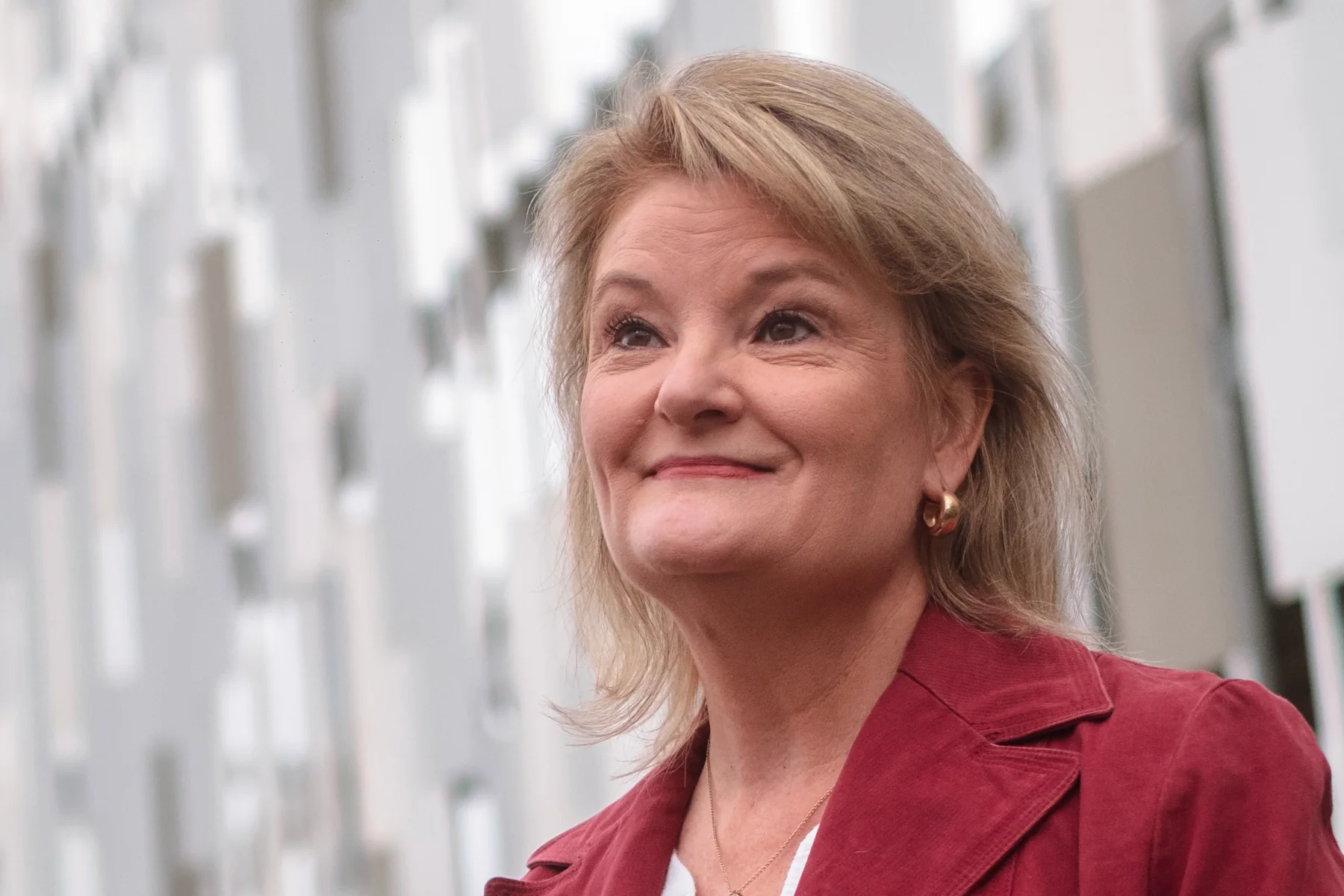
Kansas Democratic gubernatorial candidate State Sen. Cindy Holscher speaks to reporters after casting her vote during early voting at a polling location October 31, 2026 in Kansas City, Kansas.
Jim Vondruska/Getty Images
hide caption
Jim Vondruska/Getty Images
Midterm coverage: Live results | What to know | Stories from across the country
Stay connected: NPR Politics Podcast | NPR Politics Newsletter | NPR app
Democratic Sen. Cindy Holscher will retain the Kansas governorship for her party after defeating Republican Ty Masterson, according to an Associated Press race call.
Masterson, president of the state Senate, was endorsed by President Trump. Of the 36 gubernatorial elections across the country, Kansas was considered the most likely to flip from Democratic to Republican control.
Current Democratic Gov. Laura Kelly is term limited after serving for eight years in a state with a heavily Republican legislature and one that typically votes Republican for other offices and in presidential elections.
Holscher, 57, ran a campaign with populist overtones, promising to fight against “sweet deals” for billionaires. She linked Masterson to his work in the state Senate when it passed a tax cut under former Republican Gov. Sam Brownback that led to a series of budget crises and was later repealed.
Holscher opposed school vouchers, calling for more support for public schools, unlike Masterson, who supported school vouchers. She also called for a moratorium on new data centers and the legalization of cannabis as a way to generate revenue for the state.
Masterson, 57, has called for lower property taxes and said faith has influenced all his decisions, including in politics. He promised to be “the most pro-agriculture, pro-business, pro-oil and gas governor” the state has ever seen. He called Holscher “the most radical, liberal, socialist Democrat ever” on a ticket in Kansas.
“He likes to throw a lot of tags,” Holscher responded. “You know why? Because that’s all he has.”
Gn headline

