
If you’ve ever lived with an orange cat, you already know that they are built differently. It turns out that, genetically speaking, they actually are.
Orange fur is one of the most recognizable traits in the feline world and one of the most enduring mysteries of feline genetics.
Unlike most coat colors in mammals, it does not follow the usual rules of inheritance and for more than 60 years the exact gene responsible has remained hidden.
Two independent teams of researchers have discovered that any fiery-hued fuzz on our beloved claws is likely the result of a missing DNA segment in a non-protein-coding part of the cat’s genome.
“It remains a genetic mystery, an enigma,” Stanford University geneticist Greg Barsh told Sara Reardon. Science in 2024, when the results were first shared in pre-print studies.
Barsh and his colleagues discovered cat skin cells from which sprouts of orange fur express 13 times more RNA from a gene called Arhgap36compared to skin cells from orange hairless cats.
Expecting to find the protein-coding section of the overproductive system Arhgap36 The gene had mutated, and the researchers were surprised to find that it was the sequence preceding it that contained a deletion, presumably affecting the rest of the gene’s expression.
The 5-kilobase deletion was present in every orange cat the researchers examined in a database of 188 cats, which included 145 orange cats, 6 calico/tortoiseshell cats, and 37 non-orange cats.
A discovery was not a surprise. As long predicted, the mutated gene is located on the cat’s X chromosome, explaining why the color orange appears so differently between the sexes. Most orange cats are male, while most female cats with orange fur end up with different colored patchworks.
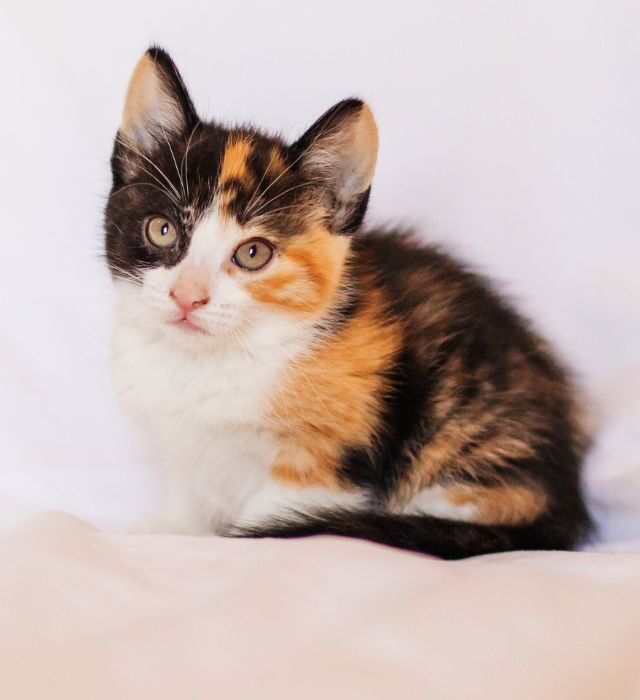
“Taken together, these observations provide strong genetic and genomic evidence that deletion of 5 kb causes sex-linked orange,” Barsh and his team write in their paper.
Since humans first cohabited with cats nearly 10,000 years ago, it’s curious that a black cat and an orange cat could be the parents of an unexpected range of kitten colors.
The male kittens of this pair are mostly orange or black, as would be expected. But female kittens may have a patchwork of black, orange and white calico, or mottling of tortoiseshell orange scattered throughout the black fur.
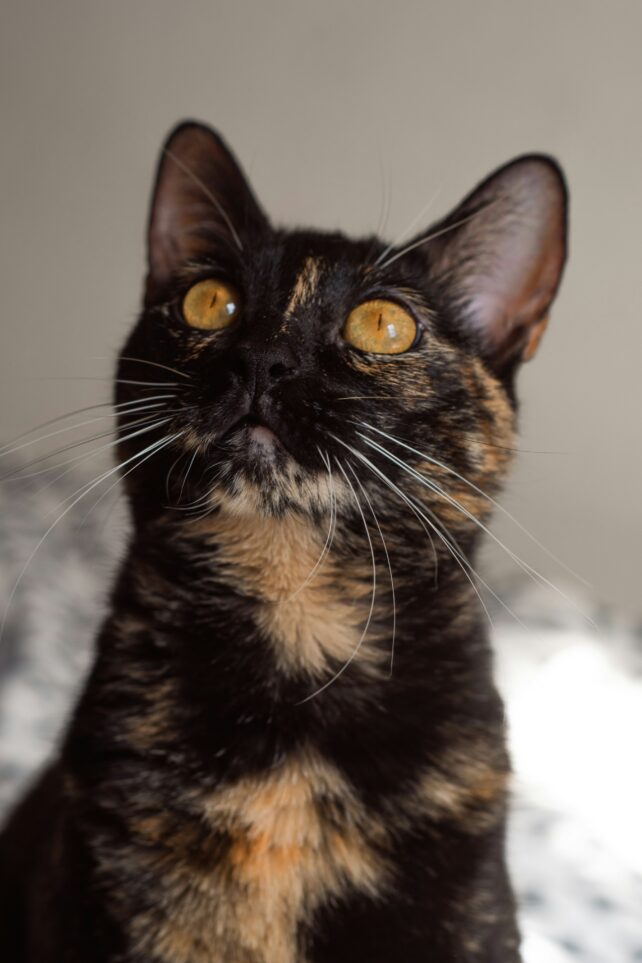
Both teams confirmed that the mutation responsible for orange fur is on the X chromosome, which explains why such stark differences in color patterns can appear between the sexes.
Unlike men who end up with just one copy of this mutation on their solitary X chromosome, women end up with two copies, one on each of the Xs they receive from each parent.
Mammals randomly inactivate one of the two X chromosomes in each of their cells to avoid expressing excess chromosome products. This leaves female orange kittens with an active orange mutation in some of their developing skin cell tissue, right next to neighboring cells in which the X chromosome with the mutated gene is disabled.
In the rare cases where both X chromosomes carry the mutation, the female turns into a hairy fireball as red as any male.
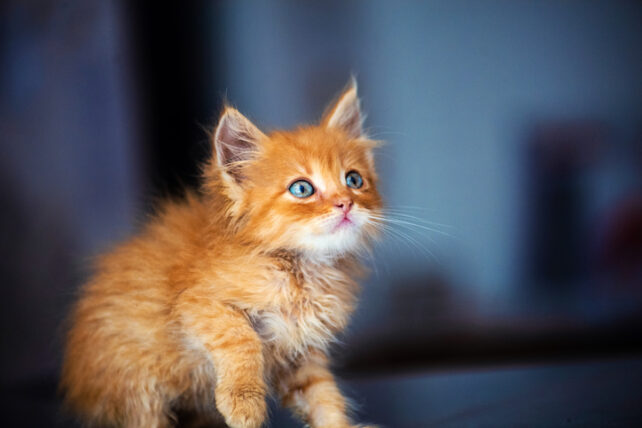
Orange cats have a hilarious reputation for not being the brightest of their species. Anecdotes aside, such links between cat coloring and cognition are not scientifically supported, and this mutation has no obvious negative consequences for health or mental well-being.
Arhgap36 is known to cause developmental problems in other animals when it functions too much or poorly. But it appears that in orange cats, the gene is overexpressed only in developing, mature pigment cells called melanocytes.
“The difference between tortoiseshell cats and calico cats is the presence of an additional white spot mutation in the calico that affects the ability of developing melanocytes to survive when they migrate away from the neural crest, thereby allowing the surviving melanocyte clones to grow into a larger body region,” Barsh and colleagues explain.
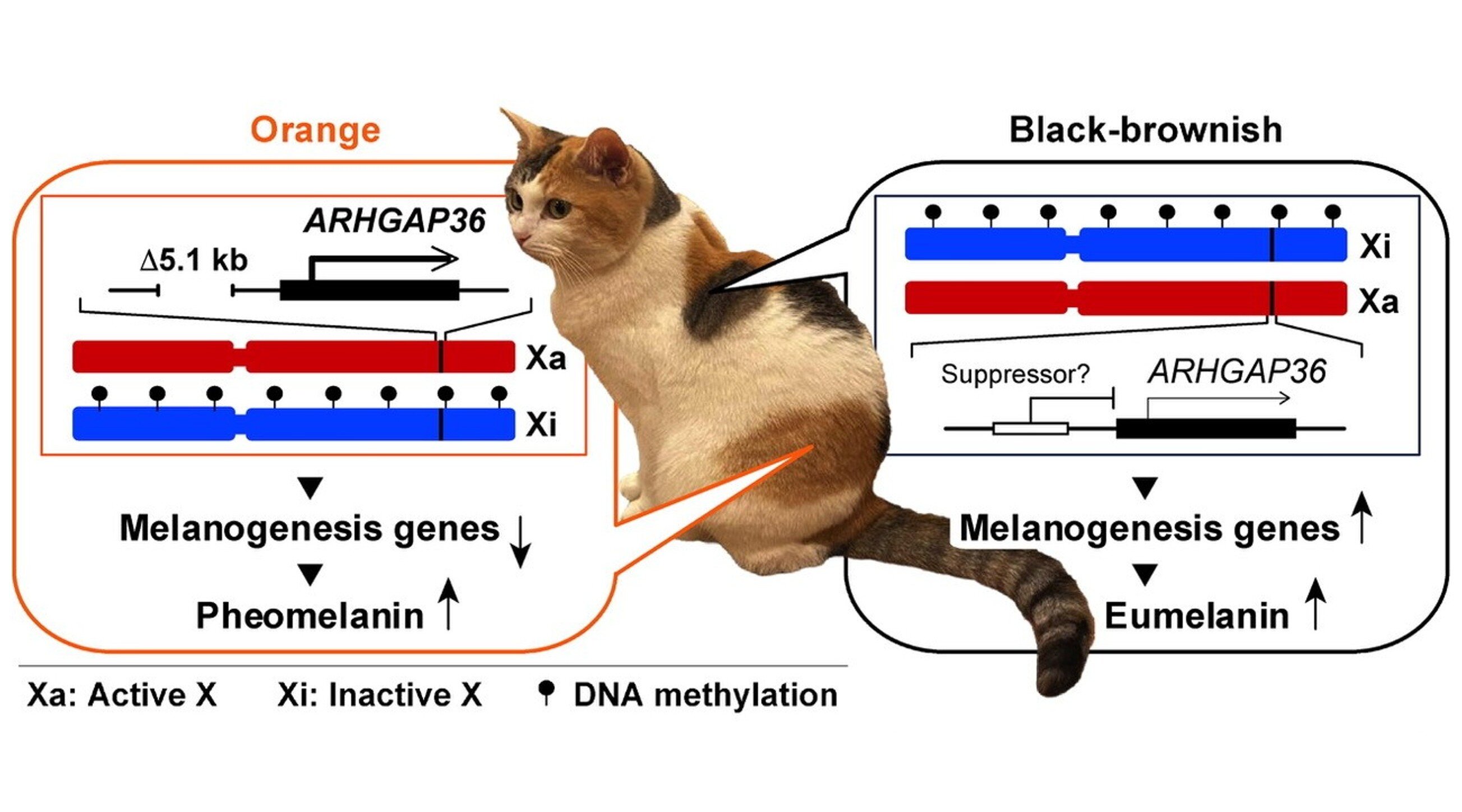
The second study, led by Kyushu University geneticist Hidehiro Toh, also identified Arhgap36 like the gene for orange fur in cats. They found that greater expression of this gene suppresses color pigment genes, shifting dark brown to black eumelanin pigments toward reddish to yellow pheomelanin pigments.
Whatever is behind their flamboyant coats, orange cats are in good company.
A recent study of 93 countries found that countries with more cats tended to report higher levels of happiness overall – although, as with any comparison between 93 countries, the researchers are the first to admit that correlation is not causation.
This research was published in Current biologyhere and here.
This article was fact-checked by Fiona MacDonald and edited by Fiona MacDonald. Although we are proud of our process, we are only human. If you spot an error, please let us know.
Gn tech