Portland Public Schools Superintendent Kimberlee Armstrong is proposing to close 10 Portland elementary schools over a two-year period, starting in fall 2027.
Armstrong’s recommended plan is a revision of the district’s previous proposals, which would have closed up to 14 schools.
If the school board approves Armstrong’s recommendation, the following schools would close next fall:
- Beach Elemental
- Peninsula Primary School
- Sabin Elementary School
- Creston Elementary School
- Buckman Elementary School
Under the proposal, other changes taking effect at that time would include several transfers of bilingual immersion programs, as well as the conversion of six K-8 schools (Beverly Cleary, César Chávez, Faubion, Laurelhurst, Sunnyside and Vernon) to become K-5 schools.
Other changes would come in fall 2028, including the closure of the following schools:
- Rose City Park Elementary School
- Lewis Elementary School
- Marysville Elementary School
- Woodmere Elementary School
- Irvington Elementary School
Along with these five closures, Armstrong’s plan includes converting Bridger K-8 to K-5 and moving the Odyssey K-8 targeted options program to Forest Park Elementary.
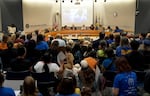
FILE – The room was packed for the Portland Public Schools Board of Trustees meeting at the Dr. Matthew Prophet Education Center on Oct. 6, 2026 in Portland, Oregon. PPS announced plans being considered by the district, including closing up to 14 schools and changing school boundaries.
Eli Imadali / OPB
The school board is expected to vote to approve or reject the recommendation on Dec. 15, and community input sessions are expected to continue.
It’s been more than a month since Portland Public Schools presented two proposals aimed at “right-sizing” Oregon’s largest district, which has seen an 11% enrollment decline since 2019. Since then, the district has held several feedback sessions to hear from students, families and staff about the proposals. While some families appear to support the district’s plan to close schools, PPS has faced harsh criticism over how it handled the process, sowing distrust in the district and the Portland community.

FILE – Attendees attempt to enter the Dr. Matthew Prophet Education Center to attend a Portland Public School Board meeting regarding the closure of up to 14 schools, in Portland, Ore., Oct. 6, 2026. The crowd pushed past the security team and went inside.
Eli Imadali / OPB
Portland is far from the only school district considering closures. In Salem-Keizer, school board members are also expected to vote on a proposed school closure next month. Across the country, school districts are announcing closure plans to deal with declining enrollment.
But in Portland, the idea of closing public schools has angered local officials as well as Governor Tina Kotek, many of whom emphasize the importance of schools to their neighborhoods.
In a news release Friday, Armstrong said the changes from the initial proposals were made to reflect community feedback.
Under his proposal, four schools would remain open: Sellwood Middle School, James John Elementary, Maplewood Elementary and Stephenson Elementary.
Sunnyside would no longer be at risk of losing its status as an environmentally focused school, although it would still become a primary and secondary school. The Mandarin bilingual immersion program at Martin Luther King Jr. Elementary School would remain there.
“These changes reflect the voices of families, students and staff who participated in this process,” Armstrong said.
“We know that closing or consolidating schools is a deeply personal and difficult matter. We have taken these comments seriously while remaining focused on the long-term needs of all PPS students.”
PPS says “right-sizing” the district will result in better resource allocation, more consistent staffing for counselors and social workers in schools and “more balanced class sizes.”
But many unknowns remain in this project. Among them are the impact on staff and students with disabilities, and whether the proposals will encourage more families to leave PPS and choose other educational options.
The PPS says it will provide “individualized transition support to students impacted by school closures, program relocations, or boundary changes,” with increased support for students with individualized education plans, or IEPs.
What this “right-sizing” proposal won’t do is solve the district’s budget problems. PPS projects a $65 million budget deficit for the upcoming school year and will spend next spring developing savings plans to balance the budget. If the school board rejects Armstrong’s “right-sizing” plan, it won’t change the district’s bleak budget outlook.
“Maintaining the status quo will not protect our students from the financial challenges ahead,” Armstrong said.
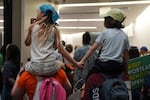
FILE – Palikulani Soileau, 7, left, holds hands with classmate Eliza Janowitch, 7, both second graders at Maplewood Elementary School in Portland, Oregon, as they attend a Portland Public Schools board meeting at the Dr. Matthew Prophet Education Center, October 6, 2026 in Portland, Oregon.
Eli Imadali / OPB
This plan will also not resolve the lack of trust that has been building for months in the neighborhood. Between a costly district contract to outsource its bonding program and concerns about district officials’ use of the messaging app Signal, the district faces a challenging environment that will only get worse as schools close.
Friday’s recommendation is a next step in Portland’s plans to reshape the school district. But it’s likely that more community reactions will follow.
Gn headline