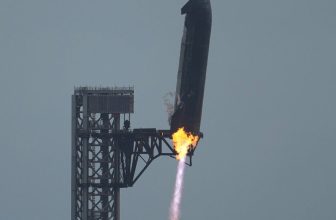
STAR BASE, Texas—The black and silver ship fell from the sky, emerging from the cloud deck near the very end of its flight. Incongruously, the rocket flew horizontally until the last moment, when three Raptor rocket engines ignited and it nosedived into a vertical position.
Slowly, gently, hesitantly, the upper stage of the Starship moved toward the waiting tower where two arms extended outward, waiting impatiently. The margins are incredibly narrow. Two bumps on either side of the rocket, each only sticking out about a foot, provided the only support the rocket would have on the arms.
Then, less than a minute after appearing, the Starship’s upper stage was attached to the launch tower, as comfortably as you want. And there it was, it was all over. SpaceX, almost a quarter of a century after its creation, had just taken an extremely important step towards the development and optimization of a massive and quickly reusable rocket.
We are dazzled
It was a breathtaking feat; a brilliant engineering achievement that required top engineers to think through a million different, difficult problems. And on Saturday evening, after a few tests in the Indian Ocean, they did it in front of the whole world.
Watching Starship launch a little less than a day ago, and knowing that it had circled the planet several times, added to the feeling of unreality of seeing this spaceship return to Earth under its own power and be captured by the tower.
It was like stepping into the future. SpaceX has already dazzled us by landing rockets on barges and bringing humans back into space with Crew Dragon. But this flight took things to another level. Spaceships are huge. They carry a huge amount of energy returning from orbit. And until a few years ago, it seemed beyond fantastical to think about capturing a rocket with essentially oversized wands.
Nevertheless, it happened.
Rapid reuse is now on the horizon
Humans have already built reusable spacecraft that have flown into orbit. In the 1970s, full of confidence after the triumphant moon landings, NASA designed and built several space shuttles. They had solid rocket boosters that were fished from the ocean and reused. The large orange external tank was not recovered after each flight, but the orbiters remained in space for two weeks or more before returning to Earth and landing on a runway.
Gn bussni