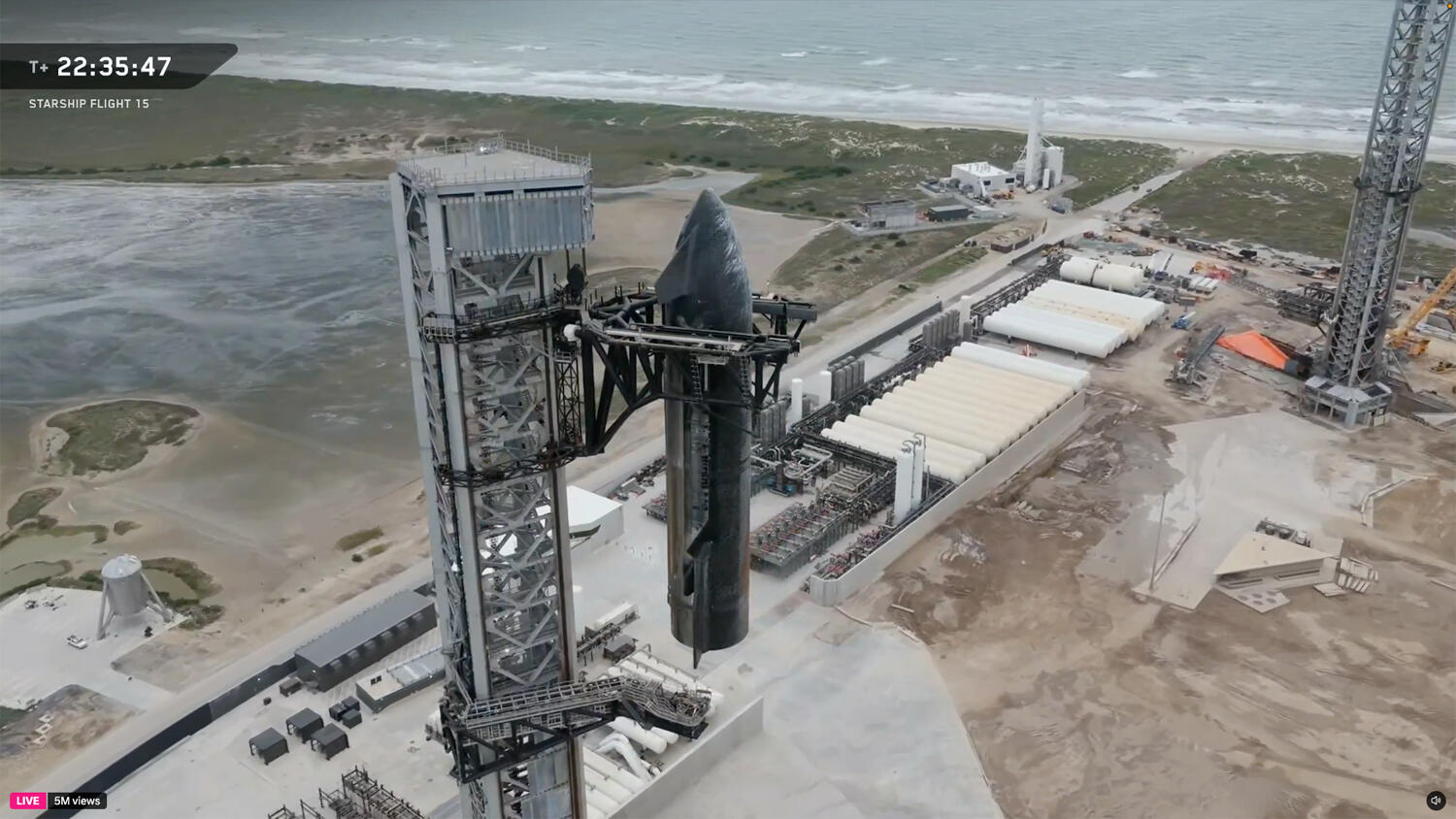
After a 22-hour stay in space, a SpaceX Starship rocket returned to Earth Saturday, enduring the scorching heat of re-entry as it headed toward its Texas Gulf Coast launch site, flipping vertically at the last moment and settling into the grip of two enormous mechanical arms on its launch gantry.
Crowds of SpaceX employees gathered nearby cheered and applauded as the rocket restarted three of its six methane-fueled Raptor engines to right itself, quickly slowing to a near hover as the robot’s arms moved for a mechanical embrace, catching the rocket an instant before the engine shut down.
“It’s so incredible to see!” said SpaceX commentator Jessie Anderson. “One of the most incredible and historic engineering feats of all time just happened before our eyes. Congratulations to our SpaceX teammates and everyone who has supported the Starship program.”
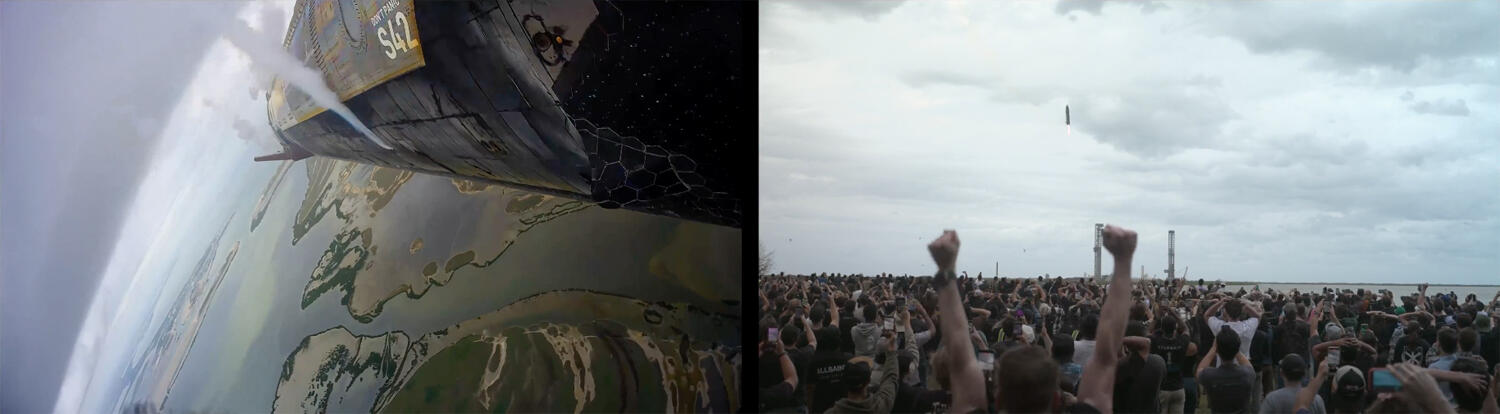
It was the first recovery of a spacecraft from orbit — previous test flights ended with planned ocean landings — marking a major milestone in SpaceX’s efforts to develop the first fully reusable orbit-class rocket, according to vehicle company founder Elon Musk, which will significantly reduce the cost of launching payloads to Earth orbit, the Moon and, eventually, Mars.
The Starship was launched Friday atop a Super Heavy booster using the same platform at SpaceX’s Starbase facility on the Texas coast. Standing 407 feet tall, the two-stage rocket is the most powerful launch vehicle ever built, generating some 16 million pounds of thrust at liftoff from 33 first-stage Raptor engines.
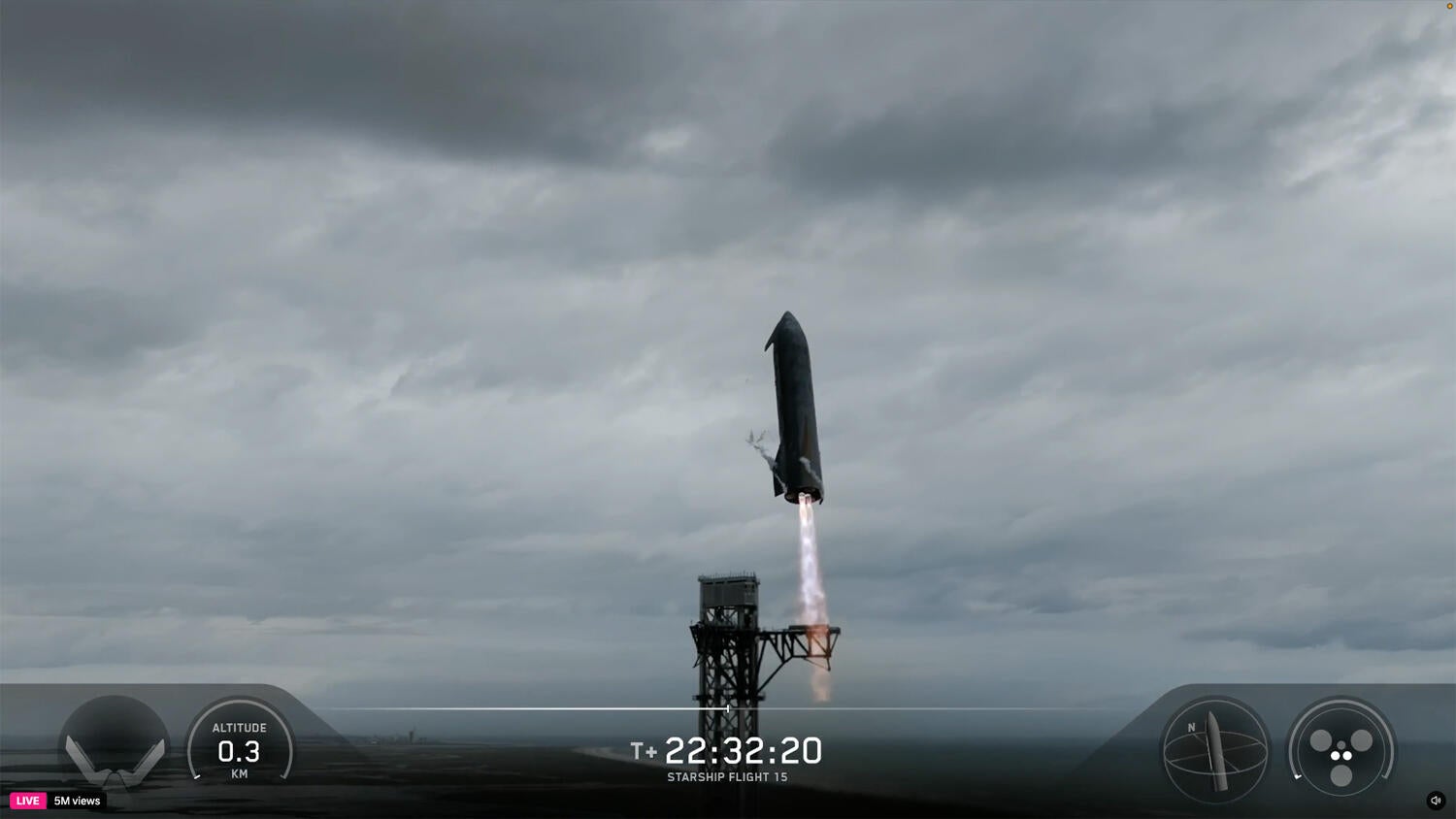
After propelling the Starship upper stage out of the lower atmosphere, the Super Heavy first stage attempted its own return to the launch site only to be captured by the gantry’s mechanical arms.
Before the giant rocket’s 15th test flight, SpaceX managed to recover the first stage boosters used in three previous launches. But the Super Heavy launched on Friday was diverted to landing at sea due to a guidance problem. The vehicle ran out of gas and exploded moments before hitting the water.
While it was a disappointment for the SpaceX team, Musk said in a post on social media platform
“This booster loss does not change our timeline for achieving high-volume, fully reusable Starship flights,” he said.
The upper stage of the Starship did not disappoint.
Broadcasting crystal clear images from cameras mounted on its steering fins, the spacecraft’s belly, covered in heat shield tiles, glowed red as the ship heated up in a fireball of atmospheric friction.
Crossing the Baja Peninsula and then northern Mexico, the big rocket descended quickly before flying just north of the launch site, tilting and falling belly first out of the low clouds, restarting its engines to right itself, then falling at an angle toward the gantry, slowing to a near-stop as the arms closed around it.
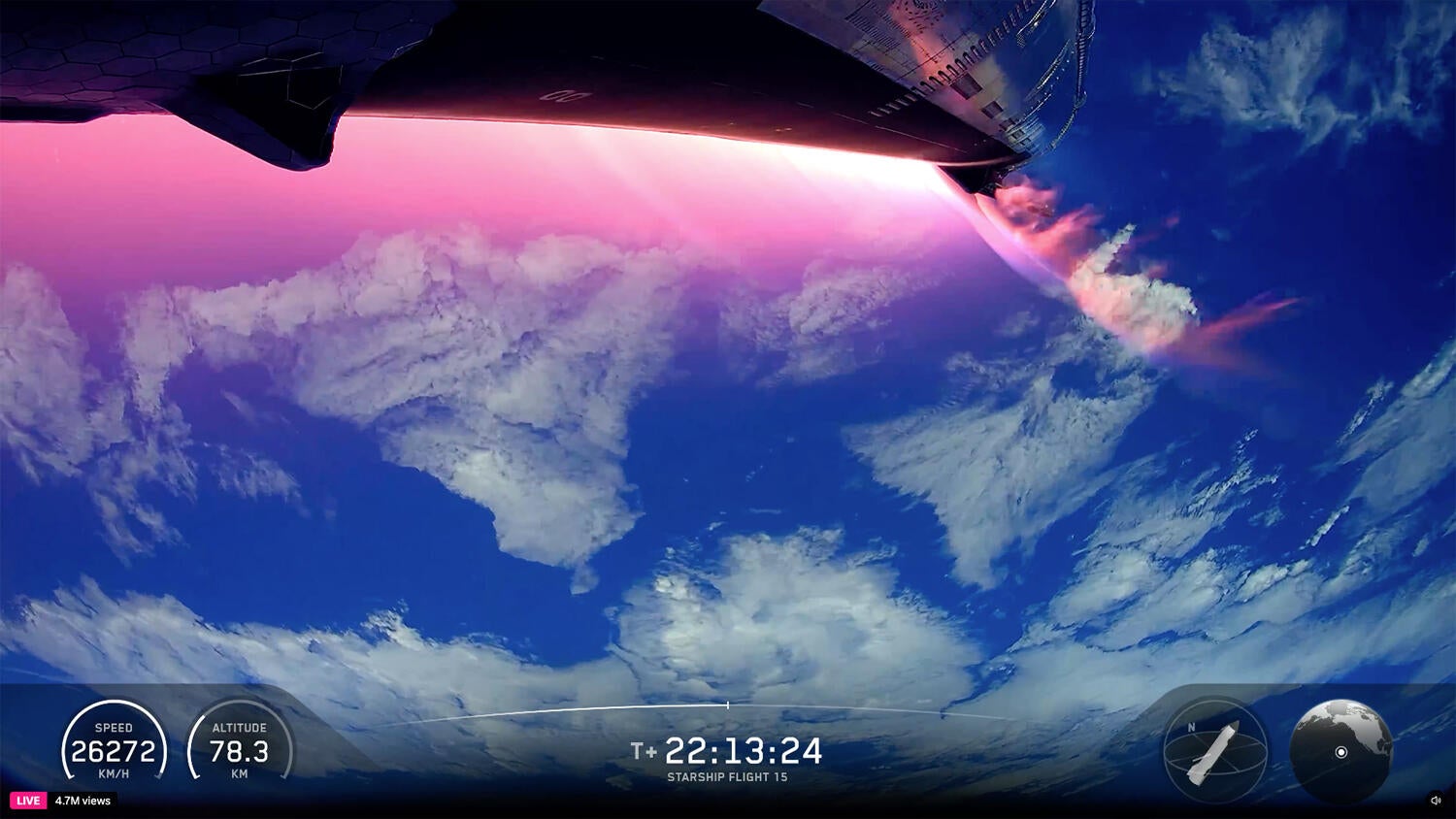
“The room behind me is going crazy,” SpaceX commentator Dan Huot said from Mission Control. “These people did so much to win this… I mean, it was the missing link. It was the holy grail of space flight, diving into fire only to be ripped out of the air by steel. We caught a spaceship, and now everything changes.”
But SpaceX will need to successfully launch and recover large numbers of super-heavy craft to demonstrate the statistical reliability needed for crewed flights. And the company will need to demonstrate its ability to autonomously refuel spacecraft in Earth orbit and prevent their propellants from evaporating in the space environment.
Although the system is designed to be fully reusable, the Starship’s upper stage uses most of its propellant to get into Earth’s orbit. NASA wants to use a Starship variant to carry astronauts to the lunar surface in 2028 and several flights of super-heavy refueling tankers will be needed to refuel the lander in Earth orbit before it can head to the Moon.
SpaceX plans to begin orbital refueling tests during upcoming Super Heavy-Starship flights. But development of the rocket took longer than initially expected and the space agency is now hedging its bets, saying it is open to using Blue Origin’s Blue Moon Mark 2 lander depending on whether the spacecraft is ready in time.
Watch: Massive waves, flooding hit Northern California
Dramatic video shows riverboats colliding
Aviation industry expert talks next steps after ‘everything went wrong’ with huge ground stop
Gn usa