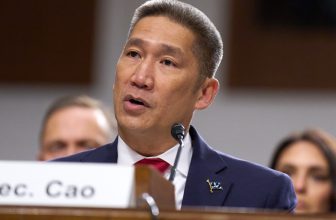
Director of National Intelligence Jay Clayton dismissed suspicions that malicious activity led to a series of outages at major technology companies and government agencies over the past week.
“This is not a cyberattack, nor is it a coordinated nation-state effort,” he told CNBC’s “Closing Bell” on Tuesday. “We looked very closely.”
It’s been a tough few days for the tech world, after a series of widespread disruptions brought different aspects of life to a standstill.
On Tuesday, an outage disrupted internal communications at the National Security Agency and the iPhone maker. Apple confirmed that various products were broken or experiencing issues.
The NSA cited “scheduled routine maintenance,” while Apple cited “an internal update” as the reason for its problems.
This is four major system issues in four consecutive business days.

MicrosoftOutlook woes wreaked havoc on businesses Thursday and the Federal Aviation Administration grounded flights Friday. Monday, the problems at JPMorgan Chase affected customer transactions and an outage United Airlines departing flights briefly delayed.
“When Microsoft goes down, the whole world stops,” said Raj Rajamani, CEO of JetStream Security. “This is a stark reminder of how deeply ingrained these services and technologies are in our daily lives.”
The disruption has rattled consumers and led to a constant stream of memes on social media, as people look for a glimmer of hope – or a sinister conspiracy – in the series of technology problems.
Experts say the real culprit behind this strange series of coincidences is much more benign.
“We’re in a weird teenage phase where the technology isn’t mature enough to know how to do this without disrupting services and so on,” said Tom Hegel, head of research at SentinelOne.
With the help of artificial intelligence, companies are patching more software vulnerabilities than ever and updating their archaic systems to prepare for swarms of attacks following high-profile incidents like Hugging Face.
That leaves information technology and security teams strained and scrambling to meet increased demand, said Sam Rubin, senior vice president of consulting and threat intelligence at Palo Alto Networks Unit 42.
Amid this period of prolonged uncertainty, Rubin said businesses should prioritize updating their most operable systems and maintaining operations in the event of an outage.
“You need to think about how you will continue to operate even if one of your IT systems goes down,” he said.
Clayton told CNBC that routine upgrades are commonplace in any organization and called for a nationwide digital infrastructure upgrade.
Last week, millions of users lost access to their email in a fiasco that Microsoft said was the result of an undetected bug that had been lurking since July.
The FAA, which is still investigating the root cause of its system outage, pointed in part to a router upgrade in southern Arkansas, overseen by government contractor L3Harris Technologies, that overwhelmed the agency’s telecommunications network.
JPMorgan said Monday that the longer-than-usual service times were caused by a software bug in on-site hardware systems.
Agencies and companies have ruled out cyberattacks, but the routine patching alibi has not satisfied some skeptics, and lawmakers are calling for more transparency.
Sen. Mark Warner, D-Va., on Tuesday used the recent incidents to argue for an AI safety bill. House Minority Leader Hakeem Jeffries, D-N.Y., acknowledged it was “too premature” to conclude malicious activity but called for a congressional briefing.
“I think it’s time for the administration to come to the Hill and explain itself so that we can be informed of the actions that need to be taken and we can inform the people of the United States of America,” he said at a news conference Tuesday.

Gn headline