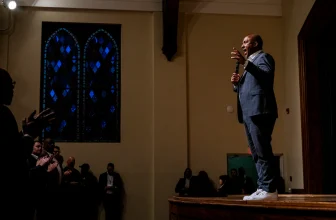
U.S. Transportation Secretary Sean Duffy (right) speaks alongside FAA Administrator Bryan Bedford (left) during a press briefing at Department of Transportation headquarters in Washington, DC, November 14, 2026.
Aaron Schwartz | Afp | Getty Images
Engineers and analysts searching for the root cause of the technical problems behind Friday’s nationwide ground shutdown by the Federal Aviation Administration were able to replicate the situation that overwhelmed parts of the air traffic system, people familiar with the investigation told CNBC.
While replicating the problem in a Florida lab is progress, investigators have not yet determined exactly why the two routers in question went down, according to the people who requested anonymity to discuss an ongoing situation. Finding the root cause is critical so the FAA can determine whether there may be a problem with other routers that make up the communications backbone of the nation’s air transportation network.
The ground stopover lasted more than four hours Friday, marking the longest stoppage of U.S. flight departures since 9/11.
Transportation Secretary Sean Duffy and FAA Administrator Bryan Bedford said there is no indication the routers went down due to a cyberattack.
The incident in question occurred shortly after L3Harris Technologiesthe prime contractor for the FAA’s telecommunications network, installed a new router at a facility in El Dorado, Arkansas.
L3Harris said that in partnership with other technology companies, it has completed more than 70% of the planned conversion of airspace communications from legacy copper wires to a fiber optic system.
“We support the FAA in its investigation to understand the conditions that led to the grounding of our nation’s air transportation on November 13,” the statement said. “L3Harris takes seriously the nationwide ground shutdown and its impact on travelers, airlines and air traffic operations.”
Investigators said that eight minutes after it was installed, the router began transmitting too much data within the FAA network.
This surge of data, 1,000 connection attempts every four to five seconds, destabilized aircraft communications and radar feeds, Duffy said.
Since the ground stop, Duffy has increased the amount he wants to spend on modernizing the nation’s air traffic system. After initially asking for $30 billion to build a digital network incorporating artificial intelligence, Duffy has now requested $50 billion from Congress.
Gn headline