California could face years of staggering deficits that could reach tens of billions of dollars within five years if urgent budget repair isn’t done — and the AI boom will collapse.
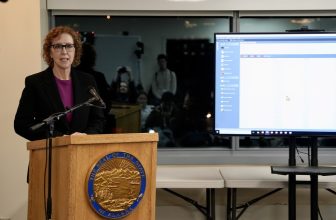
Gov.-elect Xavier Becerra received an urgent warning Wednesday from legislative analysts, who released the fiscal outlook for the next state budget.
While the outlook projects that California will face a $2 billion deficit for the next fiscal year, it predicts that deficits are expected to reach at least $15 billion by 2028-29.
And in the worst-case scenario, the deficit could reach $30 billion by the 2030-31 fiscal year.
“The issue for the next fiscal year is relatively minor, but it’s becoming quite significant,” legislative analyst Gabe Petek said Wednesday.
Analysts fear an AI bubble could burst the stock market, which currently supports state finances through capital gains tax revenue.
Analysts say lawmakers need to take this risk seriously.
“Although recent stock market developments have been beneficial for many investors and the state budget, they now appear to have reached a dangerous stage,” the analysts write.
Petek added that the signs of an explosion are there: “Every one of these indicators that we’re looking at are the highest they’ve ever been – except at the height of the dot-com bubble. »
Analysts have suggested the state make $6 billion in cuts or “budget fixes” next year to build a $4 billion reserve.
Democratic leaders in the state Legislature quickly pledged Wednesday to prepare.
“We will continue to strengthen our reserves and protect health care, food assistance, emergency response and our schools,” Assembly Speaker Robert Rivas said in a statement.
“This is how we keep costs stable and every dollar counts. Whatever happens next, California will be ready.”
Democrats pointed to recently voter-approved Proposition 2, in which lawmakers proposed doubling the cap on the state’s rainy day fund.
Top lawmakers said they would consider shifting more excess revenue to those reserves to prepare for any downturn.
Senate Republican Leader Roger Niello urged Becerra to take a more fiscally conservative approach after Gov. Newsom passed a $350 billion budget this year, the highest spending of Newsom’s governorship and an increase of nearly $150 billion over the budget he inherited in 2019.
“The new administration will have to face reality. Returning the stock market to more normal levels is only a matter of when, not if,” Niello said in a statement.
“Otherwise, when the market eventually corrects, the consequences of the current budget problems will catch up with us.”
Becerra, as the next governor, will be required to provide an initial spending plan by January 10. His spokesperson said in a statement that he is “working hard to prepare his first budget proposal.”
“He remains committed to delivering a responsible, balanced budget that protects the services Californians depend on and focuses on reducing costs,” the spokesperson said.
The budget situation is likely to fuel speculation that the governor-elect will seek to impose new taxes, such as a mileage tax charged to drivers by the mile.
Becerra, before the election, said “everything should be on the table” when asked whether he would support a mileage-based tax to maintain California’s roads, with Republicans saying the Democrat intended to introduce one.
“He said ‘everything is on the table,’ and then he started making the case for this project,” Assembly Member Carl DeMaio told the Post. “He was literally advocating for the mileage tax.”
“They just want more money,” DeMaio said. “This was all mapped out and planned.”
The Becerra campaign said he had not proposed a mileage tax. The Post reached out to Becerra’s spokesperson to see if new taxes might be considered in response to the budget outlook.
In late October, Becerra himself was asked by a reporter on the campaign trail whether the state budget was too reliant on the AI stock boom — and whether California might need service cuts or tax increases.
Becerra simply responded that the government must be “stable” even if the stock market is not.
“We’re not going to overspend. We’re going to make sure we’re fiscally prudent,” Becerra said.
Gn usa