On the morning of last week’s historic nationwide ground stop, an FAA technician escorted a private contractor from L3Harris to a remote radio communications site for air traffic control centers in southern Arkansas to replace a decades-old router.
The FAA technician believed his role ended when the contractor entered the facility. He was going about his own business without knowing exactly what the L3Harris engineer was doing, according to two sources familiar with what happened in the room and the union that represents FAA technicians.
Shortly after its replacement, this new router triggered a cascade of communications problems, flooding the FAA’s aging network with data and leading the FAA to take the rare step later that day of conducting a complete nationwide ground shutdown. About 3,500 planes were in the air when departures were halted for more than four hours while the agency worked to resolve the problem.
The details of how that router was installed and who was overseeing that work are now controversial and emerging as a key tension point in determining what exactly went wrong that day.
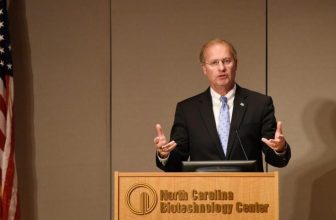
FAA Administrator Bryan Bedford defended the FAA’s modernization process and insisted that the L3Harris engineer performing the upgrade “was supervised by an FAA technician” and that a risk assessment was done beforehand.
But sources who spoke to CNN dispute that characterization. The technician “was only there to unlock the door,” says one of them.
“There was no surveillance,” another source said.
This type of hands-off agreement, sources said, is a recent development and represents a dramatic change from how this type of maintenance work was handled by previous administrations, when the FAA generally had much greater oversight over contractors’ work.
But in an effort to speed up and streamline modernization of the nation’s air traffic control system with $12.5 billion from President Donald Trump’s “big, beautiful bill,” the administration has diminished FAA oversight of that type of work, the sources said.
In a memo dated March 2025, the FAA outlined some key changes in how maintenance and upgrades would be carried out, noting: “It is essential to approve maintenance performed by telecommunications providers without delay. »
As part of this policy change, the FAA moved from receiving maintenance “requests” from its private contractors to receiving “notifications” of planned work, noting that “this work will continue without FAA approval,” according to the memo.

The memo says an FAA liaison will assess the “purpose, severity, criticality and impact” of the work, but the sources told CNN there are only a handful of liaisons nationwide handling thousands of notifications.
“So how much surveillance are they actually exercising? one of the sources said.
As a result, the L3Harris contractor at the center of Friday’s outage showed up with only a few days’ notice and carried out the work without any meaningful oversight from the agency, according to the sources and the union.
The March 2025 memo “laid the groundwork for what happened last Friday,” the source said.
“They don’t ask to go out anymore. They just warn and leave, then they do the work,” the source explained. “And that gets around the operational risk management aspect where the technician who works for the government might say no, no. You can’t do that right now.”
Elizabeth Doherty, a spokeswoman for the Professional Aviation Safety Specialists union that represents FAA technicians, told CNN that the technician’s “orders were simply to let the contractor into the building,” that he “had no instructions to assist or assist in any way,” and that “no employee represented by PASS was asked to conduct a risk assessment on this particular upgrade.”
CNN asked the FAA about the discrepancy over whether or not an FAA technician provided real-time monitoring of the work.
“We’re trying to track down a lot of information. So things have changed,” FAA spokeswoman Hannah Walden told CNN by phone. “It could have been a misunderstanding or something. So I’m not saying one way or the other right now. I’m just saying we’re trying to provide the information as we get it.”
In addressing the changes outlined in the 2025 memo, Walden denied that oversight had been reduced, saying the policy change “doesn’t change oversight at all. It changes the priority of the work that needs to be done.”
After this article was published, Walden sent an additional statement, appearing to contradict what Bedford said publicly Tuesday about the technician who was overseeing the upgrade.
“The FAA escort is responsible for allowing the L3Harris technician access and egress to the building. As this is L3 equipment, the escort is not there while the technician is working,” she said in the release.
The episode highlights the complications that can arise with a communications system operated by the federal government but owned by a private company, in this case L3Harris, whose telecommunications network serves as the communications backbone for the nation’s airspace.
It also comes as Transportation Secretary Sean Duffy is asking Congress to approve another $50 billion to modernize the nation’s air traffic control system, even as lawmakers question how the billions allocated last year were spent.
L3Harris declined to provide details in response to questions from CNN.
In a statement to CNN, the company said it “supports the FAA in its investigation to understand the conditions that led to the ground shutdown of our nation’s air transportation on November 13.”

The policy change presented in the March 2025 memo did not come out of nowhere. Sources familiar with what happened before the ground stop said a years-long chronic shortage of FAA technicians as well as the Trump administration’s drive for speed helped propel it forward.
The result, they believe, was less monitoring of the contractor on Friday and a much slower recovery, with the FAA struggling to identify the source of the problem.
L3Harris informed the FAA on Nov. 9 that it planned to perform maintenance, replacing a router, at a remote FAA facility in El Dorado, Arkansas, with work scheduled to begin at 9 a.m. Friday, Nov. 13, one of the sources said.
Four days after the notice, the L3Harris worker arrived.
Even the time of day the work was scheduled for raised eyebrows, given that it was during a time of heavy air traffic. The sources say FAA technicians were not consulted on the best time to carry out this work at this facility.
By that Friday afternoon, the new router was connected and the L3Harris contractor had left the site with no idea of the chaos that was beginning to unfold, the source said.
A few hours later, FAA technicians received a call asking them to return to the site to escort the L3Harris engineer to the facility. The agency scrambled to find the nearest available staff to let him in. Hours had passed between the time the engineer left and the time he returned to retrieve the router, the source said.
A former FAA technician told CNN that for the agency’s technicians, checking in with air traffic controllers before leaving a site is standard practice. It is unclear whether the L3Harris engineer took this action.
“As a technician, any time I was out there…and I was doing anything, anything on the equipment before I left, I would call TRACON, the center or the tower, whatever controllers had the services that I was providing on that equipment. And I would say, ‘I’m getting ready to leave. Everything looks good? Everything is fine ? Do you have everything?’ They would say ‘yes,’” the former technician said. “It’s just a practice you do.”
Immediately following the ground stop, Duffy sharply criticized L3Harris, making it a point to denounce them in his public remarks.
“We need L3Harris or whoever gave us this router to do a better job,” Duffy said during his Saturday press conference. “A lot of our contractors, a lot of our partners, take our money and give us really poor service. Period.”
However, on Tuesday, Bedford took a different tone towards L3Harris.
At a press conference, Bedford described the L3Harris contractor who replaced the router as “a highly trained certified engineer, a former Air Force veteran.” I’m told he’s a generally competent guy doing the job he’s done dozens and dozens of times before.”
Asked about oversight provided by the FAA when contractors work at FAA facilities, Bedford also responded: “There is a comprehensive risk management process for every installation. And that installation takes place whether it’s with a contractor or with an FAA employee.”
A few days earlier, Duffy had defended the schedule of the work, pointing out that it was taking place in a remote location. He said he did not expect the kind of impact seen last Friday at “smaller sites.”
This story has been updated with additional details.