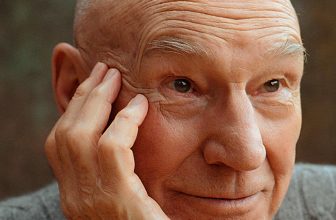

Salman Rushdie.
Photo: Beowulf Sheehan.
One of the biggest prizes awarded at the National Book Awards ceremony went to someone absent: Abdelrahman ElGendy, author of Huna: A memoir of revolution, prison and becoming. ElGendy, whose book discusses his political imprisonment as a teenager in Egypt, left the United States for Europe in 2025 out of fear of arrest by ICE, “entering what I hoped would be a temporary exile within my exile,” as he put it in a recent article. New Yorkers essay. As he returned to the United States for the ceremony, his visa was denied.
His editor, Helen Thomaides, took to the podium to accept the nonfiction prize on his behalf. (Huna was her first acquisition for Hogarth, Random House editor David Ebershoff later told me.) “I’d love for you to hear our winner speak,” she said in a hushed ballroom, before reading an excerpt from a speech he had prepared about ICE raids and U.S. financing of Israel’s war in Gaza: “I mourn the reunions that could have happened, the friendships that could have blossomed in this room.”
ElGendy was one of two nominees who were denied visas before the ceremony, alongside Syrian writer Samar Yazbek, whose Your presence is a danger to your life: Voices of survival and testimony in Gaza was nominated in the translated literature category. “She never had an appointment with the American embassy in Paris. They didn’t allow her to pay for the visa,” Judith Gurewich, the publisher of Other Press, told me early in the evening; Yazbek has a French passport. “I represent her and I fight her cause as best I can.”
The evening was a whirlwind of solemnity and giddiness, with speeches that oscillated between earnest defenses of literacy — “At its best, fiction is an act of daring,” said Caro De Robertis, chair of the fiction panel — and cross-sector teasing. (“Guys talk for more than two minutes,” said poet Brenda Hillman as she accepted her prize.) The fiction winner, Paradise 17 author Hanna Lillith Assadi, said she prepared her speech while standing on the B train. During the course of writing her decades-spanning novel, which begins during the 1948 Nakba in Palestine, “I experienced deep personal grief and unimaginable collective grief,” she said. Assadi editor John Freeman of Knopf was another winner of the evening; he also edited shortlisted authors Edwidge Danticat, who wrote Dey, and Valeria Luiselli, author of Start Middle End.

Photo: Nathalie Schueller.
The ceremony began with a song from musical guest Michelle Zauner and an introduction from host Kyle MacLachlan, who read from the pages of the children’s book. Paddle towards the sea and made the required ChatGPT jokes. In awarding Salman Rushdie the medal for his distinguished contribution to American letters, Kiran Desai said that “hundreds of years could pass and the world might never have such a novelist.” After a standing ovation, Rushdie wished a happy birthday to Don DeLillo, who turns 90 on November 20. Winner of the Poetry Prize, Hillman, author of Still House in the Desert: An eco-contemplation, thanked “everyone in the room who ever wrote a poem first. You’ve all written poems, I bet.” Vicente Luis Mora and translator Rahul Bery won for Centroeuropaan experimental novel set in the final years of European feudalism, and David Levithan and Gabriel Duckels shared the children’s literature prize for The Fight of Our Lives: AIDS in America.
After the ceremony, a DJ took over and everyone got back to mixing, stretching their legs after a ceremony that lasted for hours. (It is longpeople kept telling me: Maybe because the presenters are all writers too and can’t help it, someone posited, their speeches are always the same length or longer than the winners’.) Some rushed to grab the scattered books, making piles to take home – “People are rampage these tables,” one newbie told me, alarmed – as others rushed to the bar. I spoke to Writers House agent Sasha Landauer, sitting at the table at 20th Century Studios, who told me about the upcoming issue of her literary magazine, Notch: The theme will be salt. As she headed to the dance floor, Literary Award winner Perri Klass, a pediatrician specializing in early literacy, told me with a smile that she “felt like a little kid.”
The guests had strong words about the situation with ElGendy and Yazbek. ElGendy “absolutely should be here… he can’t be here just because of where he comes from, the color of his passport and the fact that he spoke out,” said Lara Vergnaud, who translated Mohamed Mbougar Sarr’s text. Pure men. “The fact that our nonfiction winner is not here is a direct correlation to decisions made by this industry,” said Rachel Kambury, deputy editor at HarperCollins, citing the example of publishers buying books by politicians who support book bans. “The fallout from fascism is felt everywhere in this industry. » When I asked about a controversial New York Times report from earlier this week questioning whether, because he was not living in the United States during the judging cycle, ElGendy was eligible for the prize under the National Book Foundation’s rules, she rolled her eyes: “Of course, that’s what the New York Times will do.
After a cohort of people left – translated literature candidate Karl Ove Knausgaard quickly withdrew, but Salman Rushdie, unsurprisingly, stayed – a rush of new faces arrived for the after-party. Hemlines became shorter and fabrics more transparent: one memorable dress seemed to be half a red ribbon. “The younger ones are coming after we’ve all been beaten by the chicken,” said one editor. The deep red lighting that bathed the room became even deeper, making each photo look like the prom scene. Carrie, and there was suddenly a wider range of writers, like Anika Jade Levy, author of flat earthwho told me she thought she broke her toe that morning but didn’t want to miss the party, and Stéphanie Wambugu (Lonely crowds), which came from a birthday. I found the fiction winner, Assadi, surrounded by a small group, including her friend Emily Firetog of Lit Hub, who said she cried tears of joy for an hour after the award and started crying again as we talked. “I feel like I’m in a very beautiful dream,” Assadi told me. “But I have to teach tomorrow at 11 a.m. » What will she do to celebrate, I ask? “I’ll just buy myself a nice bottle of red wine and a steak,” she says. “Maybe I’ll pay some bills.”
Gn entert