TIt’s impossible to ignore that Formula 1 achieved palpable success by holding a race in Las Vegas. Even with this year’s release as a dead rubber and with the city in perhaps its least flattering light, the cold drizzle of a Thursday afternoon under gunmetal gray skies, the fans who flocked to Nevada were irrepressibly enthusiastic.
Long queues stretched through the streets before the gates were even opened and it seemed that many locals, initially reluctant about the somewhat disruptive F1 circus, welcomed the fans, their fervor for the sport and the positive impact of racing.
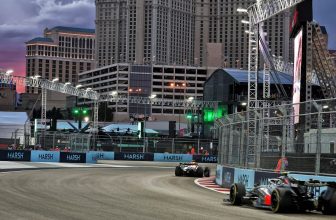
Kimi Antonelli tied the title with Mercedes in Mexico, but this weekend’s race in Las Vegas maintains an inimitable party atmosphere that organizers have assiduously cultivated and is literally paying off. When night falls and the city truly comes to life, adorned in all its garish neon beauty, F1 in Vegas really begins to come into its own as a booming sport, riding a wave of commercial success.
Las Vegas now enters its fourth year on the calendar with a deal that will run through 2037. Even if purists don’t like the emphasis on being, whisper it, entertaining, it’s here to stay.
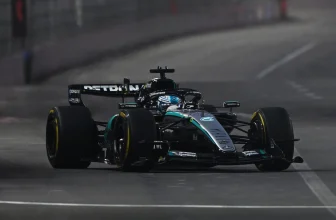
As Mercedes’ George Russell observed this week: “With the state of the sport right now, I think there needs to be a race like this on the schedule. I suppose it’s the biggest one, apart from Monaco, from an entertainment point of view for the people who come here and for F1. It just feels like the Super Bowl.”
The ‘biggest bar in Monaco’ is high praise indeed and is exactly what F1 had in mind when it brought the race to the city in 2023, spending £500 million to build the facilities and circuit. It was an eventful opening. Regardless of the well-documented problems on opening day, when operation was interrupted due to a loose water valve cover, there was opposition from residents unhappy with the disruption to their jobs and businesses, including some legal challenges. However, it turned out to be a real success.
F1 commercial director and Las Vegas GP president Emily Prazer admits it has been a difficult process. “We have to admit we may have been a little bull in the china shop about this,” she said. “We had very little time to get this project up and running for 2023, but now we’re spending hours talking to people to make sure we answer these questions.”
This required working closely with Clark County government and the Las Vegas Convention and Visitors Authority, which alleviated much of the local concern, including bringing in so much money. Over the previous three years, the meeting generated an economic impact of $3.2 billion (£2.4 billion) in southern Nevada. Over the past two years, the race has generated $45 million and $43 million in tax revenue, respectively.
By 2024, race weekend research indicated the average visitor would spend $2,400, excluding race tickets. The meeting turned what was traditionally the quietest weekend of the year in Vegas into one showing a healthy return. Although the race is initially unpopular, these are numbers that are hard to argue with and Vegas is nothing more than numbers.
During the race’s first year, a local tour guide told me that it would succeed if the people who worked here felt that it earned them tips and expenses, and that the profits outweighed the disruption. A threshold which seems to have been reached.
It’s also increasingly where F1’s business happens. This week the sport announced a new partnership with wearable fitness technology brand Whoop, meaning some drivers will have their heart rates broadcast live to fans and media, and another with Nike as part of the expanding and lucrative commercial partnerships F1 is entering into. Another, with Lego, is represented in the paddock by 4-foot-tall miniature versions of each driver outside their respective hospitality units, while celebrities will race Lego cars ahead of Saturday’s main event. None of this seems completely out of place here.
Furthermore, F1 management would undoubtedly have been just as satisfied with the fans’ feelings. The season was marked by little driver dissatisfaction with the new engine regulations, which at least partly prompted the FIA to push for a return to 2.1-liter V8 engines for 2030. An agreement that was formally reached on Friday when it was announced by F1 and the FIA in Las Vegas. The new motors will use a smaller electrical element, half of which will be limited to use in overtaking mode, with the aim of creating lighter, cheaper motors to emphasize “attack-oriented racing”.
F1 was nevertheless robust in its defense of the new formula throughout the season, insisting that despite driver discontent, fans were enjoying the race more than ever. In the bustling East Harmon fan zone, lit by red and white neon lights reflecting in clouds of dry ice and pulsing to thumping music, even though the rain continued during practice and there were few races in the first session, morale was high and they moved merchandise hand over fist.
Gemma, 24, came from New York State with two friends for their first F1 meeting. “We love cars,” she said. “I love the drivers. It’s fun, exciting, there’s so much action and coming to Vegas, even in the rain, they look great here.”
Which fits with F1’s stance on both the regulations and this race, which proved successful perhaps beyond what the sport had in mind. Earn money in the middle of the show. What’s more Las Vegas?
No competitive lap times were set in early practice, with rain and cold temperatures creating extremely difficult conditions. Teams were not willing to risk much racing, given conditions were expected to be dry for the remainder of the weekend.
During the second session, the track was still wet but running was possible, albeit with intermediate tires. Russell topped the timesheets for Mercedes, from the Alpine of Pierre Gasly, benefiting from being last on a drying track, with Charles Leclerc third for Ferrari.
Gn sports