Want to bookmark your favorite articles and stories to read or view later? Start your independent membership today.
Join us today
Already a member? Log in
A mathematician working for AI company Anthropic claims to have proven the Riemann hypothesis – the mathematical world’s most famous unsolved problem – using the great language model Claude.
The hypothesis, first proposed in 1859 by German Bernhard Riemann, states that the location of prime numbers along the number line is not random, but rather is determined by meaningful order.
This is important to mathematicians because it relates the distribution of prime numbers to a precise pattern.
The hypothesis was identified by the influential mathematician David Hilbert in 1900 as one of his 23 mathematical challenges for the 20th century.
In 2000, the Clay Mathematics Institute offered a $1 million reward to anyone who could prove this hypothesis.
Anthropic’s Dr Levent Alpöge claimed the breakthrough in a statement published on his website on Friday.
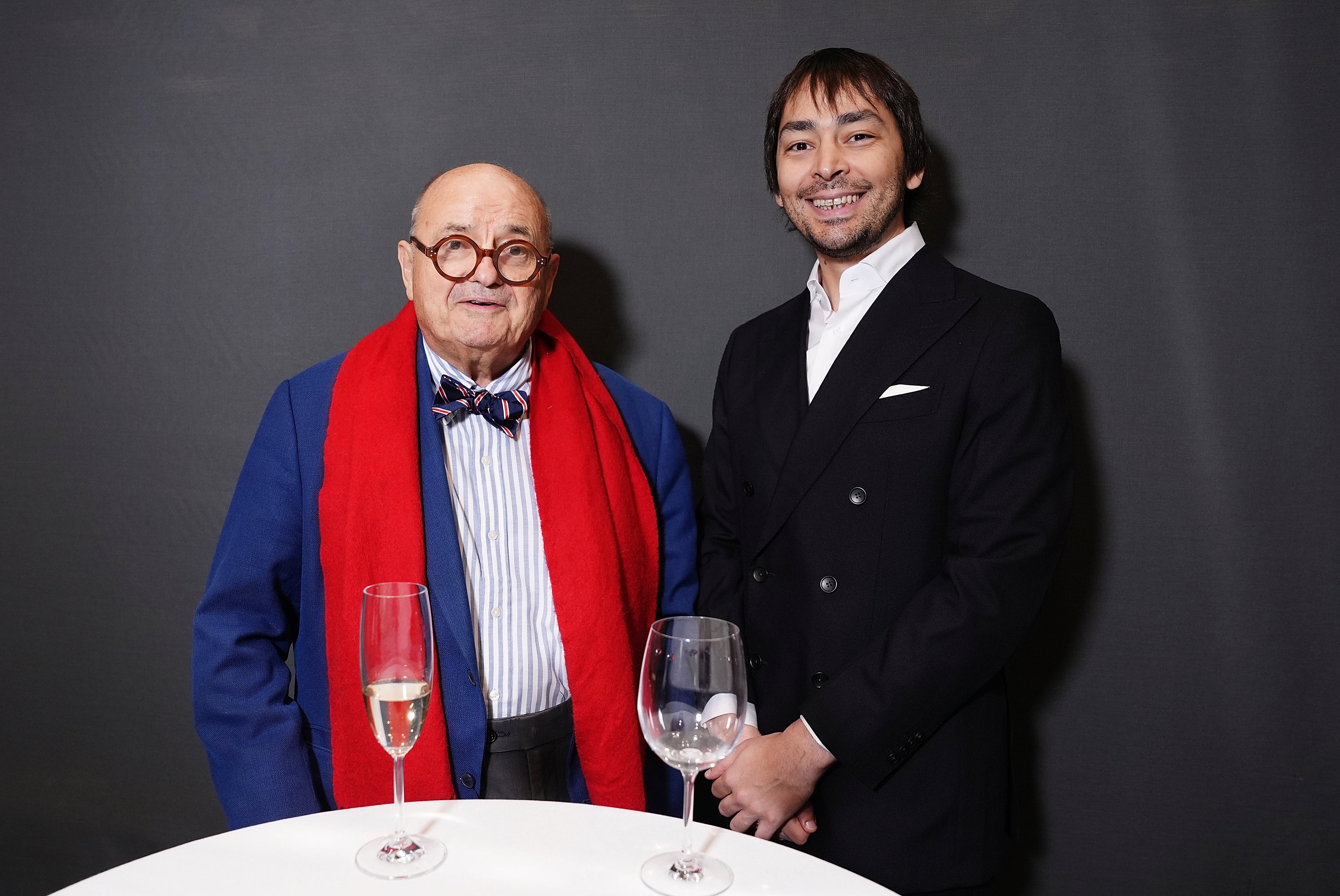
“I believe that, while working with Claude, I discovered a proof of the Riemann hypothesis,” he wrote.
“It is natural to think that this is an end, in my case a loss of a main beacon, but what I have seen in the progress has so amazed me that I believe it is the dawn in the science of something much greater.”
Dr. Alpöge published a version of the proof written in Lean computer code, used to verify the mathematical correctness of arguments.
Experts will now need to examine whether the work is correctly coded and whether the hypothesis has actually been proven.
Dr. Alpöge, who holds dual American and Turkish citizenship, holds a master’s degree from Harvard, a master’s degree in advanced studies from the University of Cambridge, and a doctorate from Princeton.
In July, he made headlines by publishing a counterexample to the famous Jacobian conjecture, a well-known problem in algebraic geometry.
As with his work on the Riemann hypothesis, he had used Claude to make the discovery.
“Hello, the Jacobian conjecture is wrong, thanks to my close friend Akhil for asking about this and my other close friend Fable for working during the World Cup final,” he posted on X (formerly Twitter).
Dr. Alpöge’s statement on the Riemann hypothesis on Friday was slightly longer and more erudite.
“I hope this argument provides a glimpse of the miracles that await us and shows us the joy and wonder we are about to find in the simplest things,” he wrote.
Gn bussni