
After decades of controversy, the International Diabetes Federation (IDF) officially recognized a fifth form of diabetes in 2025.
She is now urging other health authorities, such as the World Health Organization (WHO), to follow suit.
Type 5 diabetes is rarely discussed or studied, yet it is estimated to affect up to 25 million people worldwide, particularly in low- and middle-income countries where access to medical care is limited.
It was first described in 1955 in Jamaica and then forgotten for many years. Even once recognized by the WHO in the 1980s, the diagnosis sparked controversy.
For seven decades, scientists debated the existence of type 5 diabetes, and in 1999 the WHO withdrew this classification due to a lack of evidence. There is little agreement on how to diagnose type 5 diabetes or treat it.
Type 1 diabetes is an autoimmune disease that destroys the pancreas’ ability to produce insulin. Type 2 diabetes is an insensitivity to insulin due to diet and lifestyle. Type 3c diabetes is usually caused by damage to the pancreas. Gestational diabetes is triggered by hormonal changes during pregnancy.
Type 5 diabetes appears to arise from nutritional deficiency. Formerly known as malnutrition-related diabetes mellitus (MRDM), this form of diabetes is often misdiagnosed as other types.
And yet, because insulin resistance does not appear to be the primary cause of type 5 diabetes, existing treatments may not help. In fact, they can even cause harm.
Watch the clip below for a summary of the announcement:

))>
“Understanding the specific types of diabetes a person has is crucial to providing the appropriate treatment,” explained Craig Beall, diabetes researcher at the University of Exeter, in May 2025.
For years, Meredith Hawkins, an endocrinologist at the Global Diabetes Institute at Albert Einstein College of Medicine, has called for global recognition of type 5 diabetes, which typically affects people in Asia and Africa who experience severe food insecurity.
“Malnutrition-related diabetes is more common than tuberculosis and almost as common as HIV/AIDS, but the lack of an official name has hampered efforts to diagnose patients or find effective therapies,” Hawkins said in 2025.
“I hope that this official recognition as type 5 diabetes will provide progress in the fight against this long-neglected disease, which seriously weakens people and is often fatal.”

In recent years, numerous animal and human studies have shown that chronic nutrient deficiencies can have permanent effects on the pancreas, disrupting its ability to secrete insulin and balance blood sugar.
Hawkins’ own work, published in 2022, was the first to establish a unique metabolic profile for this malnutrition-linked diabetes.
She and her colleagues conducted a small trial in southern India, which showed that people with MRDM are insulin deficient like people with type 1 diabetes, but not to the same degree, and remain sensitive to insulin, unlike people with type 2 diabetes who develop resistance.
“Type 5 diabetes is notable for its unique pathogenesis, which is believed to involve compromised pancreatic development resulting from prolonged periods of nutritional insufficiency,” wrote Rahul Garg, a physician at FH Medical College and Hospital in India, in a recent review.
In light of this evidence, IDF is making a concerted effort to finally recognize type 5 diabetes.
Some researchers have said the move is “long overdue,” while others say it is “unwarranted” due to “diagnostic uncertainty” arising from the variety of diabetes cases apparently linked to malnutrition.
Some say the number of patients with type 5 diabetes is increasing; others say its prevalence is declining. Either way, it all depends on whether the disease is correctly diagnosed and recognized.
Without official name and recognition, it is difficult to fund research, and without additional evidence, it is impossible to know enough about a disease to formulate a standard diagnosis or say how many people it affects.
In 2025, IDF established a Type 5 Diabetes Working Group, chaired by Hawkins, to develop formal diagnostic criteria and treatment guidelines for Type 5 diabetes; establish a global research registry; and create training for health professionals.
The distinct metabolic profile of type 5 diabetes means treating physicians must walk a fine line when managing patients’ insulin levels.
People with type 5 diabetes may need only minimal amounts of supplemental insulin or may need alternative approaches to boost insulin secretion, to avoid a dangerous drop or rise in insulin levels.
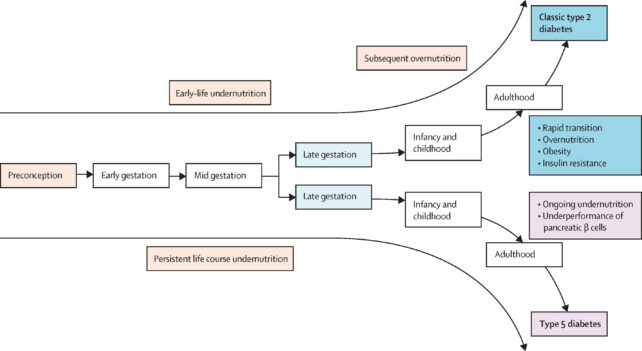
“Inappropriate insulin treatment could induce hypoglycemia (low blood sugar), which may be a particular risk in settings of food insecurity and where blood glucose monitoring may not be affordable,” Hawkins and colleagues explained in a review published after type 5 diabetes was officially recognized.
The problem is not limited to Asia and Africa either. Undernutrition is a growing problem in parts of Latin America and the Caribbean, where a complex mix of environmental, political and economic factors amplifies health inequalities and extreme poverty.
“There is no silver bullet and so we believe that combating this disease will require extensive research and advocacy,” Hawkins said in an interview.
“Once you see young patients dying from inappropriate treatment of a neglected form of diabetes, there is no going back.”
This article was fact-checked by Fiona MacDonald and edited by Fiona MacDonald. Although we are proud of our process, we are only human. If you spot an error, please let us know.
Gn Health