

Growing up in the French Alps, Julie Daoust fell under the spell of mushrooms very early on.
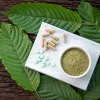
“So when we were kids, we would go get food,” she remembers. “We were encountering species like lion’s mane or reishi. And I was becoming more and more interested in these species.”
Daoust later earned a Ph.D. in chemistry, looking for new pharmaceutical products in nature. Her work eventually led her back to fungi, a group of organisms to which humans are more closely related than plants. And yet, many of our modern medicines and therapeutics come from plants.
“Fungi share a lot more biochemistry with us than plants,” says Daoust, which means “you’re more likely to find something that will have bioactivity in a human than in other source organisms.”
Daoust is now vice president of science and innovation at Monterey Nutra, a company that specializes in mushroom genetics and cultivation and sells fungal extracts and powders. His team does not focus on poisonous strains, nor on psychedelic ones that contain psilocybin. They are more interested in functional or medicinal mushrooms that Daoust likens to tiny cauldrons of potentially useful molecules.
“We like to look for soft objects that can’t run away very quickly,” says Daoust, “because they usually produce very interesting chemistry to defend themselves or communicate with others in their environment to survive.”
The complaint
Daoust says certain types of mushrooms may have specific uses.
For example, lion’s mane – a soft mushroom sheen – can aid cognition. Reishi and turkey tail, which are mushrooms that grow as hard, brown scales on decaying trees, may boost immune health.
And on social media, influencers and advertisers promise that medicinal mushrooms, taken as supplements, can slow aging and improve energy levels, focus and immune health.
The proof
According to Abby Langer, a Toronto-based dietitian, robust clinical trials proving such links – and their safety – are largely lacking. “In my opinion, I don’t think there is much evidence currently for the existence of functional fungi,” she says.
Langer says mushrooms accumulate and concentrate materials in the soil they grow in, both good and bad – so you have to be careful.
Want the latest stories on the science of healthy living? Subscribe to NPR Health report.
She admits that in some communities (in parts of Asia for example), mushrooms have been incorporated into their healing practices for generations. However, “just because a product has been used for a long time does not mean it is safe, that it is effective, that the dosage has been established,” says Langer. “There are a lot of unknowns.”
She nevertheless acknowledges that empirical evidence of the potential positive impacts of mushrooms is growing. “Clinical research on specific functional mushroom products is young,” she says, “but it is accumulating quickly and already includes impressive results.”

Mushrooms are a good source of vitamin D2 and antioxidants. Their cell walls contain beta-glucan, which has been linked to gut health, including lower risk of Crohn’s disease and immune response. Research on the effects of mushrooms on cognition is mixed.
Additionally, work in Japan is investigating how PSK, a purified turkey tail extract, improves the immune response in cancer patients. A meta-analysis looked at 8,009 patients in eight randomized controlled trials who underwent surgical removal of a gastric tumor and, in almost all cases, chemotherapy. Those who also received PSK showed a 12% reduction in the risk of death.
“It’s not something we ignore,” says Santhosshi Narayanan, an integrative oncologist based at the University of Texas MD Anderson Cancer Center, who recognizes PSK’s potential.
She admits, however, that this “does not mean that PSK or any other mushroom alone cures cancer. It just shows us that we need to be careful with these natural products.” Narayanan says there is still much to understand with this particular extract, especially for populations outside of Japan with different genetics or treatment regimens who might experience unwanted side effects.
“We need to do more research and understand how we can use it,” she says. “Like, which people, which types of patients benefit from which type of mushroom, because that in itself is a science in its own right.”
Narayanan and colleagues also reviewed 2,349 studies examining the relationship between medicinal mushrooms and cancer, but only 39 were strong enough to be included in their 2023 analysis. Of this subset, “31 studies showed the beneficial effects of mushrooms, resulting in improved quality of life, reduced (side effect) profiles of different chemotherapeutic drugs, improved anti-inflammatory and anti-metastatic effects, and increased improvement in (disease-free survival) as well as (overall survival) in a few trials,” according to the report.
Six studies found no benefit and two showed worse outcomes. Overall, the analysis failed to draw clear conclusions about “the complex biological effects of mushrooms on the immune system in cancer.”
The essentials
According to Narayanan, there is not yet enough evidence to support routine clinical use in cancer treatment.
And Langer recommends considering some basic nutrition principles before introducing a supplement for gut health or cognition. “Take a closer look at what you eat, how you eat, when you eat,” she advises, “and see if you need to make any changes.”

It may be possible to eat more fiber or protein, cut down on alcohol or sugary drinks, skip fewer meals or eat out less often, she says.
“There are so many things that people can potentially improve on,” Langer says, “before they add something else that promises to be this panacea for everything that’s going wrong…
Gn Health