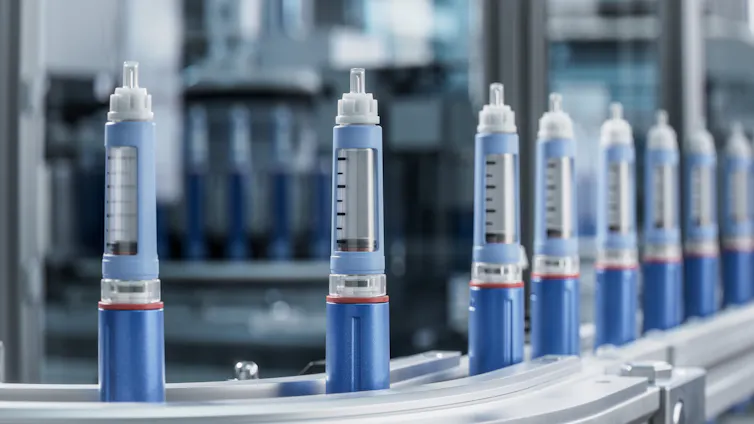
GLP-1 weight loss drugs such as Ozempic and Wegovy could affect more than just the waistlines of people who take them. If widely used, our new research suggests that these appetite suppressant drugs could transform the global food system and free up large areas of agricultural land.
The global food system is ultimately driven by demand. If people eat less, producers respond, affecting production, prices, trade and the amount of land needed. We used powerful computer simulation to explore scenarios ranging from concentrated GLP-1 use in high-income countries to widespread global access.
With the widespread use of these drugs among adults with obesity, we estimate that reducing calorie intake could prevent up to 6.6 million deaths each year by 2050, while freeing up to 32 million hectares of agricultural land – an area slightly larger than Italy – for other uses.
However, the greatest effects occurred when reducing calorie intake was combined with a shift toward a healthier diet. In this scenario, up to 7 million deaths could be avoided each year by 2050, while around 46 million hectares of agricultural land would have become available for other uses. This suggests that in addition to weight loss drugs, we need to make healthier options more widely available, affordable and more attractive.
Instant Messenger Images / Shutterstock
The food system could react in unexpected ways
Food systems are interconnected between countries. If demand falls in one part of the world, it can affect agriculture, trade and food prices elsewhere, with consequences for people who do not take these drugs at all.
Less demand from GLP-1 users, for example, could make foods cheaper. This seems positive, but cheaper foods could also encourage greater consumption among non-users, negating some of the expected benefits. In other words, the effects of widespread GLP-1 use cannot be understood simply by looking at each patient’s weight loss. They impact the global food system.
It’s tempting to view these findings as an argument for the need to put more people on weight-loss medications. This would fail to have an overview.
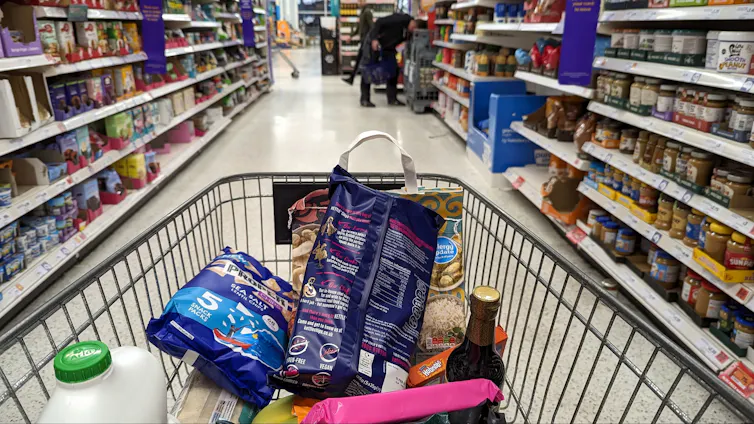
Obesity has often been presented as a “lifestyle disease,” blaming individuals for not having enough willpower. But diets depend on what foods are available, how much they cost, how they are marketed, where stores are located, and what is most convenient. In many high-income countries, it is remarkably easy to consume large quantities of cheap, energy-dense foods. Society tells people to make healthier choices while surrounding them with an environment that often encourages the opposite.
1000 words / Shutterstock
The National Food Strategy commissioned by the UK government, finalized in 2021, made this point clearly: improving diets cannot simply be about asking people to choose better. The broader food environment must evolve so that the best choice is the easiest.
Our results should not be interpreted to mean that obese people have a responsibility to lose weight in order to reduce the environmental impacts of food production. Rather, our research examines the broader consequences that changes in food demand could have on the entire food system.
Changing the food system alongside medicine
A healthier diet doesn’t necessarily just mean eating fewer calories. This could mean more fruits, vegetables and other nutritious foods, as well as eating less excessively of foods linked to poor health. These changes affect not only human health but also agriculture, land use and the environment.
Rather than wondering if GLP-1 medications or a healthier diet are the answer, let’s ask how they can work together. Imagine a food system where healthier foods are affordable and accessible, where unhealthy options are not constantly encouraged, where agricultural policy supports nutritious and sustainable production, and where people who need medical treatment can access it. This combination could be far more powerful than any single intervention.
GLP-1 drugs can play an important role in the fight against obesity, but they should not become a technological solution that allows the food system as a whole to escape scrutiny. They can help people eat less in an unhealthy food environment, but the long-term goal should be to make healthier, more sustainable eating easier and more affordable.
What’s special about GLP-1 drugs may not be that they change the amount of food people eat. They may show us, with new clarity, how closely human health, food production, and environmental health are linked, and how much we could gain if we addressed all three together.