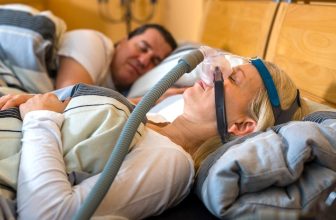
5. Reflect on the day before you go to sleep
Once in bed, instead of focusing on the next day’s commitments, try to mentally retrace the day that has just passed. What time did you wake up? What did you eat? Who did you meet? What did you talk about? What details stood out to us? “You have to try to be very detailed,” Iannoccari explains. “Often, people who have trouble falling asleep find that this exercise also helps them fall asleep.”
But there is another aspect that is particularly close to his heart. “I find that there is something romantic about it. We live one day after another and often we retain almost nothing from it. To think about it is to recognize its value. Each day leaves something behind it, like a geological layer deposited on the one that precedes it.” This little ritual provides an opportunity to remember the experiences we wish to preserve.
The real goal
When is the right time to start? “As children,” Iannoccari says. “We encourage them to play sports, but we rarely think about the importance of training their mental skills in such an intentional way. » Of course, in adult life, exercise, sleep, nutrition, stress management and social relationships also matter. “But if I had to name three engines of the mind, I would choose curiosity, creativity and emotions.”
he said. “Curiosity opens us to new knowledge, creativity allows us to connect this knowledge in original ways and emotions make experiences more memorable.”
He also notes that while older age is associated with poorer brain function, it is also how we gather wisdom from lived experiences. “We think that an efficient brain is the one we had at twenty, and we lose sight of what we acquired at sixty or seventy,” he says. “When we were young we may have been faster, but over time we have accumulated skills, knowledge and experience. We have a much richer view of the world. »
The real challenge is to remain present to ourselves and to others, valuing who we have become. And perhaps, over the years, one of the most important skills is precisely learning to choose where to invest our mental energy. “We meet people who, now that they are retired, are busier than when they were working. We have come to associate effectiveness with the number of things we can do, but in doing so we lose the opportunity to dig deeper, reflect, and let experiences settle. I always say I’m not looking for great ideas, I’m looking for great ideas. Because there are so many great ideas and they risk dispersing our energy in a thousand different directions. “With age,” concludes Iannoccari, “we have a great privilege: the ability to choose. »
A version of this story was originally published in GQ Italia.
Gn Health