Prostate cancer is the second leading cause of cancer death among men in the United States, and there have been significant changes to the guidelines on this topic, published in a new update from the American Cancer Society (ACS).
This is the first update we’ve received for ACS guidance since 2010, and there’s a major change: The organization now recommends regular blood tests to screen for prostate cancer in millions of men, starting at age 45 for those at higher risk and age 50 for those at average risk.
Until now, systematic screening was not directly recommended. Instead, men were advised to make an informed decision about screening with their doctor.
There is traditional concern about overdiagnosis and overtreatment, with the harms of unnecessary treatments (such as erectile dysfunction and incontinence) potentially outweighing the benefits – not all prostate cancers become dangerous or life-threatening.
In 2026, as the ACS points out, there is now growing evidence that early detection reduces deaths.
In recent years, there has also been a growing recognition that a screening test is only the first step in a longer process and that actions taken based on the results can be personalized between individuals.
“These updated guidelines are a critical step toward preventing advanced disease diagnoses, reducing premature deaths, and minimizing treatment-related harm,” says cancer epidemiologist Robert Smith, lead author of the new report and director of the Center for Early Cancer Detection at ACS.
At the center of the new advice is the prostate-specific antigen (PSA) test, which looks for a specific protein produced by the prostate.
This test is not new and is not entirely accurate (a higher PSA may be caused by other harmless conditions), but it is quick and inexpensive.
Regarding accuracy, over the past decade, follow-up tests (including MRI scans) have also improved, meaning PSA levels are becoming more useful as an early indicator.
“The PSA test remains the cornerstone of early detection of prostate cancer, and we now have stronger evidence of its benefits,” says Smith.
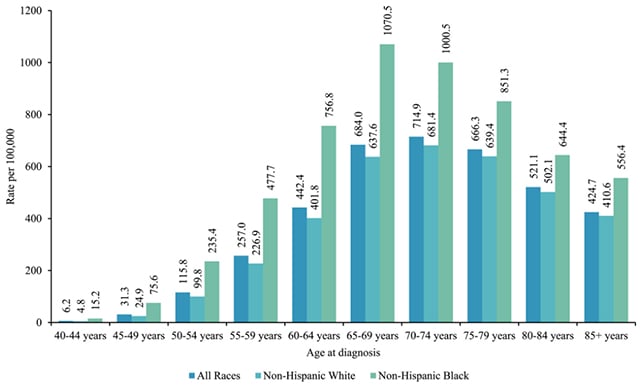
The updated guidance says men at higher risk of prostate cancer, particularly black men and non-black men with a strong family history of the disease, should have annual blood tests between the ages of 45 and 69.
 ))>
For men at average risk, screening is recommended every two years, from ages 50 to 69.
Between the ages of 70 and 74, the guidelines state that the balance between the potential harms and benefits of screening should be carefully weighed, and from the age of 75, screening is not advised.
At this stage of life, the health risks of treatment will likely be more dangerous than prostate cancer, which usually grows slowly.
The ACS team also commissioned three external modeling teams to run a series of computer models, examining the best combination of screening ages and testing frequencies to see how this could theoretically affect biopsies, overdiagnosis and lives saved.
“Our goal is also to help reduce prostate cancer disparities and reduce the burden of disease,” says William Dahut, ACS chief scientific officer.
“Black men experience a 67 percent higher incidence and almost double mortality rate compared to white men, an inequity that must be immediately reversed.”
Estimates of prostate cancer among American men in 2026 are 333,830 diagnoses and 36,320 deaths, highlighting the magnitude of the health problem. With these new guidelines, it is hoped that diagnoses will be more accurate and that deaths will be fewer.
These recommendations will continue to be evaluated and refined, the ACS says, as new scientific evidence and patient data become available.
The organization has also published a patient page that explains the new guidelines for affected men.
“Think of prostate cancer screening as an early warning system for your health,” says Shanthi Sivendran, interim chief patient officer at ACS.
“By detecting aggressive cancers with a simple PSA blood test, you open the door to highly effective treatments that protect your future. Meanwhile, low-risk findings can be safely managed with careful and active monitoring.”
The research was published in CA: A Cancer Journal for Clinicians.
This article was fact-checked by Rebecca Dyer and edited by Rebecca Dyer. Although we are proud of our process, we are only human. If you spot an error, please let us know.
Gn Health