When it comes to losing weight, it can sometimes feel like it’s you against the world.
The truth is a little more complicated.
It turns out that a host of invisible organisms living inside the gut have mysterious effects on the fat we carry around.
The better we understand this hidden microbial relationship, the better we can prevent weight gain and perhaps one day even prevent obesity.
In a new study in Cellular host and microbescientists have identified a bacteria that could prove helpful in this cause, called Immune Clostridium.
Researchers had already discovered that C. immunis may help protect mice from intestinal inflammation, but that’s not all this particular microbe does.
In an experiment with mice, animals given a single oral administration of the bacteria had 3 percent lower body weight in one week compared to control animals and saw a 25 percent reduction in blood triglycerides.
Importantly, compared to control mice, treated mice had about a third less visceral fat – a type of fatty tissue that surrounds vital organs inside the abdominal cavity, which is linked to serious health risks if you have too much of it.
In a separate experiment, mice were fed a high-fat diet for 12 weeks. Control animals experienced a 50 percent weight gain during the test, but mice treated with weekly doses of C. immunis showed 13 percent less weight gain than their control counterparts.
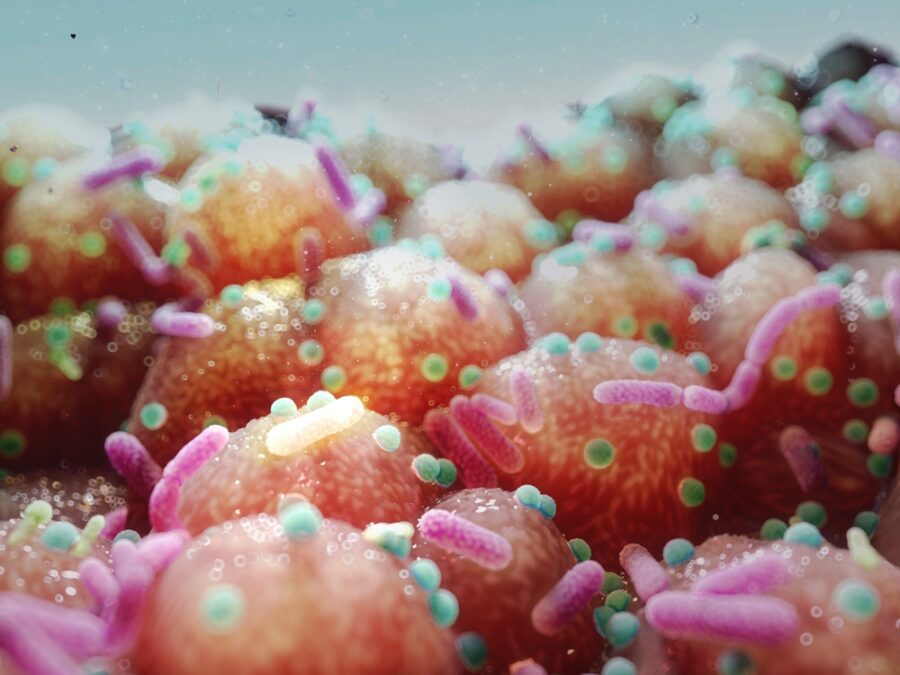
Subsequent experiments revealed that the metabolic effects were due to a bioactive compound released by the bacteria, which the researchers eventually discovered was a complex sugar molecule called an exopolysaccharide (EPS).
When mice were given EPS alone, it produced the same weight loss and fat reduction effects in the treated animals, suggesting that it was the sugar, not the bacteria itself, that was responsible for the observed benefits.
Researchers found that the EPS molecule, which carries a chemical group called phosphocholine, reduces intestinal immune cells called ILC3 cells, suppressing their production of a signaling protein known as IL-22.
As IL-22 levels decrease in the small intestine and visceral fat, more cells containing a protein called UCP1 appear in the visceral fat.
Because UCP1 is linked to thermogenesis – the process of burning energy to generate heat – this makes visceral fat more metabolically active, thereby increasing the amount of energy expended by the mice.
Remarkably, the mice achieved this without eating less or becoming more physically active.
“What surprised us was that this bacterial sugar did not work by reducing food intake or increasing activity,” says first author and medical researcher Chin Yee Tan of Singapore General Hospital, who worked on the research at Duke-NUS Medical School in Singapore.
“Instead, it changed the way visceral fat used energy. This gives us a completely different way of thinking about how gut bacteria can influence metabolism.”
Although there is much we do not yet fully understand about how the process works, EPS sugar produced by C. immunis appears to release a handbrake in the immune system that limits the energy-burning capacity of visceral fat, thereby allowing animals to burn fat more efficiently even when their diet and behavior remain unchanged.
It is unclear at this time whether the same type of treatment would work safely in humans, as so far it has only been tested in mice, but there are promising signs of related biological mechanisms at play in humans.
In the study, researchers studied gut microbiome data from more than 4,000 individuals and found that a bacterial gene involved in phosphocholine production was less abundant in obese people. A separate analysis also associated lower abundance of the gene with higher blood triglyceride levels.
Although it will be up to future studies to confirm the full implications, the researchers suggest that their results are consistent with the effects observed in mice being “generalizable to humans,” which is huge if true.
“Our results reveal how certain gut bacteria are able to communicate in a unique way with the human body: they generate distinct molecules by chemically modifying the sugars they produce,” says lead author and physician-scientist Neeraj Surana of Duke University.
“This opens a new perspective on how the microbiome can influence human metabolism and paves the way for new opportunities to develop treatments for metabolic diseases.”
The results are reported in Cellular host and microbe.
This article was fact-checked by Fiona MacDonald and edited by Fiona MacDonald. Although we are proud of our process, we are only human. If you spot an error, please let us know.
Gn Health