Judges in Prime Minister Benjamin Netanyahu’s criminal trial dealt a blow to the prosecution on Wednesday, telling Attorney General Gali Baharav-Miara that there was little chance of a corruption conviction in the most serious of the three cases against the prime minister and indicating that there was likely no crime in another.
In summoning Baharav-Miara to the Jerusalem District Court, a highly unusual step, the judges expressed serious concerns over allegations that Netanyahu traded regulatory favors in exchange for positive media coverage in Case 4000 and rejected accusations that he negotiated a quid pro quo with another media baron in Case 2000.
Leaving open the possibility of a conviction in a third case, concerning allegations of accepting illicit gifts, the judges told the attorney general that “the public interest demands a rethink” of how the trial should proceed.
“The chances of a conviction are low – to an extent that warrants reconsideration of the case,” Judge Rivka Friedman-Feldman told the attorney general about the bribery charge, as well as fraud and breach of trust, in Case 4000.
The comments appear to torpedo the prosecution’s most serious allegations, marking a huge victory for Netanyahu nearly seven years after he was brought to justice while still serving as prime minister.
The stunning development apparently leaves prosecutors with a realistic chance of conviction only in Case 1000. In that case, Netanyahu faces charges of fraud and breach of trust over allegations that he received expensive wines, jewelry and other luxury goods worth hundreds of thousands of shekels from Hollywood producer Arnon Milchan and Australian businessman James Packer and aided their interests while they were in power.
The judges said key evidence had been presented in court and the case should be wrapped up quickly, hinting at some form of agreement between the prosecution and Netanyahu’s defense team.
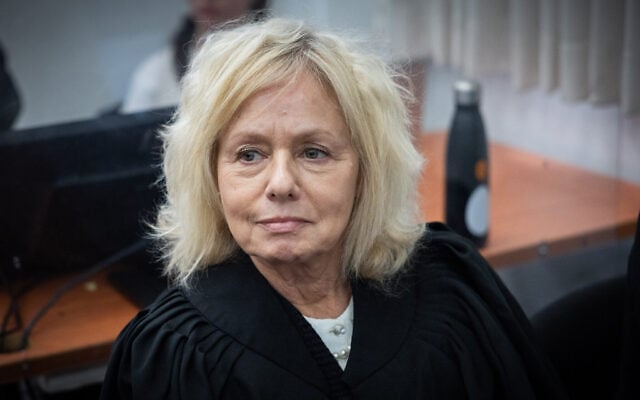
Baharav-Miara responded to the judges that she and the prosecution would take their recommendations into account. Netanyahu’s defense lawyer, Amit Hadad, offered to sit down at the courthouse right away to reach a deal, an offer the attorney general quickly rejected.
Netanyahu was indicted by Avichai Mandelblit, then the attorney general, in 2020 on three counts of fraud and breach of trust, as well as one count of bribery.
Netanyahu has consistently denied the allegations and accused law enforcement and prosecutors of holding him on trumped-up charges as part of a plot to remove him from power.
The indictment has indeed shaken the Israeli political landscape, with parties opposed to Netanyahu refusing to form a coalition with him. Netanyahu has turned to far-right political parties to associate with and has refused to resign from office during the trial.
Coincidentally, Wednesday’s hearing took place just as the Knesset was advancing legislation inspired by Netanyahu’s legal troubles that would bar an indicted individual from serving as prime minister.
The most serious charge against Netanyahu was widely seen as Case 4000, which revolved around allegations that the prime minister received a bribe in the form of positive media coverage from the owner of the Walla news site, Shaul Elovitch, in exchange for regulatory decisions favorable to Elovitch regarding his majority stake in communications giant Bezeq. Netanyahu has been accused of fraud and breach of trust in the matter, as well as corruption.
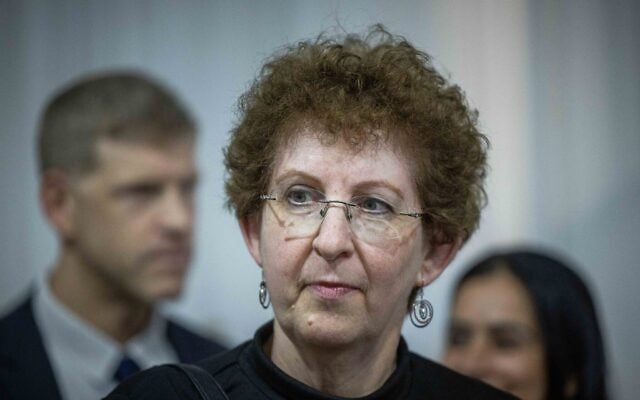
Speaking to Baharav-Miara, Friedman-Feldman expressed concerns that “the corruption charge raises significant difficulties.”
She noted that the case hinged largely on the problematic testimony of former Communications Ministry Director General Shlomo Filber regarding allegations that Netanyahu ordered him to act on behalf of Elovitch’s interests.
Filber, who was a prosecution witness, twice retracted his testimony in court, and during the trial it emerged that a meeting in which Netanyahu allegedly asked Filber to help Elovitch could not have taken place even though the prosecution said it would.
Netanyahu’s defense team had pointed to the discrepancy as proof that the meeting and instructions never took place.
“It is difficult to make factual conclusions based on (Filber’s) testimony – both in light of the cross-examination and the change in the account provided, and given that the objective data does not match it,” Friedman-Feldman told Baharav-Miara.
The judge also said there was “serious doubt” about whether allegations that Walla was “unusually compliant” with requests from Netanyahu, his team and his family members for positive coverage had been proven in court.
The indictment used the phrase “unusually compliant” to describe Walla’s positive coverage as a bribe.
Netanyahu and his lawyer, Amit Hadad, refuted the claim that Walla gave favorable coverage to Netanyahu in court, demonstrating that the news site had in fact been extremely hostile to the prime minister during the period in question.
Many of the 315 examples of supposedly favorable coverage turned out to be common requests for corrections or responses to be included in the coverage, the defense said, adding that many of these requests were ignored or only partially granted.
Equally problematic for the prosecution was former Attorney General Avichai Mandelblit’s recent admission in court that he did not review any of the 315 examples of positive coverage, even though those examples represented the actual bribe Netanyahu was accused of accepting.
“There is serious doubt as to whether the evidence supports this assertion,” Friedman-Feldman told the attorney general about the bribery charge.

“There is also serious doubt as to whether it has been proven that Mr. Netanyahu was aware, in real time, of the existence of such ‘unusual compliance,'” she added.
Proving the lesser charges of fraud and breach of trust in the case would also be problematic, the judge said, because they too relied on establishing that Netanyahu had given instructions for actions that would favor Elovitch.
Regarding Case 2000, Friedman-Feldman cast doubt on the notion that Netanyahu’s discussions with Yedioth Ahronoth newspaper publisher Arnon Mozes over legislation that would benefit the tabloid by harming its main competitor were criminal. Prosecutors alleged the discussions were part of an attempt to obtain a quid pro quo in exchange for more positive media coverage, accusing Netanyahu of fraud and breach of trust.
The judge said the “alleged crime” alleged in the indictment was based on the fact that Netanyahu had discussions with Mozes about the possibility of passing a law weakening the freesheet Israel Hayom, had detailed conversations about the components of such a law, and “took steps in the context of presenting a real possibility that he would use his government power and high public office to advance legislation that benefits Mr. Mozes.”
However, she and the other judges in the case believe there is “a real question mark” over the prosecution’s contention that such acts by a high-ranking government official “severely and seriously undermined the rule of law and ethical conduct” and constituted a crime.
She added that it was not even clear that this claim was supported by the evidence.
Before directly recommending that the prosecution drop the charges in the 2000 case, the judge said prosecutors should be given the opportunity to properly explain the charges in court.
Regarding Case 1000, Friedman-Feldman said the main evidence in the case has already been presented in court.
“It seems to us that it is possible to come to a conclusion. We are open to all possibilities – we have to find the procedural path to get there,” she said, in comments widely interpreted as referring to a possible plea deal.
Gn world