An ancient killer has tormented humans for millennia.
Although he is rarely considered a threat in developed countries today, it appears that this long-time villain still poses a danger in our modern world.
Research published in 2022 found that the bacteria that causes typhoid fever develop widespread drug resistance and quickly replace strains that are not resistant.
Currently, antibiotics are the only effective treatment for typhoid, caused by the bacteria. Enteric salmonella serotype Typhi (S. Typhi).
Yet over the past three decades, bacterial resistance to oral antibiotics has grown and spread.
In their study, scientists from several countries sequenced the genomes of 3,489 strains of S. Typhi contracted between 2014 and 2019 in Nepal, Bangladesh, Pakistan and India, and found an increase in extremely drug-resistant (XDR) Typhi.
Watch the video below for a summary of the study:
 ))>
XDR Typhi is not only impervious to first-line antibiotics, such as ampicillin, chloramphenicol, and trimethoprim/sulfamethoxazole, but it is also becoming increasingly resistant to newer antibiotics, such as fluoroquinolones and third-generation cephalosporins.
Worse still, these strains are rapidly spreading globally.
While most cases of XDR Typhi originate in South Asia, researchers have identified nearly 200 cases of international spread since 1990.
Most strains have been exported to Southeast Asia, as well as East and Southern Africa, but typhoid superbugs have also been found in the United Kingdom, United States and Canada.
“The speed at which highly resistant strains of S. Typhi have emerged and spread in recent years is a real cause for concern and highlights the need to urgently expand prevention measures, particularly in countries most at risk,” Jason Andrews, an infectious disease researcher at Stanford University, said when releasing the findings.
Scientists have been warning about drug-resistant typhoid for years. In 2016, the first XDR typhoid strain was identified in Pakistan. By 2019, it had become the dominant genotype in the country.
Historically, most drug-resistant strains of typhoid have been treated with third-generation antimicrobials, such as quinolones, cephalosporins, and macrolides.
But by the start of the 21st century, mutations conferring quinolone resistance accounted for more than 85 percent of all cases in Bangladesh, India, Pakistan, Nepal and Singapore.
At the same time, resistance to cephalosporins was also taking over.
Today, there is only one oral antibiotic left: the macrolide, azithromycin. And this medicine may not work for much longer.
The 2022 study found that mutations that confer resistance to azithromycin are now also spreading, “threatening the effectiveness of all oral antimicrobials for the treatment of typhoid.”
Although these mutations have not yet been adopted by XDR S Typhi, if they are, we are in big trouble.
If left untreated, up to 20 percent of typhoid cases can be fatal, and by 2024, more than 13 million cases of typhoid have been reported.
Future outbreaks can be prevented to some extent with typhoid conjugate vaccines, but if access to these vaccines is not expanded globally, the world could soon face another health crisis.
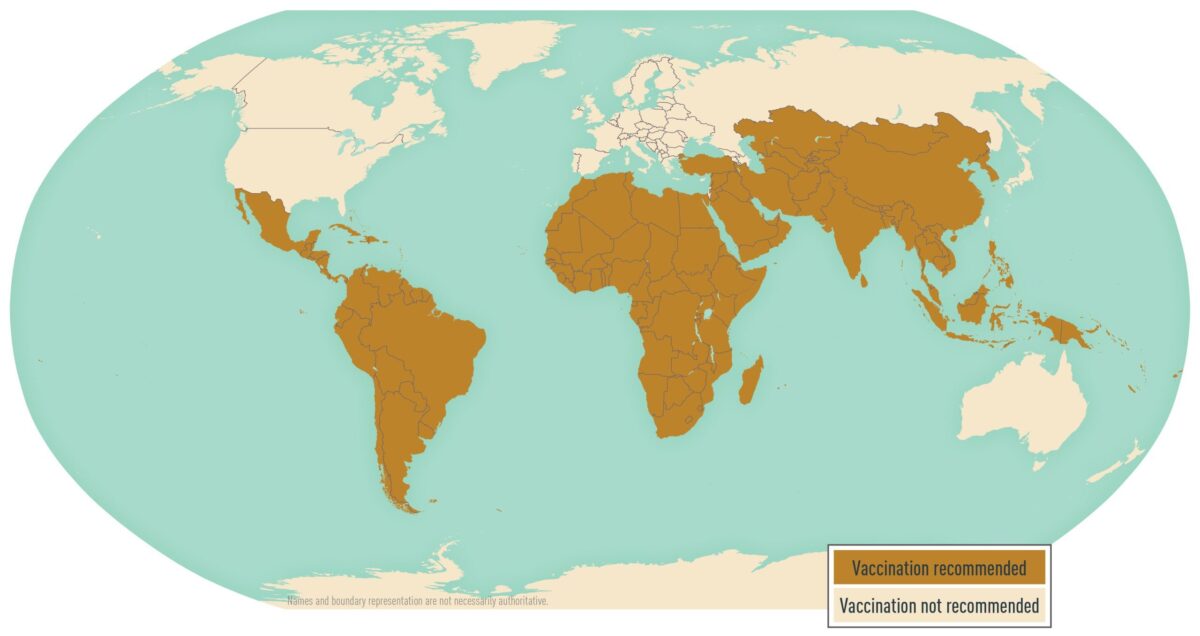
“The recent emergence of XDR and azithromycin-resistant S. Typhi creates greater urgency for rapid expansion of prevention measures, including the use of typhoid conjugate vaccines in typhoid-endemic countries,” the authors write.
“Such measures are necessary in countries where the prevalence of antimicrobial resistance among S. Typhi isolates is currently high, but given the propensity for international spread, they should not be limited to such settings. »
South Asia may be the main hub for typhoid fever, accounting for 70% of all cases, but if COVID-19 has taught us anything, it’s that variants of the disease in our modern, globalized world spread easily.
To prevent this from happening, health experts say countries need to expand access to typhoid vaccines and invest in new antibiotic research.
A 2021 study in India, for example, estimated that if children were vaccinated against typhoid in urban areas, it could prevent up to 36% of typhoid cases and deaths.
Pakistan is leading the way on this front. It was the first country in the world to offer routine vaccination against typhoid.
A small number of countries have now followed suit or are “planning or considering introducing this system”.
The World Health Organization prequalified four typhoid conjugate vaccines as of April 2025, according to the CDC, which states that “these vaccines are being introduced into childhood immunization programs in typhoid-endemic countries.”
Related: Western-Style Diet May Make Salmonella More Dangerous, Mouse Study Suggests
Antibiotic resistance is one of the leading causes of death worldwide, killing more people than HIV/AIDS or malaria.
When available, vaccines are among the best tools we have to prevent future disasters.
We have no time to waste.
The study was published in The Lancet microbe.
This article was fact-checked by Rebecca Dyer and edited by Rebecca Dyer. Although we are proud of our process, we are only human. If you spot an error, please let us know.
Gn Health