Part of Pacifica Pier collapses into ocean amid strong king tides
The latest coastal high tide flooding, spurred by a series of storms in the Pacific, has already surpassed all-time records in California and southern Oregon, and more flooding is possible for the remainder of Thanksgiving week.
What is a king tide?
King tides are the highest high tides in a year, triggered by gravitational pull when the Moon, Sun and Earth align.
(WATCH: King tides explained)

Weather in your inbox
October’s king tides brought record flood levels to many parts of Southern California, including Los Angeles and San Diego, flooding roads and buildings and eating away oceanfront properties. Many of those records have already been rewritten this week.
These West Coast king tides were spurred by a slow movement of warm water pushed against the coast, called an El Niño-spawned Kelvin wave atop already record ocean water near the California coast.
(MORE: Impacts of main tide flooding in October)
Get more of our news on Google
Set The Weather Company as your “Preferred Source” to get faster access to the news you love.

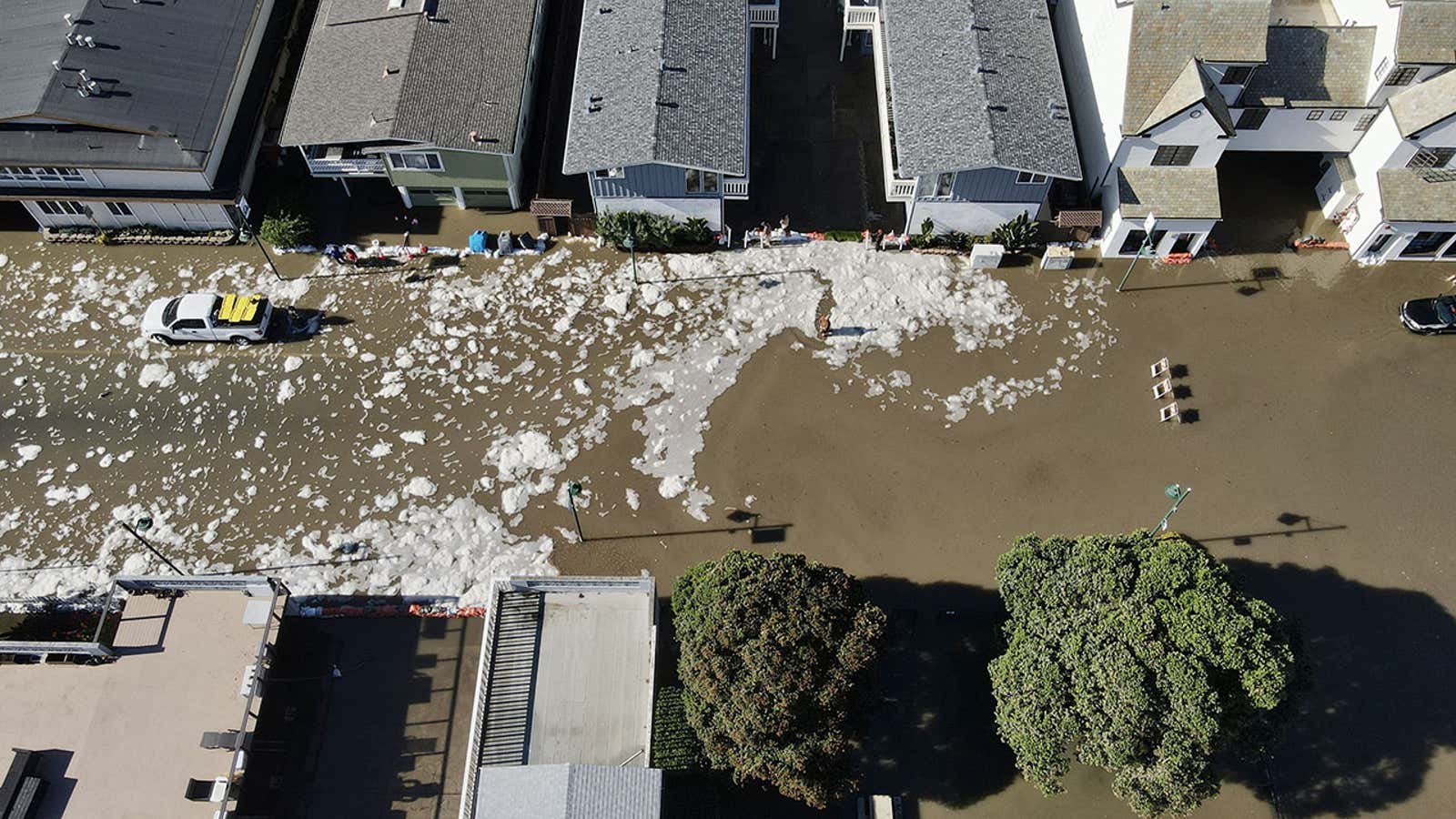
An aerial view of flooded streets and homes during a record high tide as huge waves hit near the Pacifica Municipal Pier in Pacifica, California, United States, November 25, 2026.
( Tayfun Coskun/Anadolu via Getty Images )
Record flooding so far
Six tide gauges in California tied or set new all-time flood records on Wednesday, including those in Monterey, Santa Barbara and San Diego, some of which surpassed records set during spring tides in late October.
This rising ocean waters flooded city streets, damaged piers and hit some coastal homes and buildings.
Tuesday’s high tides appeared to shatter the all-time record at the Charleston, Oregon, tide gauge, surpassing the previous record from New Year’s Day 2006, according to the National Weather Service in Medford. This flooding closed a section of US Highway 101 near Coos Bay on Tuesday.
Although the water level is not in the top 10 according to the San Francisco tide gauge, Tuesday’s flooding inundated roads throughout the Bay Area, including areas near the Embarcadero and Marin County.
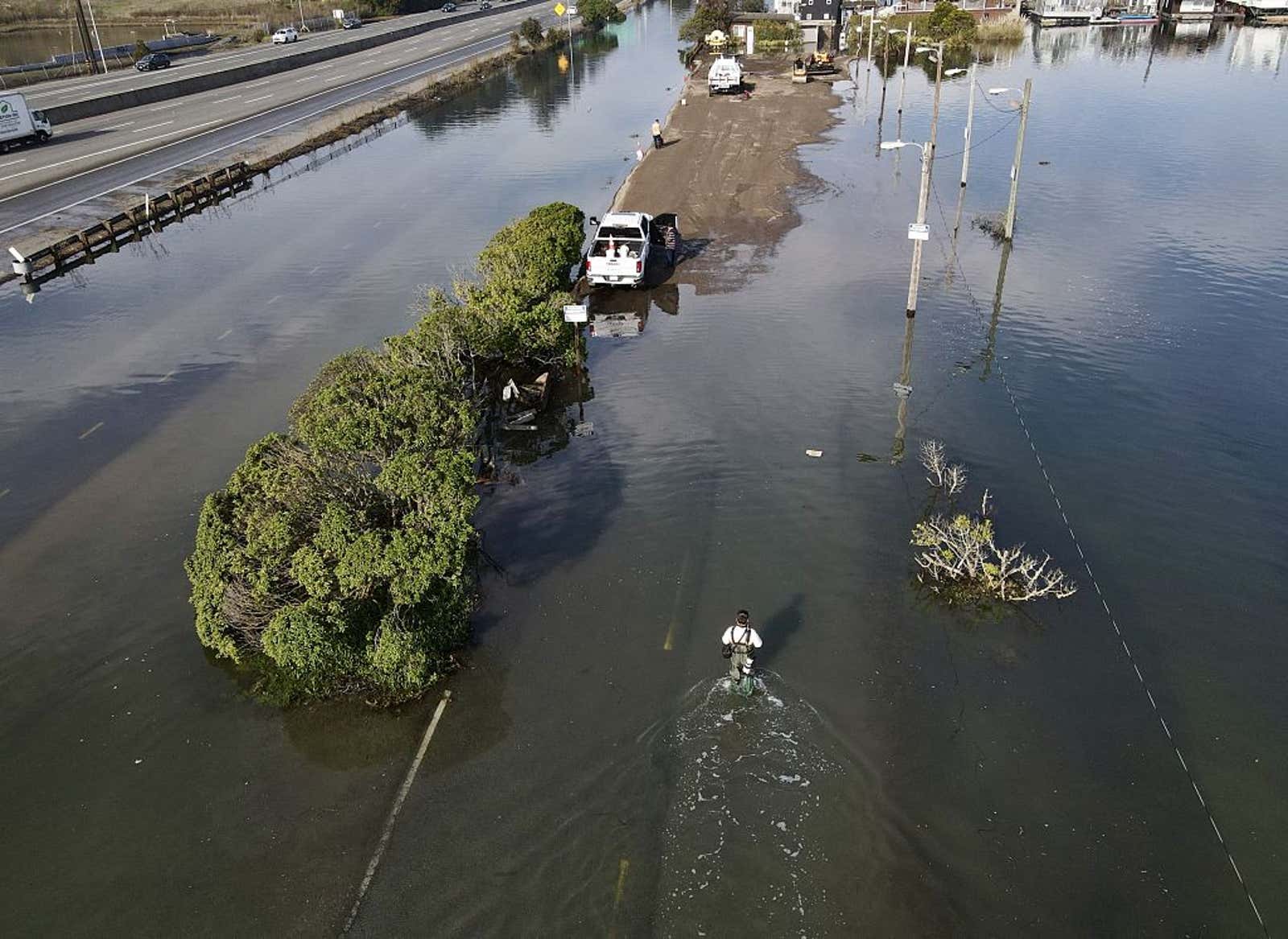
Floodwaters covered Marin County roads during high tide in Sausalito and Mill Valley in California on November 24, 2026.
( Tayfun Coskun/Anadolu via Getty Images )
Thursday’s waves in Southern California were high enough to sweep across Amtrak’s surf service tracks, causing disruptions and cancellations between Irvine and San Diego.
More coastal flooding is coming
We expect this high tide flood to last until Friday.
Unfortunately, a series of storms crossing the Pacific Ocean adds to the severity of the main tide flooding, pushing large swells towards the coast.
The pounding waves that accompany every storm in the Pacific could worsen damage to nearshore structures and beach erosion, as we saw in October.
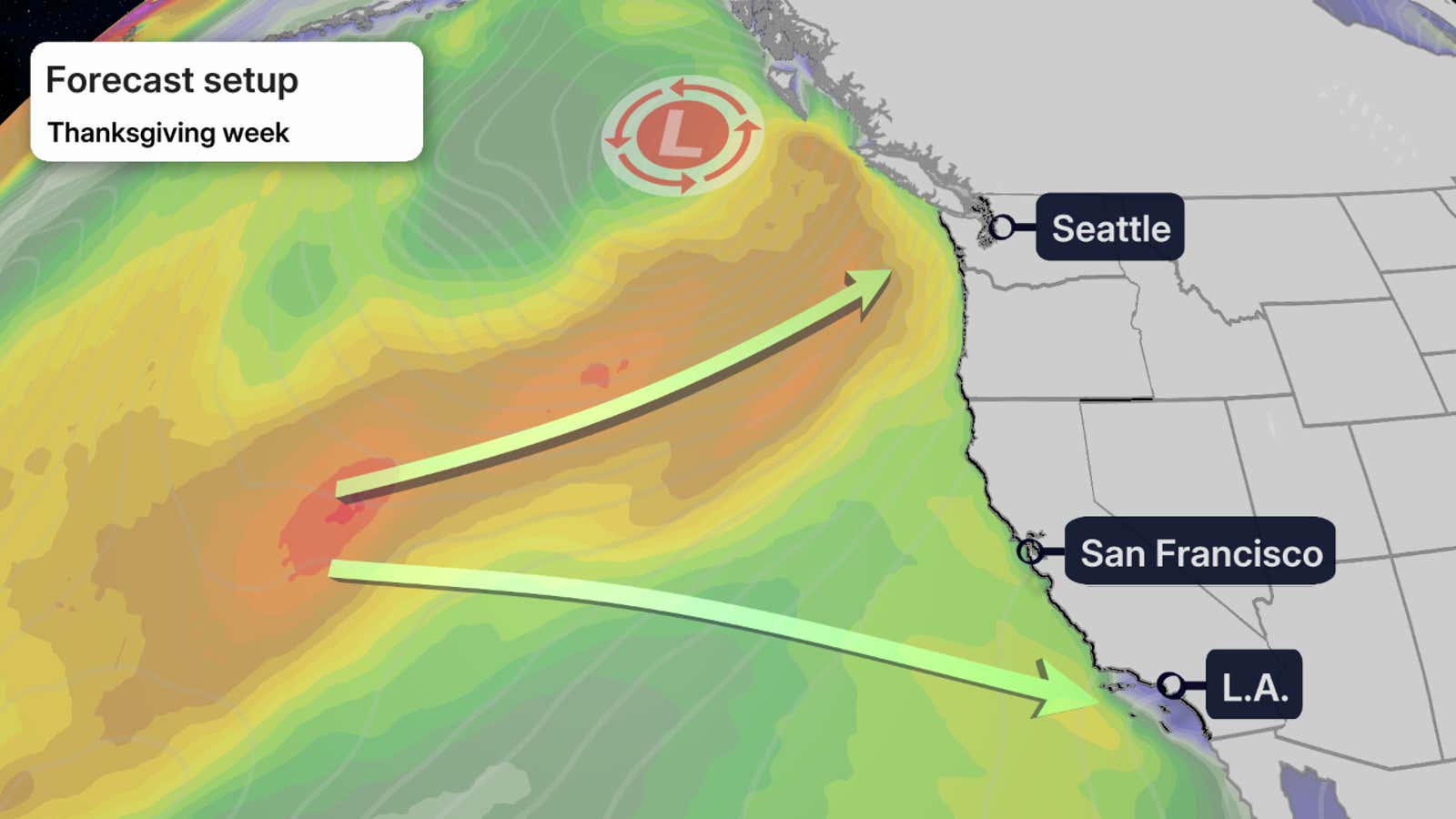
It will also flood coastal roads from Washington state to southern California, including stretches of U.S. Highway 101 in northwest California and southern Oregon, areas near the San Francisco Bay, and some streets along the coast in the Los Angeles Basin and San Diego.
Dangerous breaking waves up to 30 feet are possible again along parts of the Oregon and California coasts.
FLIGHT? Check out our flight tracker. Web | iOS | Android
More king tides next month
If that wasn’t enough, more major tidal flooding is likely along the West Coast during Christmas week and then again in late January, physical oceanographer Greg Dusek told Weather.com.
The highest king tides of the year along the west coast generally occur around the winter and summer solstices.
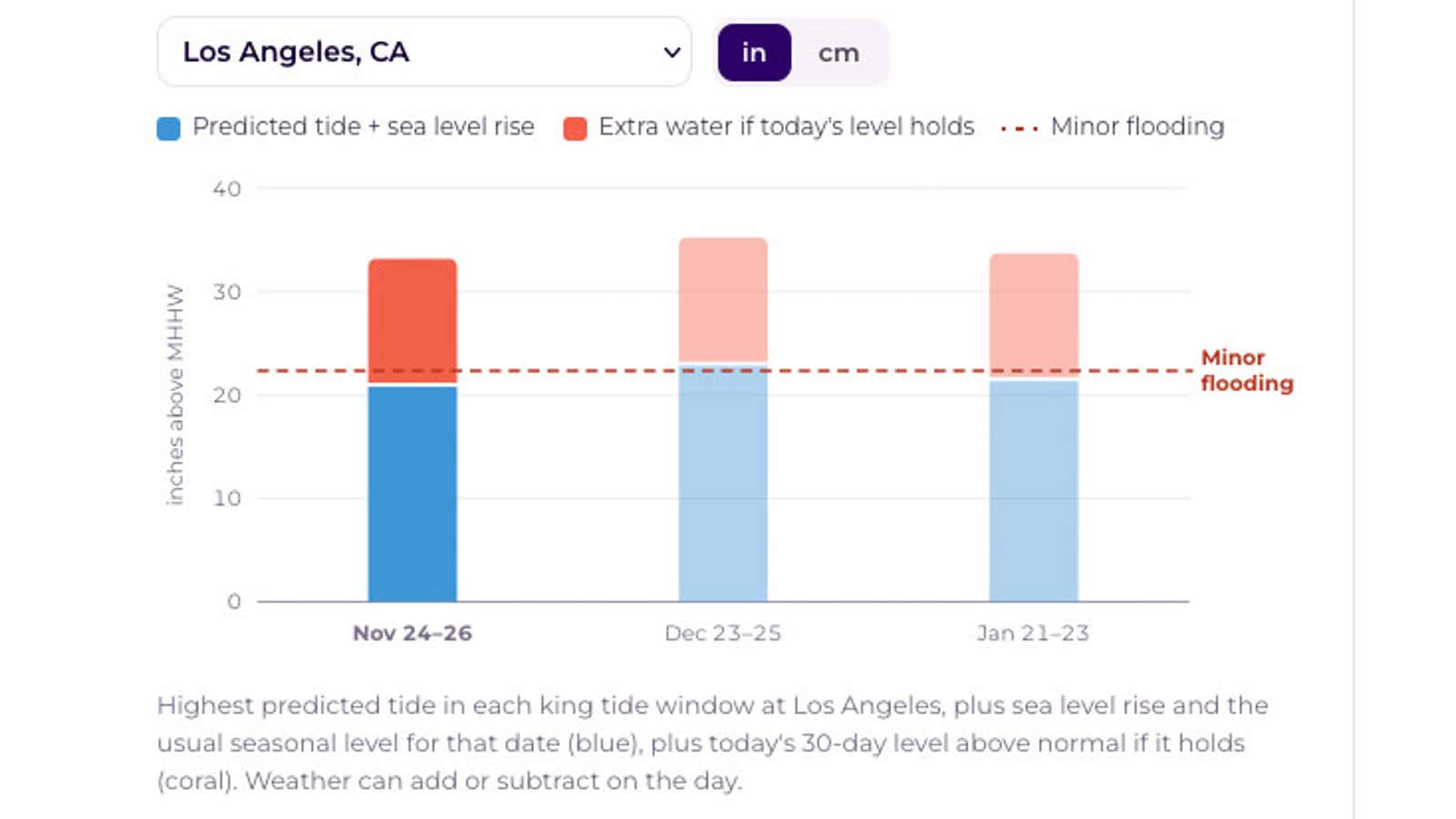
This chart shows the highest predicted tide for the late November, December and January 2026-27 king tides in inches above the mean high tide level. This October 30, 2026 forecast assumes water levels will remain as well above average as they were then.
( Hohonu.io/Greg Dusek )
What you should do
If you live near the West Coast or have vacation plans there, here are some simple safety tips:
- Stay away from the beach and out of the ocean. Some normally dry areas will be flooded at high tide. If you must watch the waves crash, do so from a safe distance from the beach, not from rocks or jetties.
- Never turn your back on the ocean. Sneaker waves can surprise you, knock you over, and contain debris such as large logs or driftwood that could lead to injury or even death.
- Never drive on flooded roads. Your vehicle could stall or float in higher water.
- Never go around the barriers marking a section of road as closed. If authorities close a road, flooding is dangerous and life-threatening, or a section of road may be washed away.
Jonathan Erdman is a senior meteorologist at Weather.com and has covered national and international weather since 1996. Extreme and bizarre weather are his favorite topics. Contact him on Blue sky, X (formerly Twitter) And Facebook.
Gn usa