“Taste – the mouth’s response to the sensation of eating and drinking – is a strange, complex and complicated thing,” writes New York. Times food editor Craig Claiborne. “I’m convinced that there are plenty of people (mostly Americans, judging by the people who buy TV dinners and frozen pizzas) who have no taste.” This column was published almost exactly 50 years ago, but even then, these convenient food products had already enjoyed an important place in American life for two decades. Although this could hardly have dented the popularity of TV dinners, Claiborne’s typically waspish side prompted a letter of objection from one Rosalie Levine of Lakewood, California.
“I live alone, I have to control my weight. I’m not a good cook,” she wrote. TV dinner price ‘can’t be bettered’; Plus, “each oven-ready dinner requires only half an hour of gas to prepare, and there are no pots or pans to clean up afterward.” » While none of these benefits are due to chance, the oft-told story of the concept’s emergence begins with a corporate crisis.
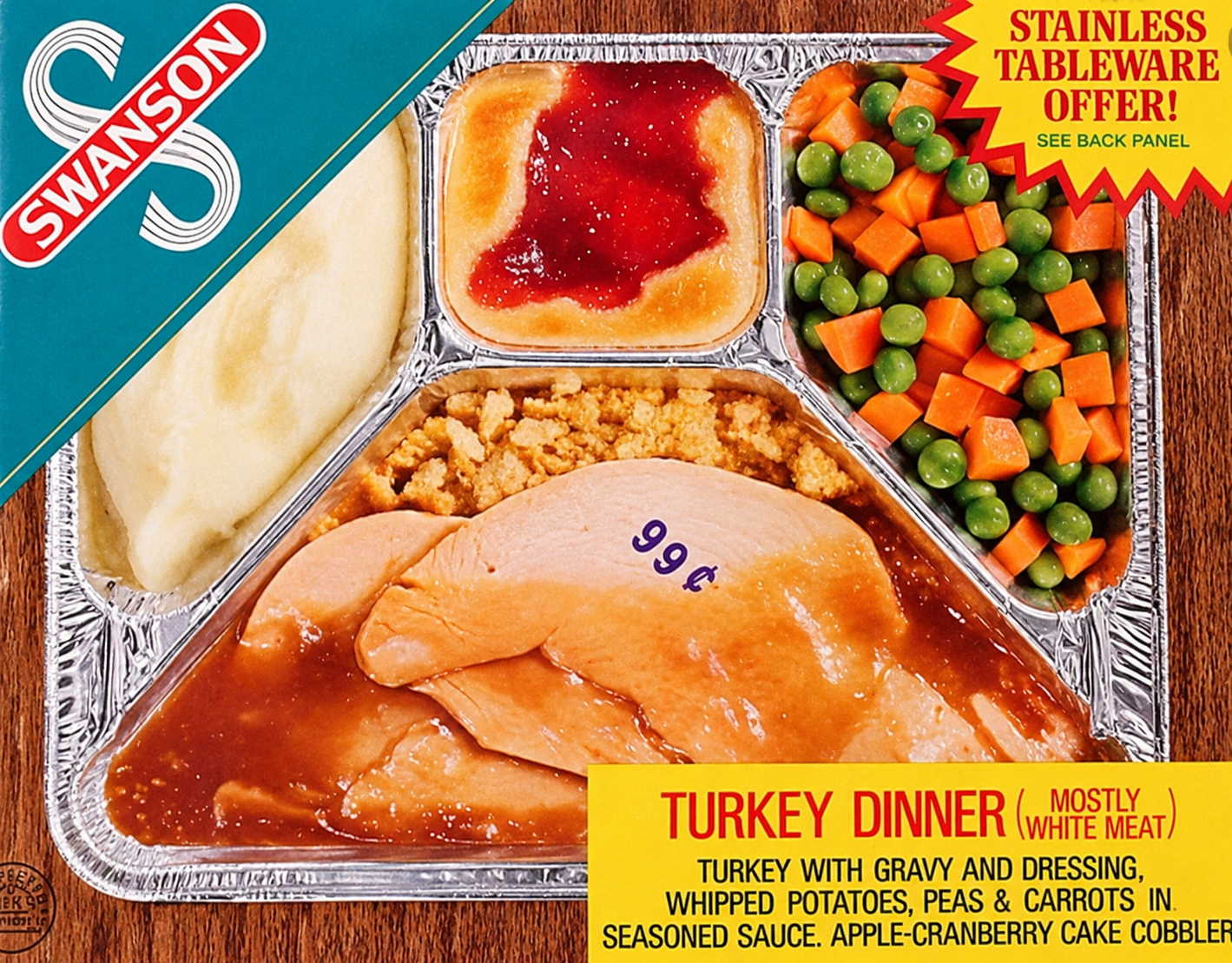
“In 1953, someone at Swanson wildly miscalculated the level of American appetite for Thanksgiving turkey, leaving the company with some 260 tons of frozen birds,” as Smithsonian.com’s Owen Edwards recounts. “Inspired by the trays of prepared meals served on airlines,” Swanson salesman Gerry Thomas turned on the machines to package unwanted meat with sauce and sides like cornbread and sweet potatoes, ready to be stocked in America’s frozen food aisles.
The following year, Swanson sold ten million of these “TV dinners,” a name given both to the shape of the boxes and the form of entertainment that families tended to enjoy while eating the meals they contained. “In 1950, only 9 percent of American households owned a television set, but by 1955, that figure had risen to more than 64 percent, and by 1960, to more than 87 percent,” writes Kovie Biakolo in a more recent Smithsonian article. (Among the Smithsonian Institution’s holdings is an original Swanson TV dinner tray.) Another major advance was the introduction of microwave-safe trays, reducing total preparation time to less than ten minutes. During the COVID-19 pandemic, Americans have rekindled their love affair with frozen meals, “spending nearly 50% more on these products in April 2020 than in April 2019.”
Where holidays and business traditions intersect, the details tend to get complicated. Swanson’s TV dinner had its precedents: the basic technology for frozen packaged foods was invented more than a century ago by entrepreneur Clarence Birdseye (he of the Birds Eye peas that Edwards remembers as “little cryogenic miracles”), and in the late 1940s, various companies planned or attempted to market frozen meals under brands like Strato-Plates, FridgiDinners and One-Eyed Eskimo. None of these names harnessed the technology that transformed not only American mass culture, but also the American way of life. In the 1950s, associations with television (and, indeed, with air travel) carried a kind of sophistication that they certainly do not have today. Craig Claiborne might be glad that Americans never quite accepted microwaved TV dinners as a substitute for the Thanksgiving meal; what he would think of the food they order through their apps is another matter entirely.
Related content:
Read over 1,000 Thanksgiving books for free on the Internet Archive
Thanksgiving menu at the Plaza Hotel in New York (1899)
F. Scott Fitzgerald’s 13 Tips for What to Do with Your Leftover Thanksgiving Turkey
How Eating Kentucky Fried Chicken Became a Christmas Tradition in Japan
An animation of the famous film Frozen Peas Rant by Orson Welles
The Museum of Failure: New Swedish museum showcases Harley-Davidson perfume, Colgate beef lasagna, Google Glasses and other failed products
Based in Seoul, Colin Mr.Arshall writes and broadcastsadvice on cities, language and culture. He is the author of the newsletter Books about cities as well as books 한국 요약 금지 (No Korea summary) and Korean Newtro. Follow him on the social network formerly Twitter at @colinmAI will.
Gn bussni