Want to bookmark your favorite articles and stories to read or view later? Start your independent membership today.
Join us today
Already a member? Log in
Covid levels are rising across the country as the winter holidays approach, new federal data shows.
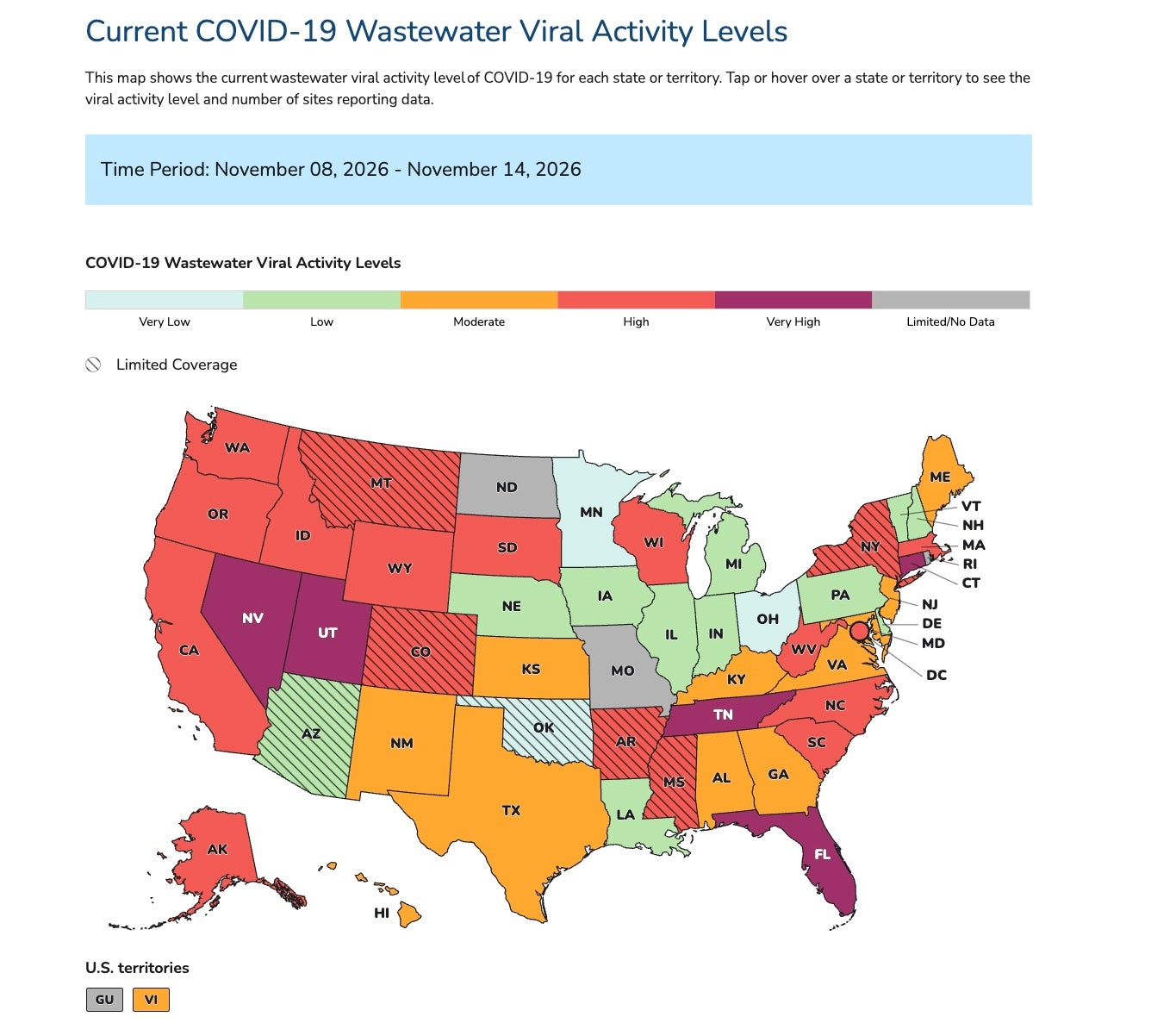
Levels are highest in the Southeast and Southwest, according to the U.S. Centers for Disease Control’s Prevention Wastewater Tracker from Nov. 8-14.
This includes Nevada, Utah, Tennessee and Florida – although levels are also rated “very high” in Connecticut. Nearly 20 other states have “high” levels from coast to coast.
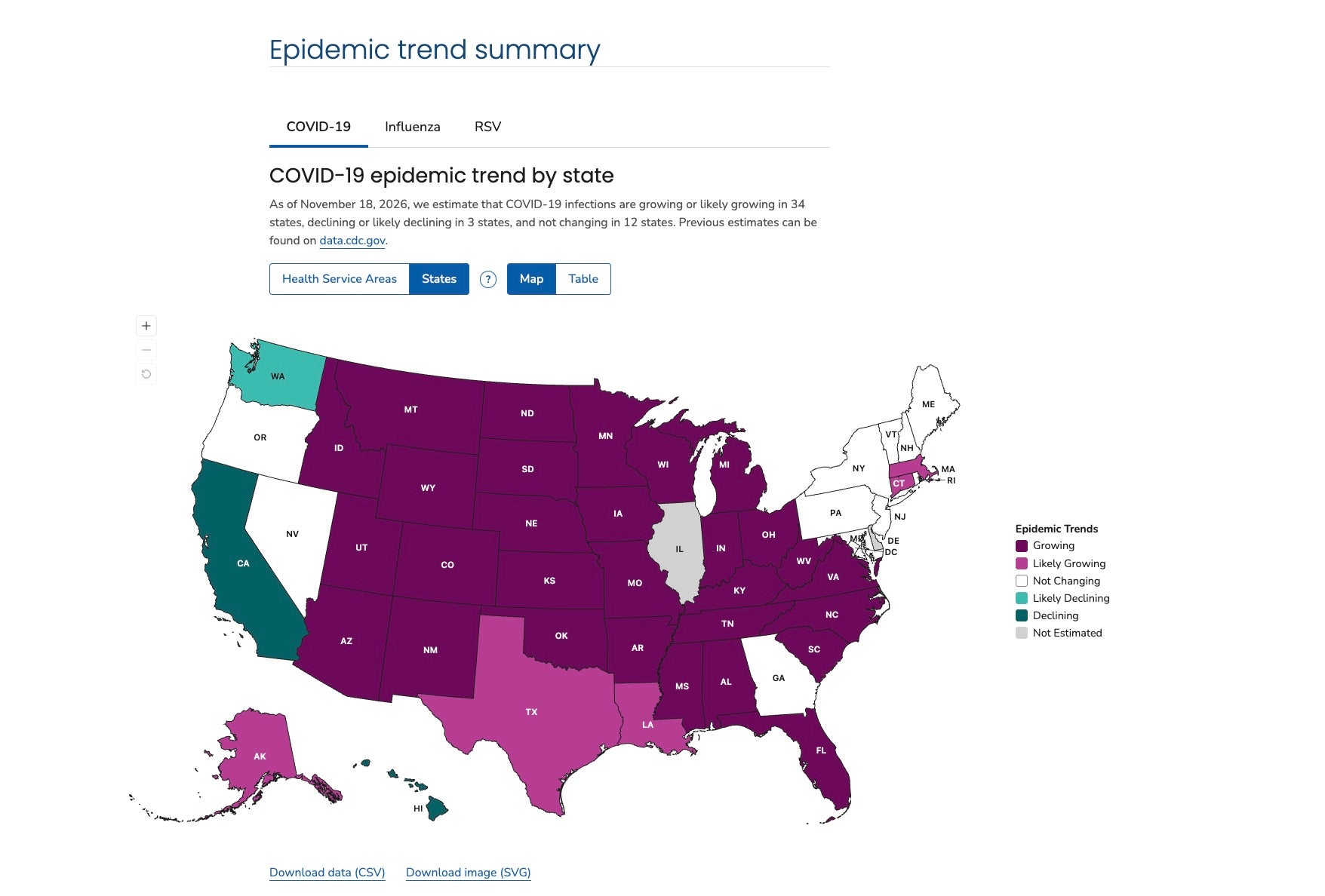
“As of November 18, 2026, we estimate that COVID-19 infections are increasing or likely to increase in 34 states, decreasing or likely decreasing in 3 states, and not changing in 12 states,” the CDC says.
Nearly 8,000 Americans have died this year from Covid infections and hospitalizations are increasing.

It’s unclear how many Covid cases the U.S. has seen this year because the CDC no longer records this data. But the percentage of positive tests for Covid was 3.66 percent on November 14, compared to 3.55 percent the previous week.
The increase comes as more than 81 million Americans are expected to travel for Thanksgiving, according to data from the American Automobile Association.
There is an increased risk of spread in airports and on public transport as Covid spreads via respiratory droplets in the air and on surfaces.
Getting an updated Covid vaccine that targets the latest strains of the virus can help prevent serious infection. The most common strains are offshoots of Omicron, which began spreading widely during the winter of 2021-2022.
According to the CDC, only 14% of American adults reported receiving the 2026 vaccine as of October 31. This year’s vaccine is available free at pharmacies and doctor’s offices with most health insurance plans. Otherwise, it may cost a few hundred dollars out of your pocket.
Doctors say everyone aged six months and older should get vaccinated. People over 65 “should receive an injection every six months,” says the Association of American Medical Colleges.
This group is at higher risk of serious outcomes, including pneumonia, organ failure and death.
Gn Health