A top Democratic senator has pledged to close a tax loophole that has become a favorite of tech billionaires, as progressives seek new ways to boost the incomes of wealthy Americans.
Sen. Ron Wyden of Oregon said the party would target what are called “grantor-retained annuity trusts,” or Grats. The estate planning vehicle is widely used by the very wealthy to avoid gift and inheritance taxes and is particularly effective for those with rapidly appreciating stocks, such as technology stocks.
Grats, born from rules passed by Congress in 1990 to close another tax loophole, ostensibly give their creators the right to receive a stream of regular annuities for a specified period, then pass on what’s left to their beneficiaries.
In practice, they allow the wealthy to pass on billions of dollars to their families without the 40 percent tax usually levied on gifts and inheritances above $15 million.
Grats are “a congressionally approved device to provide — without a gift tax — future appreciation of any asset,” said Austin Bramwell, a partner at the Milbank law firm.
The FT’s analysis of US company filings found that SpaceX founder Elon Musk, Nvidia co-founder Jensen Huang, AMD chief executive Lisa Su and Microsoft chief executive Satya Nadella placed shares worth a total of $20 billion in the trusts.

The Grats are “yet another example of how the ultra-rich are evading paying a fair share,” said Wyden, who is expected to chair the powerful Finance Committee when Democrats take control of the Senate in January. “What happens with these trusts is that ultra-wealthy individuals move a lot of money around on paper and, poof, the taxes they owe on that money disappear.”
Democrats won majorities in both houses of Congress in November’s midterm elections, with the most progressive promising to raise taxes on the nation’s wealthiest citizens, following a sharp rise in the cost of living and concerns about the influence of tech barons in American politics.
“We have a mandate from voters to pass a bold, progressive agenda and Republicans have left the budget in shambles, so fixing both of those problems will require Democrats to address these gaps for the ultra-wealthy,” Wyden told the FT.
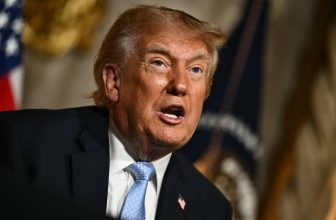
He is expected to use the 56-44 Democratic majority in the Senate starting in January to advance a bill he filed with Angus King, an independent senator from Maine, aimed at closing that gap as quickly as possible. Any new legislation can be vetoed by US President Donald Trump and would then require a two-thirds majority to pass.

More than half of America’s 100 richest people had used Grats and other planning vehicles to avoid estate taxes, according to a 2021 ProPublica report based on leaked tax returns.
Huang, who recently returned to the helm of Nvidia 11 days after stepping down amid a scandal, said in a September interview: “Nothing would give me more joy than being able to pay even more taxes.”
Responding to a question about a proposal for a one-time 5 percent wealth tax on California residents, which the state’s voters rejected earlier this month, he said: “I don’t mind paying taxes…the fact that I can afford to pay $8 billion in taxes over five years is a privilege.”
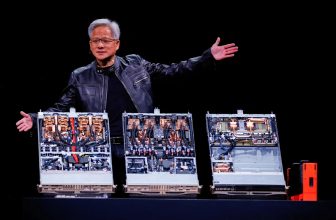
Yet he and his wife Lori Huang are expected to avoid paying inheritance and gift taxes on at least $16 billion of Nvidia stock through their Grats maneuvers, according to FT calculations based on the chip group’s share price as of Friday.

In 2016, Huang and his wife created four Grats and transferred 770,000 shares of Nvidia stock into each, for a total of $100 million at the time.
Normally, these transfers would have been subject to a gift tax, equal to the value of the shares in 2016 minus the value on that date of future annuity payments.
But the Huangs structured their annuity payments to match the value of the 2016 gift, meaning virtually no gift tax was due.
If Nvidia’s stock price had remained stable or fallen, the Huangs would not have benefited from this maneuver. The Grats’ shares would simply have been returned to them in the form of annuities.
But over the next few years, the company’s stock price skyrocketed, meaning that only a small fraction of the Grats’ shares had to be transferred back to the Huangs to pay the annuities. The shares left behind were transferred into a remainder trust and are now sheltered from gift and inheritance taxes. As of Friday, they were worth $16 billion.

Huang is not alone. Musk placed $1 billion in SpaceX stock in Grats created in 2024, according to a report on the rocket maker’s insider holdings. Microsoft’s Nadella owns $213 million in Grats, about half of his total shares.
Outside of technology, other executives, like JPMorgan chief Jamie Dimon, have used the estate planning vehicle.
Since 2016, Dimon has transferred more than 4.2 million JPMorgan shares, now worth $1.4 billion, from Grats to entities linked to his family members, according to securities disclosures.
Musk, Huang and Su did not respond to requests for comment. Dimon and Nadella declined to comment through their respective companies.

In the United States, gift and inheritance taxes are levied at a rate of 40 percent on wealth transfers exceeding a threshold of $15 million. Gift tax applies to transfers during a lifetime and estate tax is charged at death.
Very few estates pay these taxes due to the high threshold and the multitude of avoidance strategies that allow those whose assets would be affected to avoid the levy.
In 1970, estate and gift taxes accounted for 1.9 percent of federal tax revenue. By 2025, this figure had fallen to 0.6%, or $29 billion, partly due to the raising of the threshold and the abundance of avoidance strategies.
“Tax planners will always try to reduce their clients’ obligations and that is an expected part of the system,” said Ray Madoff, a professor at Boston College Law School and author of The Second Domaina book about how the ultra-rich avoid taxes.
But “Congress has failed to address basic maintenance of the estate and gift tax system (and has) failed to close these gaps,” she added.
Data visualization by Martin Stabe