Donald Trump likes to think of foreign policy as a business. Allies should earn their share and adversaries should be forced to pay, unless they can make an offer that leaves America better off than it was before.
The man who brought you The art of the market and a few seasons too many The apprentice should really know when he’s the one being taken for a ride.
Vladimir Putin is currently waging war against Ukraine and threatening Washington’s historic allies across the Atlantic, while the Kremlin’s digital agents spread fabricated information and attempt to manipulate the American political debate through vast disinformation campaigns.
According to the White House, this should not prevent the Russian president from being considered Washington’s best partner to help resolve the American oil crisis.
The Russian diesel import deal Trump struck on the phone with Moscow last week is likely to leave Putin better off, Ukraine worse off, and the Americans likely to get little from the deal. But kyiv’s recent strikes on Russian data centers suggest that kyiv may have found another way to make life difficult for Putin and demonstrate why Ukraine, not Russia, might be Washington’s most valuable partner.
Lose-Lose-Win
Trump’s response to the fuel crisis is not an answer. It is an act of desperation with only one obvious beneficiary.
After a phone call with Putin on Friday, Trump announced that Russia would supply 300,000 tons of diesel immediately, another 500,000 in November and a million more shortly after. To keep diesel moving, the Treasury quickly eased sanctions on Russian diesel until April 2027 and allowed imports directly to the United States.
There are, unsurprisingly, some problems here. For starters, Congress explicitly banned Russian energy imports in 2022, with provisions requiring Moscow to agree to end hostilities and withdraw its forces on terms acceptable to Ukraine before the U.S. president can end the ban.
Putin did no such thing. On the contrary, during its telephone conversation with Trump, the Kremlin said that it had not even committed to resuming peace negotiations. The president also did not consult Congress before making his deal, and senators from both parties have already demanded that the deal be canceled on legal grounds. Senate Minority Leader Chuck Schumer called the deal a “deal with the devil.”
Second, the deal makes a mockery of Trump’s own demands that his European allies stop buying Russian oil, as well as his repeated threats to punish China and India for keeping the Kremlin’s coffers afloat.
Less than a month ago, Trump signed the Lindsey O. Graham Act sanctioning Russia and Iran, giving him the tools to further reduce Russia’s energy profits and impose punitive tariffs on its major trading partners. News week called this Trump’s latest TACO test, asking how much the president would actually use this sanctions hammer. Trump turned the tables and offered Putin the handle to get him out of the hole.
Of course, Washington could argue that a little hypocrisy is worth enduring if Americans can finally get a break from the pump.
Unfortunately, the figures are not encouraging. America consumes about 3.6 million barrels of diesel and other distillate fuels every day. Russia’s initial delivery of 300,000 tons equates to about 2.25 million barrels, or just 15 hours of U.S. demand, even if every drop reaches the United States. This also assumes that Putin can and will keep his promises.
Ukrainian drone strikes knocked out 3.1 million barrels per day of Russian refining capacity, according to a study by S&P Global Energy. Russian diesel exports have collapsed and analysts expect supply constraints to persist until 2027.
Ukraine, for its part, finds itself in an already very short situation.
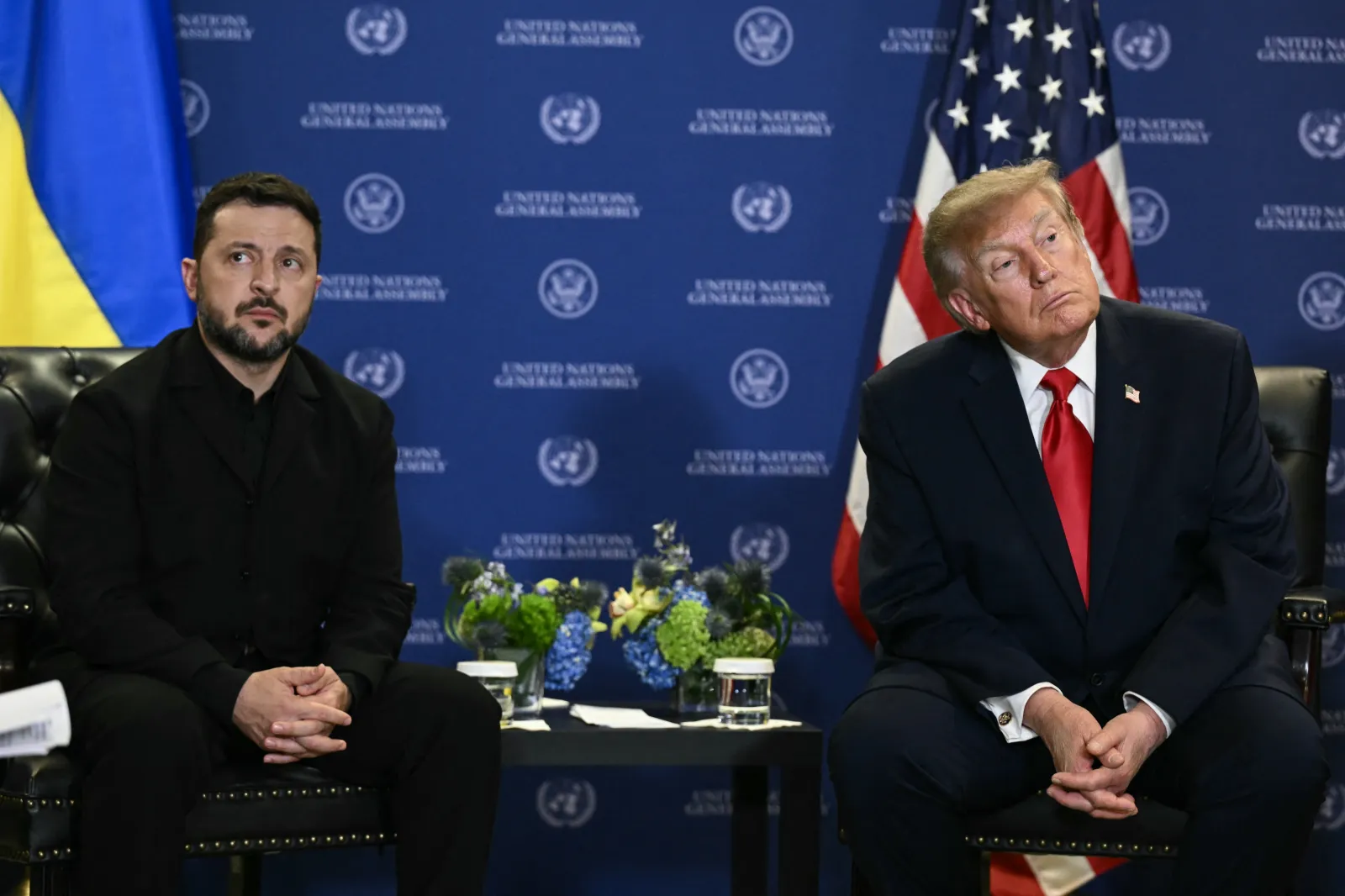
Volodymyr Zelensky previously said he would be willing to end kyiv’s campaign of extensive strikes against Russian refineries – one of Ukraine’s most effective strategies for complicating Putin’s war effort – provided Russia in turn agrees to stop bombing Ukrainian energy facilities.
But Russia’s attacks continued, as did Ukraine’s. And when Zelensky criticized Trump’s diesel deal, the US president lashed out, declaring that it was “time for Ukraine to have a new president.”
kyiv is therefore forced to choose between sacrificing one of its most effective weapons to stay in the good graces of the White House, or defying a president who controls crucial military and intelligence support. Putin, meanwhile, benefits from sanctions relief and a potentially lucrative export opportunity, without making any significant concessions in return.
But Ukraine may have just discovered another way to demonstrate its value to the United States and remind Americans which country actually threatens their interests.
The age of (dis)information
While Trump was negotiating with Putin, Ukrainian drones were operating beyond Russian refineries.
Between October 8 and 11, three data centers operated by Yandex, the Russian equivalent of Google, were struck by drones. Yandex’s sprawling digital empire accounts for about 70% of Internet searches in Russia, provides essential cloud computing and AI services to countless Russian companies and boasts 61.5 million monthly users for its taxi, ride and delivery services.
Russian media have published numerous reports that Yandex customers were having difficulty making payments, ordering taxis and using other Yandex services amid the strikes, while businesses using Yandex cloud computing experienced significant disruptions. The company’s shares fell more than 8 percent between October 7 and 9, before the third strike, and it could not say when its damaged facilities would be restored.
Clearly, Ukraine has the capacity to inflict serious damage on the digital infrastructure that underpins the Russian economy, just as it has done with the energy sector by targeting refineries and the consumer sector by hitting the facilities of Russian e-commerce giants. Maybe Kyiv could go further.
For years, Moscow has invested enormous resources in online operations aimed at manipulating political discourse, sowing distrust and stoking divisions in Western societies, particularly the United States. US authorities have repeatedly uncovered networks of fake accounts, websites and coordinated propaganda campaigns linked to the Russian state.
In 2024, the US Department of Justice dismantled an AI-assisted Russian bot farm involving 968 fictitious social media accounts, which investigators linked to the Russian intelligence service FSB and public broadcaster RT. That same year, authorities seized 32 internet domains allegedly linked to a Kremlin-led influence operation targeting American voters and undermining support for Ukraine.
As the midterm elections approach, Russia’s disinformation machine shows no signs of slowing down.
In September, Graphika researchers exposed another Russia-aligned campaign, circulating fabricated information and manipulated videos attacking U.S. politicians running for office in November, including Democratic Senator Jon Ossoff. The operation even appropriated images of celebrities, including Julia Roberts and Sarah Jessica Parker, as well as fake CNN, BBC and Politico brands, to give its claims an air of credibility.
It is difficult to determine whether these campaigns significantly influenced American public opinion, but their objective is unmistakable. Russia is trying to manipulate the American political debate, including in the weeks leading up to the election.
This presents a tempting opportunity for Kyiv. If Ukrainian intelligence can identify the networks, operators and infrastructure behind Russian interference campaigns and direct kyiv’s drones against them, Zelensky could provide exactly what the White House has been demanding from its allies: a concrete contribution to American security and interests, rather than a new request for assistance.
Putin offers diesel to Washington. Ukraine could offer something far more valuable: a tangible defense of American society and democracy. Then again, maybe Trump wouldn’t appreciate the help; the latest Russia-aligned influence campaign revealed by Graphika targeted Democrats, not Republicans.
Why would Putin want to do anything to weaken a U.S. president willing to buy his diesel, ease sanctions, and publicly berate Ukraine?
Gn world