
Andrea de Armas knew the sonographer thought she was overreacting.
De Armas was 26 years old. She had no known family history of breast cancer. But she found a lump in her chest. Before beginning a rigorous physician assistant training program, she wanted to get examined.
Being so young in a waiting room full of older patients routine analyzes was already troubling, she said. Then the technician seemed to dismiss her concerns.
“The technician asked, ‘Why are you here?’ vibrations. Without her saying it explicitly, that’s exactly what she told me. I felt belittled and just weird,” De Armas recalled. “I was like, ‘I have a mass, I feel something on my chest or my chest.’ And they were like, “Oh, really? …It was really uncomfortable during the whole visit.
After the scan, a radiologist examined him and recommended that De Armas immediately undergo a biopsy. It was a radical departure from the technician’s skepticism, De Armas said, adding that she “had a lot of emotions and felt so conflicted” about the experience.
De Armas made an appointment at the Herbert Wertheim Cancer Institute at Baptist Health, which performed another scan and biopsy. Four days later, the day before her physician assistant program began, she learned the lump was malignant. She had breast cancer.
“Words can’t describe it. It’s just sensory. I was in a paused state, where I was just listening,” De Armas said. “Then the words went through my head and I felt like I was in ‘go’ mode. I have to do something about this, because tomorrow I start PA school. So we have to do something about this.”
Andrea de Armas 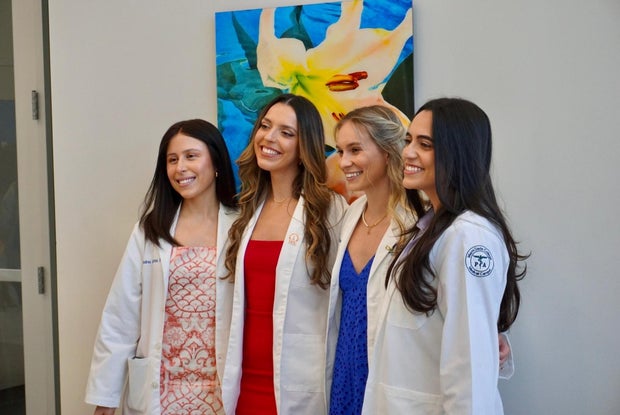
Breast cancer in younger patients
About one in 10 new breast cancer diagnoses These are women under 45, according to the American Cancer Society website, although only about one in 1,344 women are diagnosed in their 20s. Breast cancer incidence rates have also increased about 1% per year, and there are slightly more new cases diagnosed in women under 50 than in women over 50, according to the ACS.
Younger women tend to be diagnosed with breast cancer at a later stage and have “more aggressive” tumors or be diagnosed with breast cancer. rarer disease subtypessaid Dr. Mary Gemignani, director of the Women’s Cancer Program and chief of the division of breast surgery at NYU Langone.
Despite these statistics, some young women are still at risk of being laid off, Gemignani said.
“I’ve seen many women over the years talk about being told they were too young to have breast cancer,” Gemignani, who has seen patients for more than 25 years, said in an interview with CBS News in 2025. Gemignani was not involved in De Armas’ care.
Further testing revealed that De Armas had a genetic mutation associated with an increase breast cancer risk. A learning that helped De Armas feel in control when she began treatment.
“It was a little bit of relief, in the sense of understanding where this could have come from and that there were things out of my control,” De Armas said. “It’s also a real empowerment for my family. People can get the screenings they need and move forward.”
Balancing classes and chemotherapy
De Armas was determined not to let the diagnosis disrupt her life. She underwent a lumpectomy in early June, a month after her diagnosis, during a break in her school schedule. To balance her schedule and chemotherapy, she went in for treatment at 6:50 a.m., then spent the afternoon in class. She scheduled a bilateral mastectomy and reconstruction over winter break.
Gemignani said it’s not unusual for young women to have “unique needs” when it comes to cancer treatment, as they may juggle school, work or family obligations with less support or resources than older generations.
Andrea de Armas 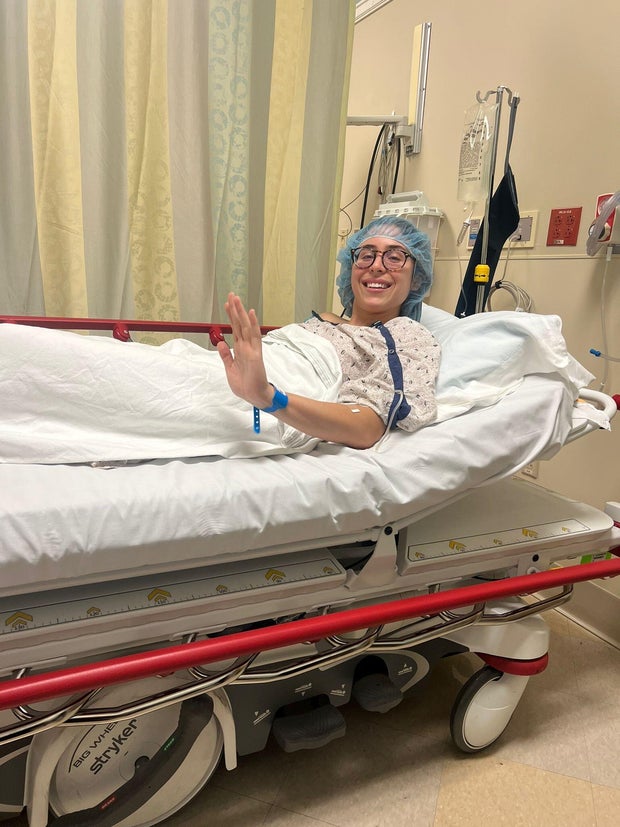
Dr. Cristina Lopez-Penalver, a surgical oncologist at Baptist Health’s Herbert Wertheim Cancer Institute who treated De Armas, said the unusual treatment schedule allowed him to stay on track in school while maintaining his health.
“We worked together as a team,” Lopez-Penalver said. “She really wasn’t ready to let this breast cancer get in her way.”
“It’s still in our hands”
De Armas graduated as a physician assistant in 2025. A month later, she was working in the field. In September, she celebrated her first anniversary in this position.
Now 30, De Armas says she is cancer-free. The days of surgery and chemotherapy are behind her. But due to the nature of her cancer, she continues to undergo hormone treatment. The drug put her in temporary menopause, which Gemignani said is another unique concern for young patients with breast cancer. She also had to make fertility decisions earlier than expected. She continues to see her oncologist for regular follow-ups.
“I’m really lucky. I feel like I’m doing well,” De Armas said. “It took me a little while to adjust. It wasn’t immediate; it took time. It took understanding the kind of changes my body was going through. But I’m able to live a pretty normal life for a 30-year-old.”
Andrea de Armas 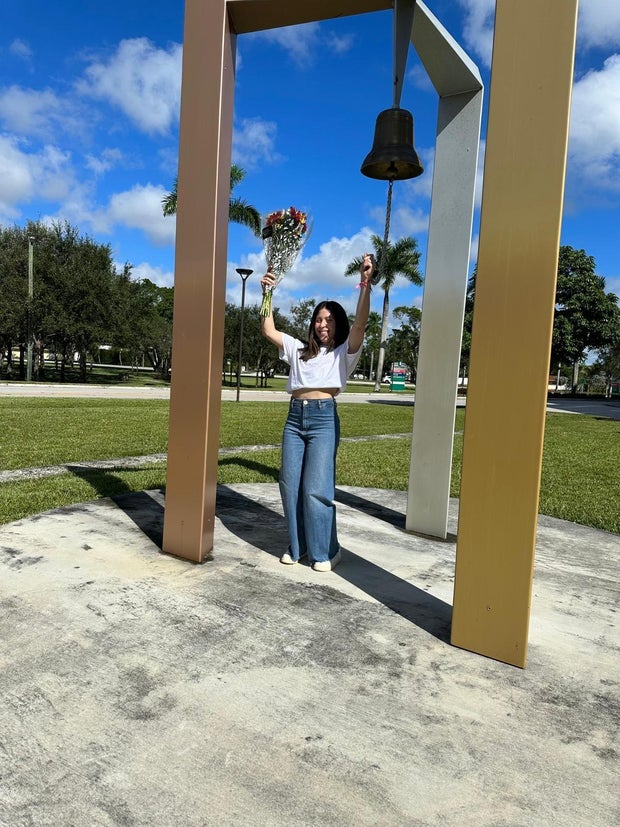
De Armas said she hopes sharing her story will inspire others to trust themselves and push for answers when something goes wrong. Being nervous about a scan or medical procedure is “a valid experience,” she said, but someone should “never let the fear of the unknown scare you.”
“It’s always in your hands, and you just have to take that step with the community and the people around you,” De Armas said. “Always do what is in your best interest. We are all human beings. The things we are genetically predisposed to are out of our control. So to feel empowered, do the things we know are within our control. It’s a cliché that knowledge is power, but it’s so true.”
Gn Health

