You only need to look at the risk factors for Alzheimer’s disease – sleep quality, eyesight, air pollution, diet, reading habits, genetics and mental health, to name just seven – to realize what a complex and difficult disease it is.
This complexity means researchers are tackling the disease from all angles when it comes to potential treatments, and there are promising early results from a recent phase 1 clinical trial, summarized in a brief summary on Alzheimer’s and dementia.
The trial was led by a team from Regeneration Biomedical Inc (RBI), a pharmaceutical company behind the new therapy, which uses patients’ own stem cells – regenerative cells that can transform into many other cell types – to remove some of the toxic buildup in neurons that characterizes Alzheimer’s disease.
Not only was the treatment shown to be safe in five participants in the phase 1 trial, but there were early positive signs in terms of cognitive improvements. A more comprehensive phase 2 trial is expected to start very soon.
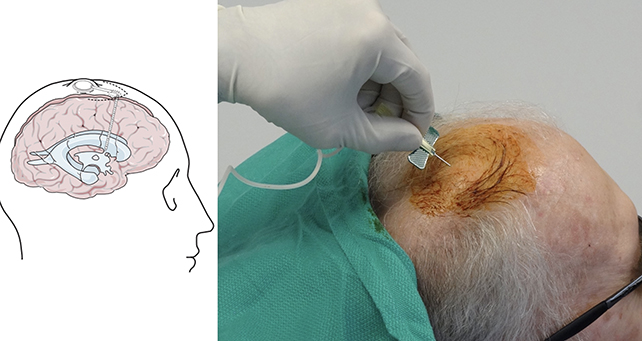
“Our direct-to-brain platform is designed to bypass the blood-brain barrier and deliver the patient’s own stem cells throughout the central nervous system,” explains neurosurgeon Christopher Duma, founder and president of RBI.
“We believe that Alzheimer’s disease is a whole-brain disorder requiring a comprehensive therapeutic approach, capable of simultaneously influencing neuroinflammation, tau biology, amyloid processing, and neuronal health.”
Here’s how the treatment (RB-ADSC) works: Stem cells from a patient’s body fat are extracted and “supercharged” with a family of proteins called Wnt, which act as chemical messengers telling other cells to grow and repair themselves.
These stem cells are then delivered from a surgical implant to fluid-filled areas of the brain called ventricles, which, in theory, rejuvenate the brain’s repair and waste management systems.
The goal is to repair broken neurons, reduce inflammation, and eliminate the harmful buildup of amyloid beta and tau proteins that accompanies Alzheimer’s disease, all through a single therapy.
In addition to removing toxic proteins, as other treatments do, RB-ADSC aims to repair the processes that create them.
 ))>
“If you have a refrigerator and it produces spoiled food, why would you continue to remove the spoiled food instead of repairing the refrigerator? » said the Duma.
“Our hypothesis is that we need to fix what’s wrong in the brain.”
The main goal of a phase 1 trial is to establish safety, hence the low number of participants. However, in addition to demonstrating the absence of serious side effects, the trial results recorded cognitive improvements in four out of five volunteers.
This means the research can now move on to a phase 2 trial, where RB-ADSC will be tested on 115 participants and pitted against a placebo. The U.S. Food and Drug Administration (FDA) has approved “fast-track” status for the next step, meaning tests and reviews can take place more quickly.
“We believe this designation recognizes the urgent need for innovative therapies that treat Alzheimer’s disease through mechanisms beyond any single disease pathway,” says Duma.
The next stage of research will take a closer look at improvements in brain function and cognition, as well as the effect of Wnt-loaded stem cells on toxic clumps of amyloid beta and tau proteins.
According to the latest information from RBI, the phase 2 trial could start as early as December, although it will likely take several years to obtain confirmed results.
Related: Human ‘mini-brains’ spent 40 days in space. Scientists have found clues to Alzheimer’s disease.
This is an exciting addition to the growing number of treatment options analyzed by researchers in recent years, gradually bringing us closer to the point of being able to stop, reverse and prevent Alzheimer’s disease.
“Our first human stem cell trial demonstrated favorable safety and statistically significant changes in biomarkers over a 52-week period,” says Duma. “FDA’s Fast Track designation marks an exciting step toward Phase 2.”
An abstract summarizing the results of the phase 1 trial was published in Alzheimer’s and dementia.
This article was fact-checked by Peter Dockrill and edited by Peter Dockrill. Although we are proud of our process, we are only human. If you spot an error, please let us know.
Gn Health